

中国大力推动产业数字化和数字产业化,以赋能实体经济为重点释放数据要素价值,并将数据纳入生产要素并参与分配。中共中央、国务院印发的《关于构建数据基础制度更好发挥数据要素作用的意见》更是为中国数据要素长远发展绘制了蓝图。由于数据具有可复制、非消耗、边际成本接近于零的特点,同时数据对其他生产要素具有放大、叠加、倍增的作用,因此数据资源打破了有限的自然资源供给对增长的制约,推动了资源快速流动,提升了各领域资源的配置效能。数字经济正在以前所未有的深度和广度参与社会生产生活,数据生产力得到显著发展[1]。
当前,中国经济步入了高质量发展的新时代,通过城市更新活动全面盘活城市存量资源、激发城市活力,已经成为带动区域经济发展小循环、增加政府财政收入的重要措施。党的二十大报告提出:“提高城市规划、建设、治理水平,加快转变超大特大城市发展方式,实施城市更新行动,加强城市基础设施建设,打造宜居、韧性、智慧城市”。数据驱动的城市更新,正在成为贯彻落实国家战略部署的重要途径。2022年1月16日,习近平总书记在《求是》发表重要文章《不断做强做优做大中国数字经济》指出:“充分发挥海量数据和丰富应用场景优势,促进数字经济和实体经济的深度融合,赋能传统产业转型升级,催生新产业新业态模式,不断做强做优做大中国数字经济[2]”。国家《第十四个五年规划和2035年远景目标刚要》中也明确指出:“建设智慧城市和数字乡村,以数字化助推城乡发展和治理模式创新,全面提高运行效率和宜居度”。
在城市更新活动中,按照国务院办公厅、住房和城乡建设部、发改委等机构在推动智能建造和加快数字化发展、建设数字中国、坚持数据赋能,以及以技术创新为驱动、以信息网络为基础促进经济高质量发展等方面的要求,探索如何利用数字技术整合城市更新行动中的存量不动产权益、规划设计、工程建设、竣工验收、运营管理等数据,实现城市更新中资源资产权益、工程建造、城市管理运营全过程数据的互联互通,进一步落实好全国自然资源工作会议提出的“维护资源资产权益, 更好发挥产权制度的激励约束作用, 实现好、维护好、发展好各类自然资源资产产权主体合法权益[3]”的要求,引导科学规范化的城市更新,成为现行城市更新背景下亟待解决的重要问题。
为了指导实施前文提出的以数字技术维护资源资产资本权益、做好数据驱动的城市更新活动全过程管理,本文首先分析了当前城市更新全流程管理的现状和问题;进而综合应用基于元数据的多源数据融合、建筑信息模型(building information modeling, BIM) 与地理信息系统(geographic information system, GIS)集成和轻量化等技术,设计和开发了城市更新大数据平台;最后以武汉市的城市更新项目为例,阐述了城市更新大数据平台的应用。
1 城市更新研究现状
1.1 中国现阶段的城市更新
在城市发展过程中,对于原有的城市建成区,包括旧工业区、旧商业区、旧住宅区等,依据相关规定程序进行的综合整治、功能改变或者拆除重建等活动,都属于城市更新的范畴。这些区域通常环境比较恶劣,存在着较大的安全隐患,通过城市更新可以带动其周边经济的发展,改善市容和人居环境,确保城市的可持续发展,促进产业结构的升级,盘活存量土地,改善住房供给等。
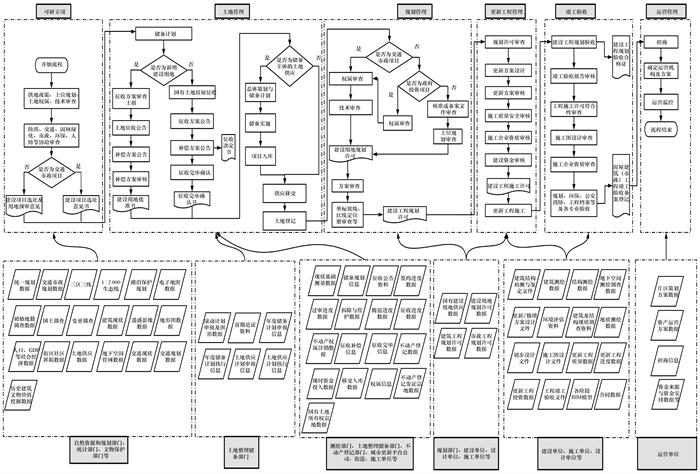
城市更新活动的全过程管理大致分为6个阶段(见图 1),分别是可研立项、土地管理、规划管理、更新工程管理、竣工验收和运营管理。在目前城市更新的全过程管理流程中,依然存在以下5个问题:1) 数据分散地存储在诸多不同的部门单位,缺乏统一的管理,缺乏数据之间的分享和交换机制;2) 缺乏统一的数据标准,通常对同一事物的表达存在多种形态,同一种表达方式(如CAD格式)的详细程度等也不尽相同;3) 数据完整度不够,数据表达方式较为粗糙,且关键数据缺失(如文保建筑数据仅有简单的建筑概况、产权、粗略测绘数据,缺乏文物价值挖掘数据、细部大样或细部模型、关键工艺做法等);4) 数据来源、数据维护的责任主体不明确,数据时效性低,准确程度无法保证;5) 缺乏对整个城市更新工程全过程关键指标的及时跟踪和反馈(如进度、资金、工程质量等)。
1.2 国内外城市更新数字化平台
对于数字技术支持下的城市更新,研究者们已经有了较多探索。比如,在城市更新项目中,通过GIS平台建设拆迁管理系统[6-7],实现数据入库、自动成图、三维建模和建筑物智能提取与审查;通过二三维数据融合和可视化技术,构建实景三维可视化平台,提出实景三维数据一体化融合展示的开发框架,支持更新项目监管、经济测算分析、规范审查等[8];通过城市信息模型(city information modeling,CIM)平台实现城市存量资源精准诊断与统筹、研判、管理,实现复杂机制下推进城市更新规划技术方法与策略的创新[9];针对问题识别难、项目决策难、实施推进难等问题,通过设计CIM+古城保护更新应用的总体架构,重塑面向古城保护更新的流程,实现CIM平台下的参数化规划指标调整和项目方案三维审查[10];在社区更新改造中建设参与式数据平台,支持高效、科学、直观的规划设计和社区运营管理等[11]。在国外,也有学者通过开发公众参与的二维GIS平台,集成多个决策分析系统,支持城市建设过程中业主、投资者、城市管理者的科学决策[12];虚拟新加坡项目建设的动态三维城市模型和协作数据平台,通过初步集成建筑语义、地形、水体等基础数据,支持仿真分析,允许数据在不同机构间进行共享,以平台虚拟仿真支持半自动规划和城市应急管理,但缺乏对权属、地籍等关键信息的集成,不支持对城市更新工程的监控和管理;芬兰赫尔辛基的城市数据管理平台通过集成属性、桥梁、建筑、水体、土地利用、地形6大类城市数据,支持城市虚拟规划和仿真分析,同样也不支持对城市更新工程的管理。
除此之外,现有的信息化系统还服务于城市更新中的土地储备和不动产登记两个过程。在土地储备方面,土地储备监管系统在建立土地“审批、征收、供应、应用”等数据库的基础上实现网上审批与监管,为土地调查、储备、供应、规划、管理等业务提供了便利。土地储备综合管理系统借助GIS、云计算等技术,通过对土地储备供应的远程申报、综合分析以及“一张图”展示,实现了对土地供应的全过程管理[13-15]。在不动产登记方面,通过构建不动产单元和基于拓扑关系的不动产二维表达模型,开发的不动产统一登记平台[16]却缺乏涵盖城市更新全过程管理的大数据体系,且应用场景受限[17-19],难以对不动产交叉产权和内部空间权属信息进行精准管理[20-23]。
总体而言,这些系统在不同程度上实现了城市更新不同阶段多源异构数据的集成,重塑了数字平台支持下的业务流程,实现了多维数据的可视化展示与工程应用,但依然存在的共性问题有:1) 随着信息化建设的推进,原有的基于部门内网、客户端/服务器(client/server,CS)架构设计和原单一业务数据体系的土地储备监管系统、供应管理系统、不动产登记系统等不再能适应新的法律、法规、规范的要求;2) 各系统的不可兼容性和独立性阻碍了当前城市更新全过程管理的实施;3) 以解决单一业务问题为导向而建设的软件平台,难以对系统性城市更新进行统计分析和决策支持;4) 缺乏对城市更新全流程数据建模和业务重塑等。
2 平台设计
2.1 建设思路
城市更新大数据平台的搭建,应依照“片区城市更新+片区资源资产调查+片区城市体检评估+片区留改拆建控+片区功能提升+片区生态修复+片区基础设施完善+构建完整社区”的推进模式,以促进资源资产权益维护和促进片区经济高质量发展为目的,综合运用大数据、人工智能等技术,通过信息集成,辅助决策者在城市更新全生命周期中做到“更新有数”;通过技术总控,促进城市更新的“品质提升”。将信息化创新贯彻到产业策划招商、规划设计和建设运营的全过程中,建立城市更新大数据“一张图”“一平台”“N个应用”的信息化体系,对总体目标、时序安排、品质控制、运营维护、补足缺项等实现统筹协调管理,实现各项建设基础信息和数据全程跟踪、更新工程质量跟踪、产业业态跟踪管控、基础设施建设跟踪、交通设施建设跟踪和低碳运营管理,统筹推进城市主体功能区配合城市更新单元的改造。
2.2 数据驱动的城市更新全过程管理流程
构建数据驱动的城市更新大数据平台,是解决上述问题的有效方法。首先,在城市更新活动这一契机下,综合利用多种数字技术,将国土调查、地籍调查、不动产权属信息、人口经济和社会文化等数据进行结构化建模建库,构建统一的数字平台,辅助政府盘清区域内的存量资产、资源、资本,摸清“家底”,明晰产权;其次,在城市更新活动中,制定统一的数据采集、存储、共享格式标准,建立城市更新全过程的数据平台,将规划设计、工程进度、质量管理、资金投入以及运维管理等数据全部纳入平台系统,实现从规划策划数据到建设运营数据的互联互通,全过程跟踪和量化分析片区的资源涵养量、资产承载量及资本流通量,促进城市更新和片区经济高质量发展。
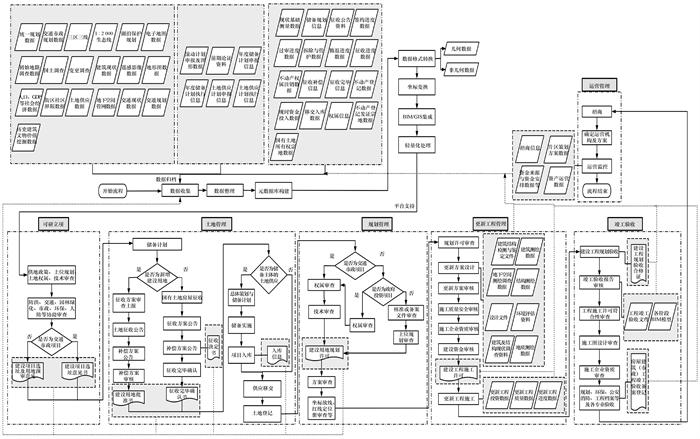
数据驱动的城市更新全过程管理流程如图 2所示。首先,将城市更新全过程数据构建为城市更新元数据,便于统计分析和查询,为各种方案、设计文件的编制提供支持;其次,通过BIM和GIS集成和轻量化等技术,实现各业务流程的数字化和可视化,同时便于各种关键信息的监控和管理;最后,城市更新过程中各阶段产生的数据均被归档到元数据库中,形成数字资产,为城市更新的科学决策提供依据。
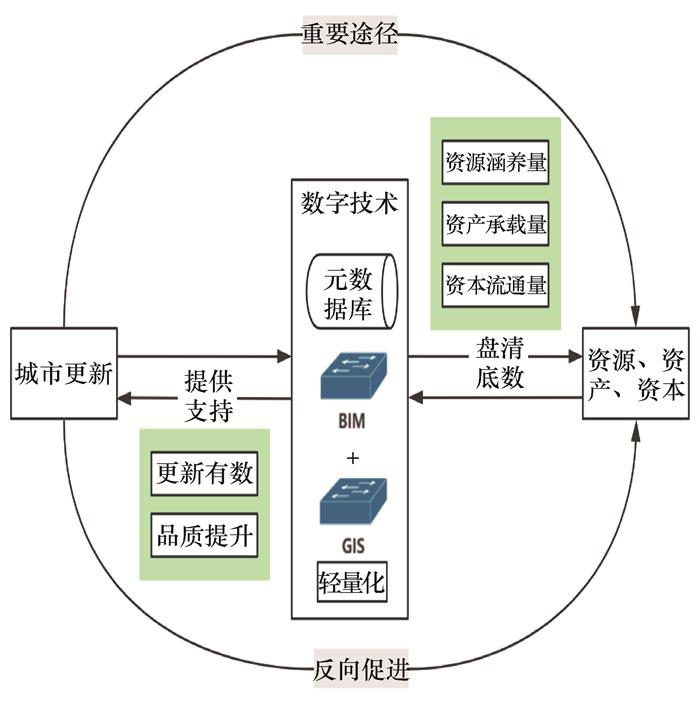
在这种数据驱动的城市更新框架下,城市更新活动和资源、资产、资本之间的关系(如图 3所示)可以表述如下:通过城市更新这一重要的途径,利用数字技术,可以辅助盘清片区内的资源涵养量、资产承载量和资本流通量;同时,清晰的资源、资产、资本底数又可以反向促进城市更新活动,结合数字技术,为城市更新提供数据支持,促进城市更新品质的提升。
2.3 系统架构
平台的架构分为4个层级,分别是支撑环境层、数据资源层、基础平台层和应用系统层。为保证平台的高效和稳定运行,还需要制定一系列的政策、标准以及构建平台系统安全运维的保障体系。平台的系统架构如图 4所示。
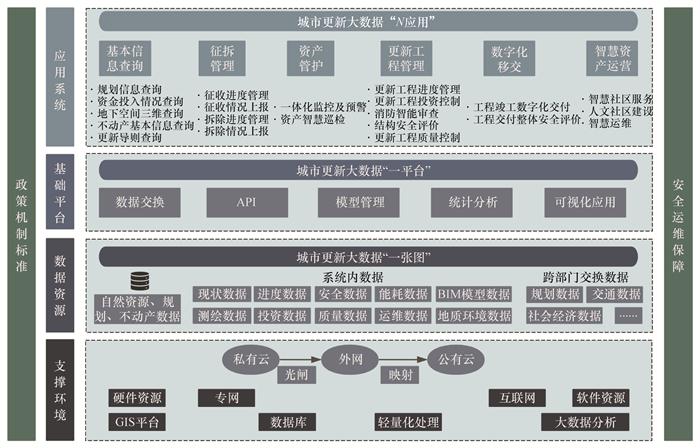
1) 支撑环境层包含的基础环境是保证整个系统运行的基础,主要包括了平台使用的GIS平台、数据库、轻量化处理、大数据分析以及专网、互联网公网、云存储等软、硬件资源。
2) 数据资源层是平台运行的“血液”,主要包括扩展的自然资源、规划、不动产数据,城市更新建设单位构建的内部数据(现状数据、测绘数据、投资数据、进度数据、BIM及各种属性数据等),以及跨部门交换数据(规划数据、交通数据、社会经济数据)等。这3类数据构成了城市更新大数据体系的基本内容。
3) 基础平台层主要为应用系统层提供基础服务,包括数据交换、应用程序编程接口(application programming interface, API)、模型管理、统计分析、可视化应用等。
4) 应用系统层是平台主要功能实现部分。其中,基本信息查询模块主要提供对更新片区以及城市规划、资金投入、三维空间、城市更新导则等方面信息的查询;征拆管理模块主要是对片区征收和拆除工作的管理;资产管护模块是在征拆后和更新工程施工前这一空档期对片区基础设施进行管护;更新工程管理模块是从工程进度、成本、质量、安全等方面对片区更新工程进行管控;数字化移交模块主要包括更新后建筑的全专业BIM交付和既有建筑更新后的结构安全评价;智慧资产运营模块包括智慧社区服务线上线下大厅建设和智慧运维等功能。
3 关键数字技术
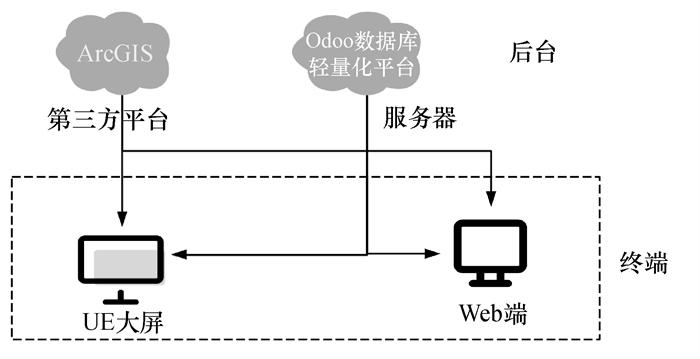
城市更新大数据平台分为终端及后台两部分,如图 5所示。终端包括桌面用户界面虚幻引擎(unreal engine,UE)端和Web端;后台数据库采用稳定可靠的关系型数据库PostgreSQL,应用服务器采用Python FastAPI,并通过插件接入ArcGIS第三方平台、Odoo数据库轻量化平台。UE端的优点在于能够提供高真实感的场景渲染,适合大屏展示需求,同时也可以接入虚拟现实(virtual reality,VR)沉浸式体验设备以及主流的GIS平台,该过程主要采用Nanite技术和Lumen技术。其中:Nanite技术能够加载数百万甚至数十亿个多边形,为场景提供更多的细节;Lumen技术是全新的光照解决方案,能实现更真实的场景光照。Web端的优点在于使用便捷,只要能联网就能访问系统,不需要下载或安装软件。Web端主要使用WebGL技术,并采用deck.gl对海量数据进行高性能渲染,以实现BIM+GIS的应用需求。
3.1 基于元数据的多源数据融合技术
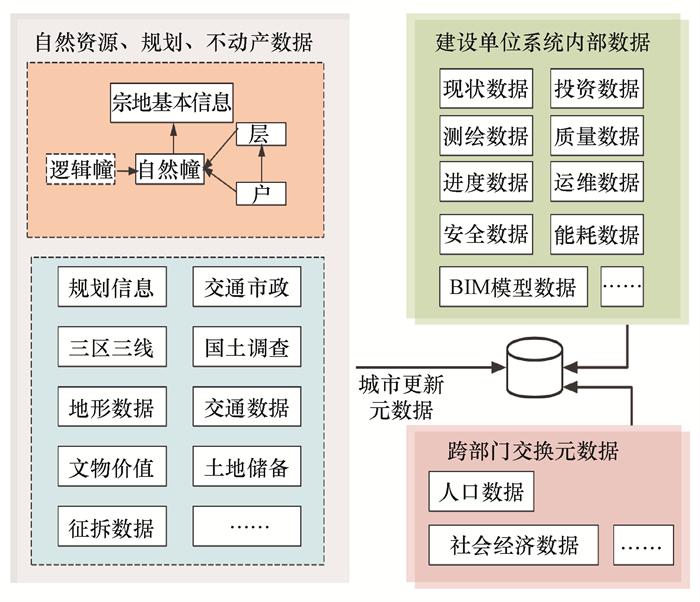
城市更新大数据平台以城市更新全过程数据为基础建立元数据库,并串联起政府部门业务数据及社会经济空间大数据,以解决信息无法高效共享、流动和关联而导致的多源数据信息孤岛现象[24],实现全生命周期信息化管理。平台采用基于元数据的多源数据融合技术,建立城市更新元数据库统一标准,实现城市更新全过程各阶段的信息协同及数据共享。数据库由自然资源、规划、不动产数据,建设单位系统内部元数据(由建设单位归集的包括设计、施工、运维等在内的数据,如现状数据、测绘数据、投资数据、进度数据、BIM及各种属性数据等),以及跨部门交换元数据(人口、社会经济数据等)组成,如图 6所示。根据建立的城市更新多源数据库,通过即时服务云平台实现多源数据的一体化存储、更新、管理及查询[25],进而实现基本信息查询、征拆管理、资产管护、数字化交付等应用。
3.2 BIM与GIS集成技术
3.2.1 ArcGIS+UE
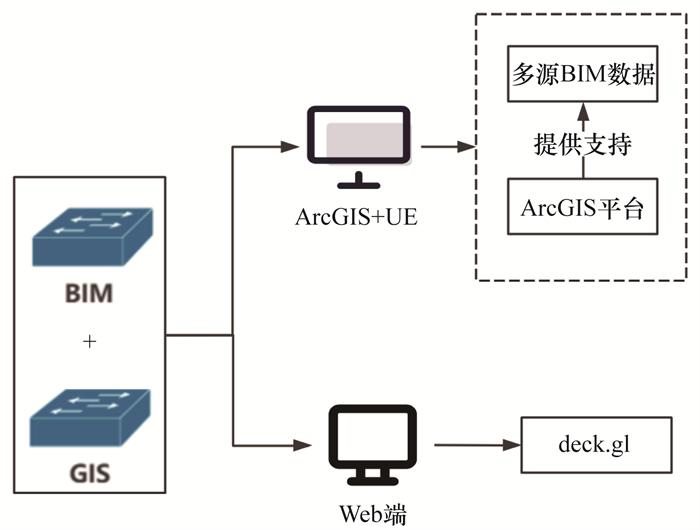
UE端通过ArcGIS+UE实现BIM+GIS数据融合。ArcGIS平台提供多源BIM数据支持,包括对Bentley、Catia、Tekla、PDMS等主流BIM软件的支持,具体支持形式包括原生支持和交换格式支持。其中:原生支持即Autodesk的Revit数据可直接作为ArcGIS平台的数据源;交换格式支持通过将Catia、SolidWorks、Tekla等导出为STEP或IFC交换格式进行支持。
3.2.2 基于WebGL的deck.gl技术
Web端采用基于WebGL的deck.gl地理大数据可视化框架。deck.gl具有不同类型可视化图层、高性能GPU渲染等优势,可对BIM数据按照GIS引擎的多级金字塔结构进行数据构建,实现BIM+GIS的有效融合,提供建筑空间信息与片区的信息交互应用。
3.3 基于数据属性的模型轻量化技术
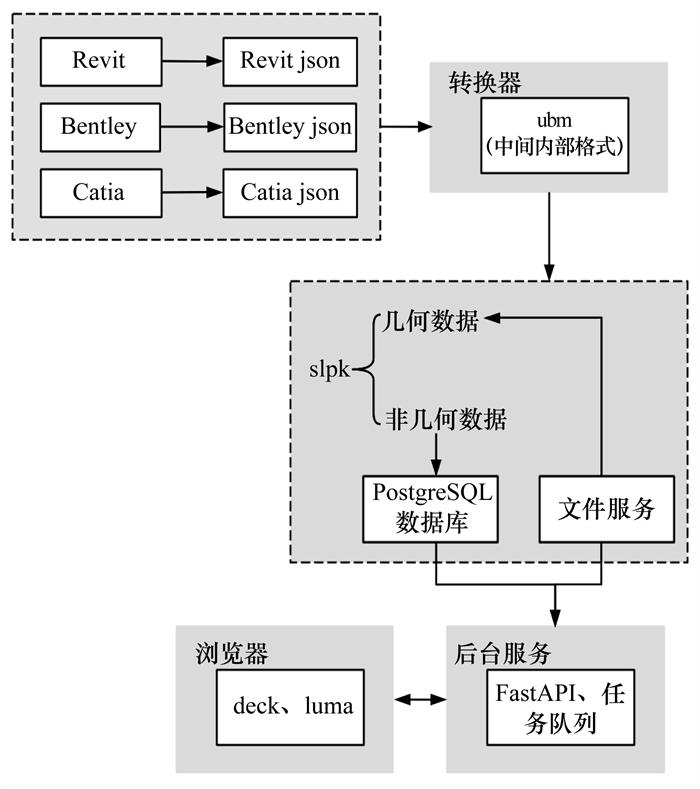
实行城市更新全过程的信息化管理,需要相关人员能够充分掌握各个阶段的海量数据信息。BIM文件包含了三维模型的几何数据和扩展属性,这导致模型体量变大,严重影响模型的传输及图形解析效率[27]。为此,平台采用模型轻量化技术,基于数据属性进行模型存储。平台将BIM文件(Revit、Bently、Catia)转换为方便读取的json格式文件,然后通过转换器转化成统一的ubm文件(中间内部格式),再根据内部算法生成slpk文件。slpk文件的非几何数据(属性数据)存储在PostgreSQL数据库中,几何数据以文件的形式存在,共同由后台服务提供接口访问。后台服务使用Fast API实现,使用任务队列进行任务调度。前端浏览器通过deck.gl加载模型,并采用luma.gl进行模型渲染显示。轻量化技术架构如图 8所示。
4 平台应用示范
城市更新大数据平台的开发依托武汉市的城市更新项目,旨在实现对城市更新全过程的总体管控。项目涉及的片区内存在大量的历史文物建筑和优保建筑,同时还有部分需要拆除重建的建筑,对片区的更新涉及复杂的资源资产权属变更以及历史建筑的保护和修缮。针对片区的实际情况,开发的城市更新大数据平台主要包括区域内不动产的基本信息查询、征拆管理、资产管护、更新工程管理、数字化交付和智慧社区运营管理6大基本功能模块。
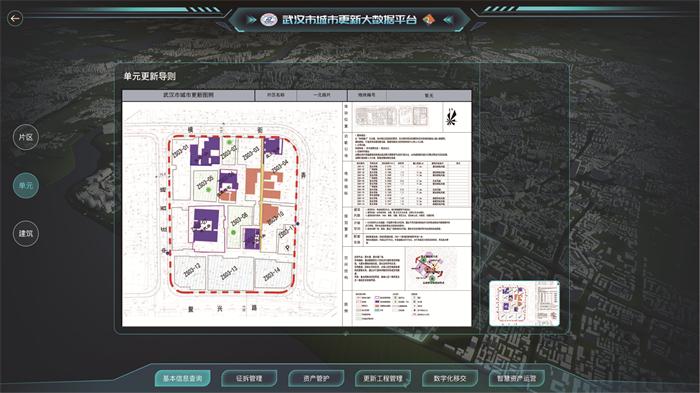
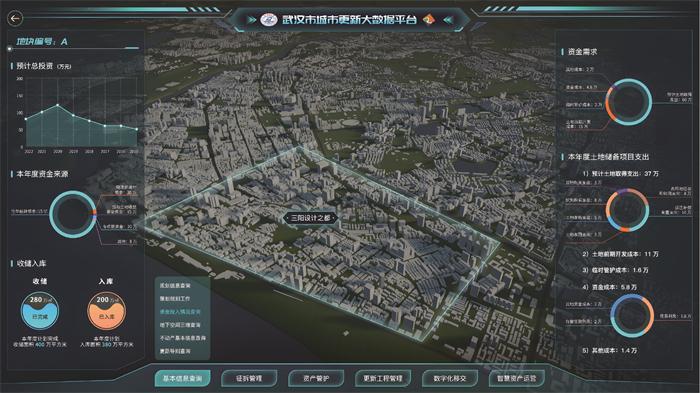
在片区基本信息查询模块中,区分了片区、单元、建筑3级更新单元,并将每级更新单元的名称、占地面积、建筑面积、建筑基本现状、病害信息、工艺信息等与BIM+GIS模型相关联。在这种基于元数据的多源数据融合技术支持下,实现了权利空间、权属关系、测绘数据等各种信息的三维可视化查询与统计展示。此外,对历史价值较高的更新单元编制了更新导则(图 9),辅助规划和设计工作。
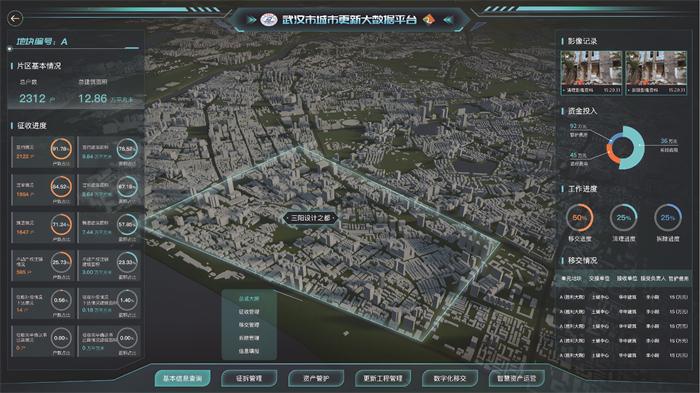
在片区的更新过程中,征拆管理模块包含了项目空间管理、进度管理和投入资金管理功能。项目空间管理主要实现基于平台的三维空间测量测绘、面积统计查询等;现场管理人员使用手机端应用程序实时上传征拆报表、征拆现场图片和视频,进度管理算法自动提取关键信息并将数据指标图表化展示在平台上,同时支持进度报告的推送,有助于管理者及时了解项目进度与问题;投入资金管理则实现了对补偿费用的下达统计,以及对征拆过程的管护、清理等费用的统计。
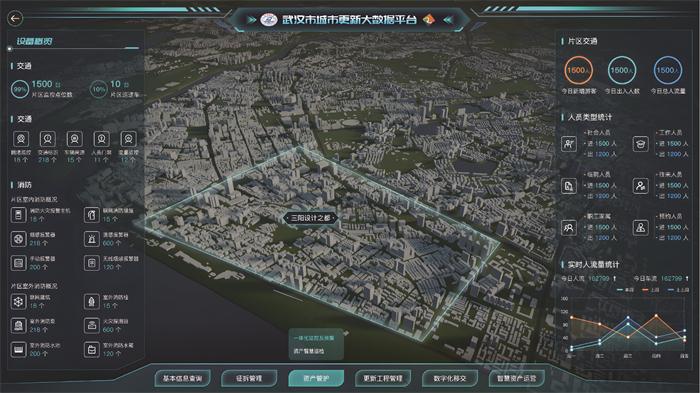
片区资产管护模块(图 12)的目的是保证腾退后的资产不受到二次破坏,同时监控腾退区域以防止发生不安全事件。资产管护模块接入了社区摄像头,通过划定关键区域的电子围栏,结合人员、车辆识别系统,实现对管护区的数字化监管与联动预警。数字化交付模块集成了更新区域内建筑、管线、道路、设施设备的基本信息,以及更新工程全过程各阶段产生的所有权属变更、进度、相关方、资金、设计方案、施工方案等数据,形成了更新区域的数字化副本。社区运营管理模块主要面向潜在租户或投资者开放,使他们可通过在线云览功能远程调研更新片区。系统还对片区内的能耗、税收等关键指标进行统计分析,辅助运营管理和投资收益监控。
城市更新大数据平台通过多源数据融合、BIM与GIS集成和模型轻量化等技术,实现了对城市更新全过程的数字化管理,是对数字技术支持下的城市更新思路和方法的探索。目前,该平台已在武汉市三阳设计之都、武钢云谷、武汉站、武昌南站等城市更新项目中得到部署和应用,对于城市更新工程质量、资金投入等起到了有效管理与控制。
5 结语
城市更新活动是盘清城市片区内资源资产资本家底的重要途径,清晰的资源资产资本底数又为城市更新活动提供数据支持,同时通过数字技术构建的大数据平台可以实现全过程数据的互联互通、量化跟踪和分析评估资源资产资本,进而辅助决策。
本文详细阐述了城市更新大数据平台的建设思路、系统框架。通过整合城市更新中的存量不动产权益、规划设计、工程建设、竣工验收、运营管理等全过程数据,综合利用基于元数据的多源数据融合技术、BIM+GIS集成技术以及基于数据属性的模型轻量化技术等,开发的城市更新大数据平台实现了城市更新中不动产权益、工程建造和城市管理运营全过程数据的互联互通以及对各类基础数据的全程控制和全方位监管,以在城市更新活动中通过数据驱动实现资产权益维护。本文不仅为城市发展提供了通过数字转型、智能升级、融合创新实现城市高质量发展的大数据平台,而且有助于实现数字的产业化,推动传统城市更新产业的数字化,加快数字经济和实体经济的深度融合,并协助地方政府探索“土地经济”向“数字经济”转变的发展方式,促进经济高质量发展。
为了促进数据驱动的城市更新框架的落地实施,在未来的研究中需要重点关注以下几个问题:
1) 采用信息化手段赋能传统的工程管理,充分利用数字技术促进建筑行业的标准化和智能化发展;
2) 明确数据产权、流通、分配、使用、治理等规则,推动数据要素市场的规范化建设,提升数据要素的配置效率,建立以利益共享为目的的多组织协调参与和沟通机制,充分利用分散的现有数据资源;
3) 研究和推动统一的城市更新数据采集、存储、共享格式标准,研究统一标准的数据转换系列软件,明确数据的质量要求等;
4) 研究从政府层面推动城市更新大数据平台建设机制和方法,使数据平台真正能为城市更新工作中的单位、集体、个人服务。


