


由于安全文化对人的安全信念、价值观以及安全行为模式等具有根本性影响,如何科学提升安全文化一直是建筑业安全领域最受关注的研究课题之一[6]。目前,建筑业安全文化研究的重点主要集中在概念界定、测评方法及影响作用分析3个方面,其中安全文化测评指标体系被认为是反映企业或建设项目安全文化水平、发现薄弱环节的主要方法[2-3]。但现有众多的测评指标体系在层级、维度、指标等构成上存在数量和内涵方面的差异[7-8]。最值得关注的是,基于简化测评工作等目的,现有安全文化测评指标在表述方式方面通常采用高度简化的方式,且语言逻辑性不足,对从业人员实际理解和试图设计提升安全文化的措施造成困扰。安全文化提升方法及措施的设计不仅要参考安全文化指标及内涵,更需要遵循管理学中的管理机制设计理论与方法,厘清安全文化测评指标涉及的管理要素及其作用关系[9-11],才能形成系统有效的安全文化提升措施。然而,目前学界尚缺少安全文化管理机制研究,使得建筑业安全文化研究和实践之间仍存在联系与转化不足问题。
为此,基于管理机制设计理论和语义分析方法,针对现有安全文化测评指标进行系统收集与分析,提取安全文化的管理机制元素,通过分析元素间的作用关系,归纳并构建安全文化管理机制模型,提出基于管理机制的安全文化提升策略,并结合实际案例阐明机制模型的应用方式。
1 安全文化管理机制分析基础
1.1 安全文化
1.2 管理机制
安全文化提升不仅需要依据安全文化的理论规律,如安全文化测评中得分低的维度和指标所反映出的内涵,在提升方法上还需要依据管理学的理论规律,如通过合理设计组织中相关人员和事物的关联规则,形成具体措施,达到安全文化提升目标。从管理学上讲,安全文化提升是典型的管理机制设计问题。
2 基于语义角色的管理机制分析框架
实际中,管理机制蕴含着丰富的信息,语言则是描述管理机制的重要方式。语言中的语义、句法、语法与管理机制中的构成元素、逻辑关系、作用方式等具有天然的联系。语义角色是构成语句中基本成分及承担的意义角色,是语句及语言形成的基础。因此,本文提出一种基于语义角色的管理机制分析框架,即用语义角色表征管理机制元素,以此作为研究安全文化管理机制的新思路。其中,语义分析和语义角色标注是本文采用的主要方法。语义分析指运用各种方法来学习与理解文本表示的语义内容。语义分析的概念非常广泛,任何对语言的理解都属于语义分析的范畴[19]。语义角色标注(semantic role labeling,SRL)是一种以句子的谓词为核心,分析句子各个成分与谓词间关系的方法[20],常见的语义角色包括施事者、受事者、时间、地点等。通过SRL进行语义分析得到的结果与管理机制元素非常契合,例如施事者对应主动方、受事者对应从动方,且SRL的处理结果内涵更加丰富。因此,本文将SRL方法中的语义角色作为管理机制元素[2, 20],从语义分析层面对现有关献的安全文化测评指标中的语义角色进行提取,进而获得相应的管理机制元素及内涵,结果如表 1所示。
表 1 管理机制元素含义及示例 |
| 管理机制元素 | 内涵 | 示例 |
| 属性(property) | 主体的修饰语 | 工人的、有效的、安全的、造成事故的…… |
| 主体(agent) | 行为的发起者或承受者 | 管理人员、班组长、工人、全体人员…… |
| 行为(behavior) | 主体间的作用方式 | 纠正、采取、认为、提醒、设置…… |
| 时间(time) | 行为发生的时间或条件 | 当发生风险时、当日程紧张时、经常…… |
| 地点(location) | 行为发生的地点或场合 | 在工地、在安全会议上、在危险环境中…… |
| 范围(range) | 行为的来源、伴随或针对的对象 | 从安全规程中、和管理人员、对安全问题…… |
| 方式(manner) | 修饰行为的状语副词 | 迅速、充分地、非常、更安全地、清楚地…… |
| 原因(reason) | 行为的原因、目的或结果 | 为了工作需求、为了安全、为了进度…… |
3 数据收集、处理与分析
3.1 收集建筑业安全文化测评指标
为了从建筑业安全文化测评指标中提取管理机制元素并分析作用路径,对现有的相关文献进行了深度检索,并针对性地提取了其中的测评量表和指标。数据收集的主要步骤包括论文检索、论文筛选和指标提取。检索关键词为“safety climate”“safety culture” “construction”,检索时间范围为1980—2022年。由于国内相关研究较少,因此主要在以下4个文献数据库中检索论文:Science Direct、Scopus、Web of Science、Engineering Village。得到初步符合要求的论文545篇,但其中部分论文有重复,且存在测评其他行业、没有使用明确的测评量表和没有进行实证研究的论文。在排除这些不满足要求的论文后,最终用于分析的论文共33篇[3, 12, 15-18, 21-47],测评指标1 107项。论文检索及筛选流程图如图 1所示。
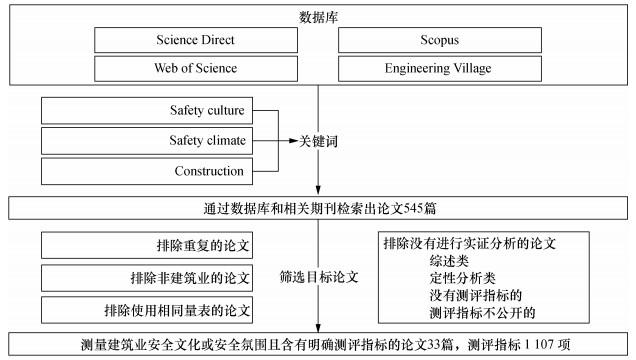
最终获得的33篇论文,从研究内容看,均以建筑业的项目或企业为研究对象,所占比例分别为63.64%、36.36%,充分覆盖了建筑业安全文化建设在管理实践中的核心对象;从发表时间看,文献发表时间跨度较大,其中2000—2009年的论文占比最高,为48.48%,其次是2010—2019年,占比为39.39%;从论文内容研究的国家或地区看,包含了中国(包括港澳台地区)(占比30.30%)、美国(占比15.15%)、澳大利亚(占比12.12%)、西班牙(占比9.09%)和印度(占比6.06%)等,反映了安全文化在不同社会环境中的特征;从论文发表的期刊看,发表在《Safety Science》上的论文最多,占比为24.24%,其次是《Journal of Construction Engineering and Management》(占比15.15%)、《Accident Analysis and Prevention》(占比12.12%)、《International Journal of Occupational Safety and Ergonomics》(占比12.12%)。此外,论文来源普遍为《科学引文索引》(scientific citation index, SCI)收录期刊或《工程索引》(engineering index, EI)收录期刊。
3.2 提取测评指标中的管理机制元素
在提取管理机制元素时,以8种最主要的管理机制元素(即属性、主体、时间、地点、方式、范围、原因、行为)为框架,对测评指标进行结构化地分解与储存。以“工人的班组长经常提醒工人注意安全信息”为例,提取出其中的管理机制元素并储存后得到如表 2所示的结果。
表 2 测评指标结构化存储示例 |
| 属性A | 主体A | 时间 | 地点 | 方式 | 范围 | 原因 | 行为1 | 属性B | 主体B | 时间 | 地点 | 方式 | 范围 | 原因 | 行为2 | 属性C | 主体C |
| 工人的 | 班组长 | 经常 | 提醒 | 工人 | 注意 | 安全信息 |
3.3 管理机制元素统计分析
在对测评指标中的管理机制元素进行结构化提取后,进一步对8种管理机制元素进行统计和分析。从出现频次来看,在1 107项测评指标中,主体的数量最多,为2 458次,行为次之,为1 433次,其他管理机制元素相比之下数量较少。这是因为按照语句的构成以及提取元素的规则,主语和谓语是句子的主干成分,几乎存在于所有语句中,而其他成分则不尽然。根据出现频次,每种管理机制元素排名前10的词语如表 3所示。
表 3 管理机制元素频次统计 |
| 排名 | 属性 | 主体 | 行为 | 时间 | 地点 | 范围 | 方式 | 原因 |
| 1 | 工人的 | 工人 | 认为 | 经常 | 在工地现场 | 向工人 | 可以 | 为了安全地完成工作 |
| 2 | 足够的 | 管理人员 | 提供 | 总是 | 在班组中 | 就如何改善健康和安全 | 不会 | 为了获得团队中其他人的尊重 |
| 3 | 工地的 | 班组长 | 重要 | 定期 | 在安全问题上 | 与工人 | 都 | 为了改善安全 |
| 4 | 良好的 | 安全规程 | 得到 | 在有压力时 | 在会议上 | 对安全问题 | 安全地 | 为了生产的需要 |
| 5 | 不安全的 | 全体人员 | 鼓励 | 在工作时 | 在危险的地方 | 对违反安全规程的工人 | 迅速 | 为了提高安全绩效 |
| 6 | 安全方面的 | 安全问题 | 采取 | 已经 | 在应急计划中 | 在自己身上 | 非常 | 为了满足重要的时点 |
| 7 | 同事的 | 工作 | 完成 | 在被要求时 | 在工人的安全培训方面 | 就健康和安全问题 | 愿意 | 因缺乏时间 |
| 8 | 全体人员的 | 安全与健康 | 重视 | 在工人有需要时 | 在跟进安全检查方面 | 向管理人员 | 努力 | 为了增加生产 |
| 9 | 现在的 | 安全培训 | 关心 | 在任何时间 | 在业务中 | 为工人 | 严格 | 以免受意外伤害 |
| 10 | 安全规程的 | 设备 | 参与 | 在有人报告险情时 | 在安全改进方面 | 比生产力 | 同等 | 为了防止事故发生 |
| 出现总次数 | 676 | 2 458 | 1 433 | 307 | 85 | 172 | 519 | 91 |
从“主体”来看,测评指标中涉及最多的3种主体分别是“工人”“管理人员”和“班组长”,表明安全文化管理的主要对象是“人”。从“行为”来看,涉及最多的3种行为依次是“认为”“提供”和“重要”,表明安全文化管理既包含相关人员在价值观和信念层面的思想,也需要相关人员在实际管理层面做出行动。从“属性”来看,涉及最多的3种属性依次是“工人的”“足够的”和“工地的”,表明安全文化测评指标紧扣工地实际管理,同时也对管理中的主体进行了限制。
4 安全文化的管理机制原型
根据管理机制设计相关理论,组织中既定目标的各个相关组成部分会在给定的管理规则下向达成目标的方向运作并发生复杂的作用关系。从安全文化测评指标中提取出的管理机制元素也存在复杂的作用关系,且这种作用关系也可以看作安全文化发挥效用的作用路径。在对管理机制元素的作用关系进行分析后,基于单个行为,本文提炼出单主体和双主体2种最基础的管理机制元模型。
4.1 单主体管理机制元模型
在单主体管理机制元模型中,只存在某个单独的主体。该主体的行为一般使用不及物动词或形容词表达,因此其作用路径可以看作是主体自身在对主体进行管理,可表示为“A→A”,其示意图如图 2所示。
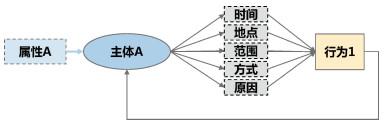
单主体管理机制元模型的含义是:具有一定属性的主体A,在特定的时间、地点、范围内,用某种方式,为了某种原因,而进行了某种行为,且其行为对象为自身。
以“工地的安全规程对工人来说非常完整”这一测评指标为例,其中涉及的主体仅有一个,即“安全规程”,因此适合用单主体元模型进行归纳。该指标可以简化为“安全规程完整”,即“安全规程”是路径中的主体,“完整”是路径中的行为,而“工地的”“对工人来说”“非常”则分别作为主体的属性以及行为的范围和方式。从字面看,“安全规程”这一主体自身需要达成“完整”这一行为,因此元模型的箭头始于主体自身,在时间、地点、范围、方式、原因等管理机制元素的作用下,通过“完整”这一行为,最终指向自身并达成管理目标。
4.2 双主体管理机制元模型
在双主体管理机制元模型中,存在2个主体A和B。其中主体A的行为一般是及物动词,作用路径即为主体A通过行为对主体B进行管理,可表示为“A→B”,其示意图如图 3所示。
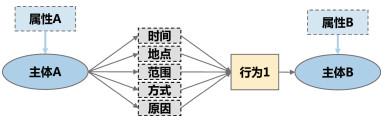
双主体管理机制元模型的含义是:具有一定属性的主体A,在特定的时间、地点、范围内,用某种方式,为了某种原因,而进行了某种行为,且其行为对象为主体B。
以“管理人员在工地迅速纠正安全问题”这一测评指标为例,其中涉及的主体有2个,分别为“管理人员”和“安全问题”,因此需要用双主体管理机制元模型进行分析。该指标可以简化为“管理人员纠正安全问题”,即“管理人员”是路径中的主体A,“纠正”是路径中的行为,“安全问题”是路径中的主体B,而“在工地”和“迅速”则分别作为行为的地点和方式。从字面看,“管理人员”这一主体需要采用“纠正”这一行为,因此元模型的箭头始于主体A(管理人员)自身,在时间、地点(在工地)、范围、方式(迅速)、原因等管理机制元素的作用下,通过“纠正”这一行为,最终指向主体B(安全问题),进而达成管理目标。
5 安全文化管理机制元模型的拓展与应用
5.1 安全文化管理机制元模型的拓展
在复杂的管理实践中,由于涉及的行为往往不止一个,因此还需要在管理机制元模型的基础上加以拓展,以应对管理实践中更复杂的情况。为此,以管理机制元素的作用关系为依据,在单主体和双主体管理机制元模型的基础上,提炼出安全文化管理机制拓展模型,如图 4所示。
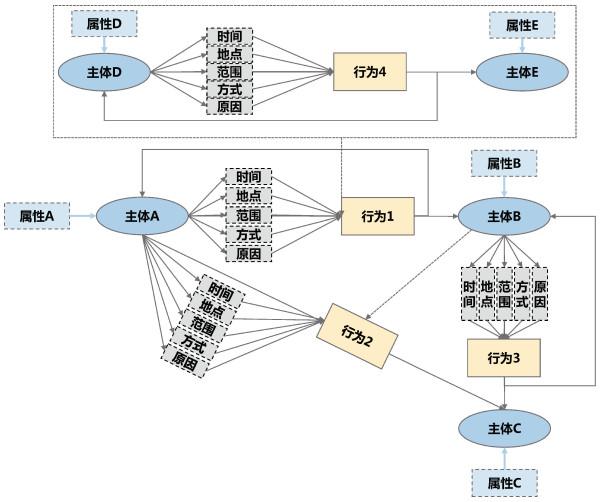
模型中某些主体之间并不直接发生作用关系,而是需要以其他主体间的作用关系,作为时间、地点、范围、方式、原因5种管理机制中的任意一种,来对其行为加以限定,在建筑业安全文化管理机制拓展模型中用虚线表示。可见,在多主体的安全文化管理机制拓展模型中,根据主体间的作用关系,可以分为直接作用和间接作用两类拓展形式。
5.2 多主体直接作用的管理机制拓展模型
在主体直接作用的管理机制拓展模型中,主体间的作用关系均用实线表示。根据收集到的测评指标,除了第4章中提到的2种基础的作用方式外,还存在2种主体直接作用路径,可分别用“A→B→B”和“A→B→C”表示。
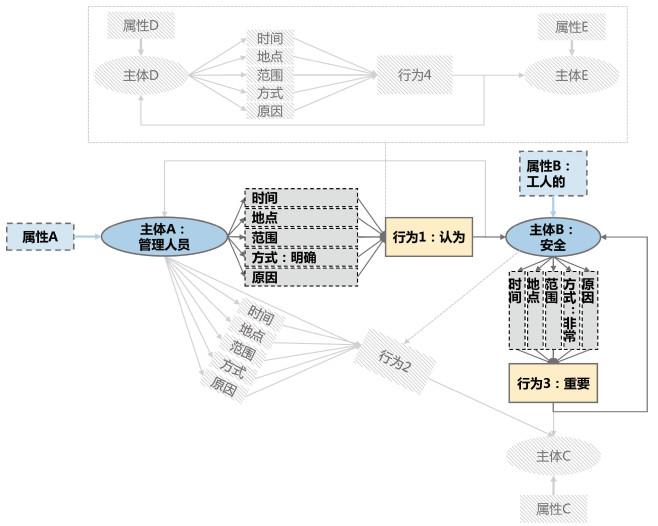
在“A→B→B”中,主体A先对主体B采取某种行为,主体B再对自身采取其他行为。以“管理人员明确认为工人的安全非常重要”这一指标为例,可先将其简化为“管理人员认为安全重要”,易知其中涉及的主体共有2个,分别是“管理人员”和“安全”。在作用路径中,先有主体A(管理人员)对主体B(安全)在某种方式下(明确)采取行为(认为),再有主体B(安全)在属性B(工人的)的限制下对自身采取行为(重要),进而达成目标,如图 5粗体文字部分所示。
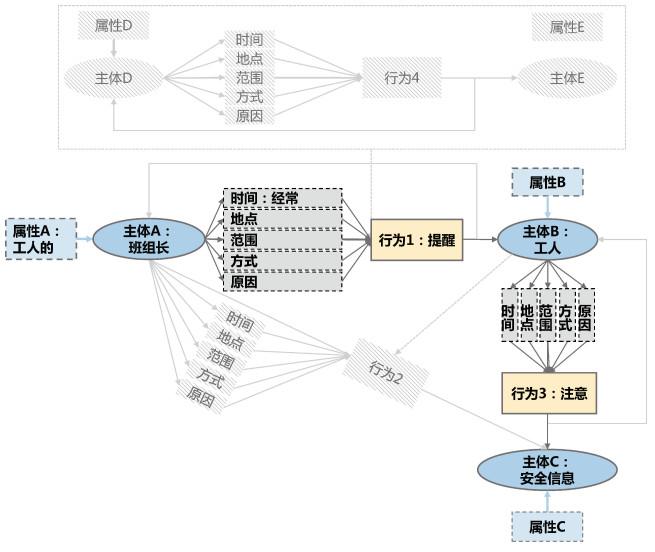
在“A→B→C”中,主体A先对主体B采取某种行为,主体B再对主体C采取其他行为。以“工人的班组长经常提醒工人注意安全信息”这一指标为例,可先将其简化为“班组长提醒工人注意安全信息”,易知其中涉及的主体共有3个,分别是“班组长”“工人”“安全信息”。在作用路径中,先有主体A(班组长)对主体B(工人)在某种方式下(总是)采取行为(提醒),再有主体B(工人)对主体C(安全信息)采取行为(注意),进而达成管理目标,如图 6粗体文字部分所示。
5.3 多主体间接作用的管理机制拓展模型
在主体间接作用的管理机制拓展模型中,用虚线对不直接作用的主体进行连接。根据收集到的测评指标,间接作用路径较为复杂,主要存在2种主体间接作用路径,可分别用“A→(A→B)→C” “A→(D→E)→A”加以概括。其他更为复杂的间接作用路径可以在这2种路径的基础上进行推演。
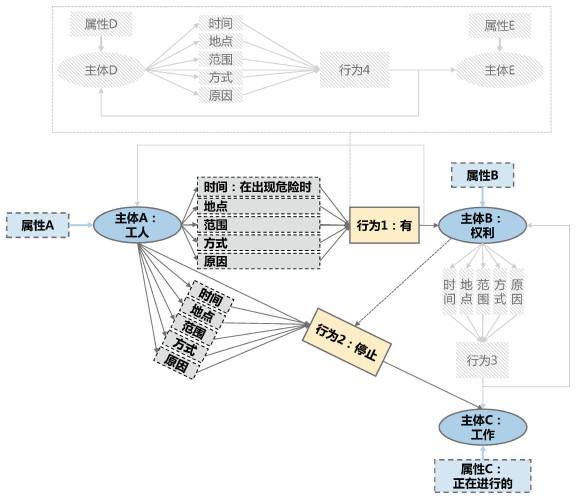
在“A→(A→B)→C”中,主要作用关系是主体A对主体C采取某种行为,但其中伴随着以“(A→B)”作为时间、地点、范围、方式或原因对“A→C”的行为进行限制。以“在出现危险时工人有权利停止正在进行的工作”这一指标为例,可先将其简化为“工人有权利停止工作”,易知其中涉及的主体共有3个,分别是“工人”“权利”“工作”。但其中“工人有权利”是“工人停止工作”的条件,因此该指标的作用路径为,在主体A(工人)对主体B(权利)采取行为1(有)的条件下,主体A(工人)在特定时间(出现危险时)对属性C(正在进行的)限制下的主体C(工作)采取行为2(停止),如图 7粗体文字部分所示。
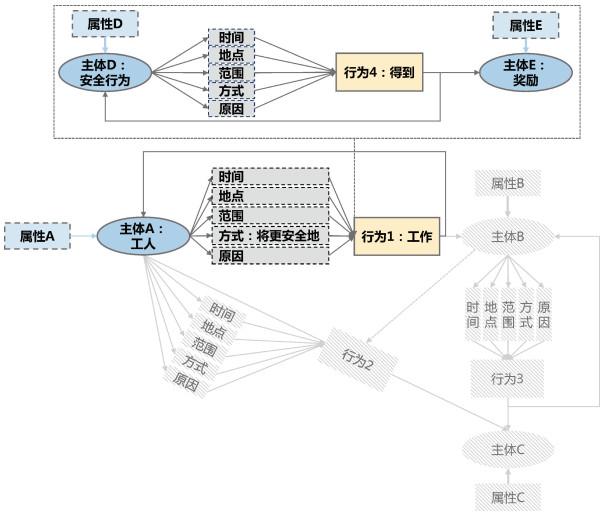
在“A→(D→E)→A”中,主要作用关系是主体A对自身采取某种行为,但其中伴随着以“(D→E)”作为时间、地点、范围、方式或原因对A的行为进行限制。以“如果工人的安全行为得到奖励,工人将更安全地工作”这一指标为例,可先将其简化为“如果安全行为得到奖励,工人工作”,易知其中涉及的主体共有3个,分别是“安全行为” “奖励” “工人”。但其中“安全行为得到奖励”是“工人工作”的条件,因此在作用路径中,先有主体D(安全行为)对主体E(奖励)采取行为4(得到),再有主体A(工人)在某种方式下(将更安全地)采取行为1(工作),进而达成管理目标,如图 8粗体文字部分所示。
5.4 基于管理机制的安全文化提升策略及案例分析
基于构建的安全文化管理机制元模型及拓展模型,本文进一步提出了建筑业安全文化提升步骤。
步骤1 利用安全文化测评指标体系对安全文化进行测评,找到得分较低的指标,检查建设项目在相应方面是否出现问题,明确安全文化问题的范围;
步骤2 根据问题题项的描述,精确识别其中的管理机制元素,再通过分析管理机制元素间的作用关系,得到该测评指标适用的管理机制模型及作用路径;
步骤3 针对提取出的管理机制模型及作用路径,可通过修改、增加、减少等操作进行调整,形成针对安全文化具体问题的管理措施。
管理措施实施过程中,可定期对安全文化进行跟踪测评,一方面可持续监测问题指标的改善情况,另一方面可根据措施实施过程中存在的不足进行机制优化。
以国内某大型建筑施工企业M集团为例,对安全文化提升策略的应用方式进行介绍,主要过程如图 9所示。首先,根据步骤1,采用Fang等开发的安全文化测评指标体系[3],在2019年9月对M集团进行首轮安全文化测评。首轮测评中,有效样本量共计4 653。测评结果显示,“管理人员不断地要求所有现场工作人员安全工作”这一指标得分最低,仅为4.02分(满分为5分)。其次,根据步骤2,对问题题项的管理机制元素和作用路径进行识别和分析,符合多主体直接作用的管理机制拓展模型,作用路径为A→B→B。进而,根据步骤3,针对需要改善的管理机制元素,结合案例实际,通过对主体、方式、行为等包含的实践内容进行选取,并设定或调节相应的水平,设计出具体的提升措施,即区域总经理主动关心现场安全,每月至少到每个项目现场走访一次,每次2 h,1 h用于检查现场,1 h用于与工人座谈。在实行提升措施9个月后的第2轮测评中,有效样本量共计3 007,问题题项的得分从4.02分提升到4.48分,说明该措施对改善此前安全文化得分低的指标具有实际作用。
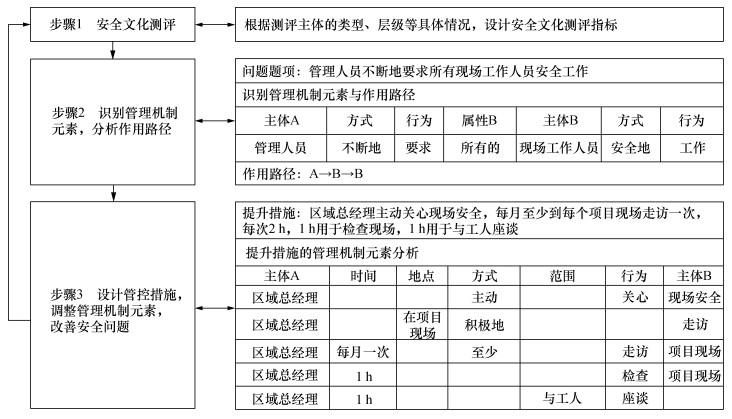
上述案例中应用的建筑业安全文化提升策略以现有的测评指标体系为分析基础,以本文构建的安全文化管理机制模型及作用路径为分析工具,通过对实践中出现问题的测评指标进行元素识别和路径分析,有目标地进行调节,将管理机制元素的状态朝着安全管理的特定目标方向优化,最终实现提升建筑业安全文化的目标。该安全文化提升策略可以形成一个完整的闭环,在管理实践中循环应用。
6 结论
安全文化的高度抽象的特点是安全管理实践中的关键制约因素。为此,本文基于管理机制设计理论和语义分析方法,对建筑业安全文化测评指标中的管理机制元素进行了结构化的解析和提取,通过深入分析管理机制元素间的作用方式,发现安全文化测评指标可以由管理机制元模型及其拓展模型对其蕴含的主体、行为、方式、属性、时间、地点、范围和原因8种机制元素及其作用关系进行结构化表征。8种机制元素不仅涉及多样化的管理实践内涵,并且可进行针对性地调整以形成安全文化提升措施。此外,本文提出了基于管理机制的建筑业安全文化的提升策略,在原有以测评为导向的安全文化提升方式基础上,从理论上丰富了安全文化的管理机制内涵与特征,从实践上为建筑业从业人员开展安全文化管理提供了思路和依据。
本研究仍存在一些不足和局限性。在研究数据来源方面,本研究主要采用了建筑业安全文化研究文献中的测评指标,虽然数据本身具有可靠来源,但由于文献发表时间普遍偏早,难免会影响管理机制元素提取和分析的前瞻性和时效性。在研究视角方面,由于侧重于理论研究中的测评指标,可提取的管理机制元素内涵较为有限,尚未对工程实践中的安全管理资料,如安全手册、安全规程、安全生产政策文件等开展深入分析。因此,后续研究可以从实践的角度出发,拓展安全文化相关数据的来源,以此丰富建筑业安全文化管理机制元素的内涵,使研究结果能更好地契合安全管理实践。


