

然而,合闸电阻装置具有较为复杂的机械结构,且故障率较高,是诱发电力系统故障的一个重要原因。在带合闸电阻的高压断路器的合闸过程中,辅助触头弹跳就是引发电力系统故障的一个原因,辅助触头弹跳导致主断口被击穿,使合闸电阻失效,未受抑制的操作过电压会威胁设备绝缘。
本文基于气体绝缘开关设备(gas insulated switchgear,GIS)的宽频带电压测量,提出一种高压断路器合闸电阻装置辅助触头弹跳的在线检测和诊断方法,通过测量和解析高压断路器合闸过程的高清暂态电压波形,提取辅助触头弹跳熄弧时间间隔作为特征参数,实现对辅助触头弹跳的状态评估。
1 GIS断路器合闸电阻工作原理
在超特高压变电站,投切空载气体绝缘输电线路(gas insulated line, GIL)的断路器合闸电阻为400~600 Ω,投切换流变的断路器合闸电阻较大,约为1 500 Ω。合闸电阻大多采用碳化硅电阻片或金属无感电阻,合闸电阻的提前接入时间为7~12 ms。
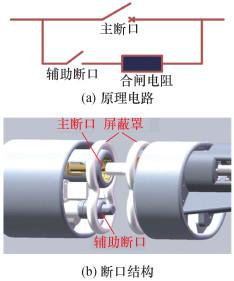
辅助断口的静触头侧有复位弹簧。合闸操作时,动触头以较高速度与静触头接触,复位弹簧被压缩,动触头在机构带动下抵着静触头向静触头侧运动,被压缩的弹簧对静触头产生一个向动触头方向的力。当动触头运动到位后,在复位弹簧的作用下,对接式的辅助断口触头可能出现弹跳,辅助断口在机械上再次断开。
本文以单断口带并联式合闸电阻的断路器为对象,分析断路器合闸过程出现辅助触头弹跳的情况。整个合闸过程如图 2所示,大致分为5个阶段。
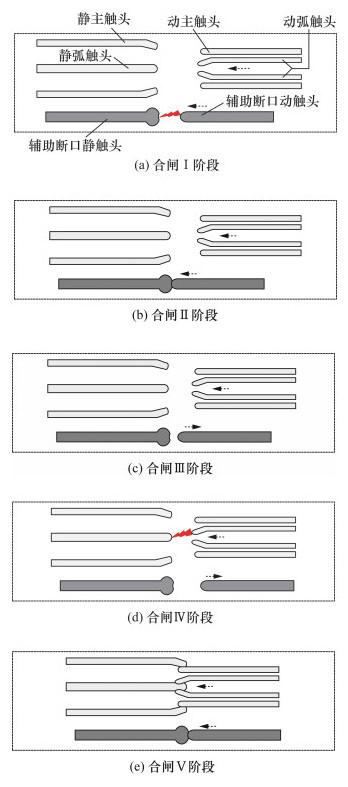
第1阶段:在断路器合闸指令下,主断口和辅助断口的动触头同时向静触头侧运动,主断口和辅助断口承受相同的电压差。由于辅助断口间距较小,辅助断口的动静触头间先于主断口发生电弧击穿现象,此时主断口两侧的电压为合闸电阻两端的电压,幅值较小,不足以导致主断口被击穿。
第2阶段:辅助断口的动触头以较高速度与静触头接触,静触头侧的复位弹簧被压缩,产生一个向动触头方向的力。辅助断口的动静触头实现有效机械接触,主断口的动静触头间距进一步减小。
第3阶段:动触头运动到位后,在复位弹簧的作用下,对接式辅助断口的动触头发生弹跳,之后向反方向运动,辅助断口的动静触头发生机械分离,辅助断口的动静触头间将再次出现电弧。当弹跳使辅助断口的触头间距较大时,电弧熄灭,断路器GIL侧保留残压。此时,主断口两侧的电压将发生较大变化,但主断口的动静触头由于触头间距较大,动静触头间未发生电弧击穿现象。
第4阶段:主断口的动静触头间距逐渐减小,主断口两侧的电压逐渐增大,当电压达到临界点时,主断口被击穿。之后,主断口间的电弧可能出现熄灭和复燃,由于触头间距越来越小,电弧复燃时,主断口两侧的电压降低。由于电弧击穿现象发生在主断口间,合闸电阻无法发挥抑制作用,因此电弧击穿所产生的暂态电压将含有较多的高频振荡分量。
第5阶段:主断口的动静触头完全接触,同时辅助断口的动静触头在发生弹跳后也逐渐恢复有效机械接触,该阶段不再发生电弧击穿现象,断路器完成合闸操作。
由上述分析可知,辅助触头弹跳可能引起辅助断口间发生电弧复燃,加剧动静触头烧蚀[22],同时可能导致主断口在弹跳期间被击穿,合闸电阻失去抑制作用,出现较大的暂态电压和电流,威胁设备绝缘。
2 GIS暂态电压在线监测
由于合闸电阻的存在,辅助断口和主断口被击穿所产生的暂态电压存在差异。为此,本文提出了基于电容分压传感技术的GIS暂态电压宽频带监测方法,基于合闸过程中的暂态电压传感实现断路器合闸过程中辅助触头弹跳状态的实时监测。
2.1 宽频带电压测量系统
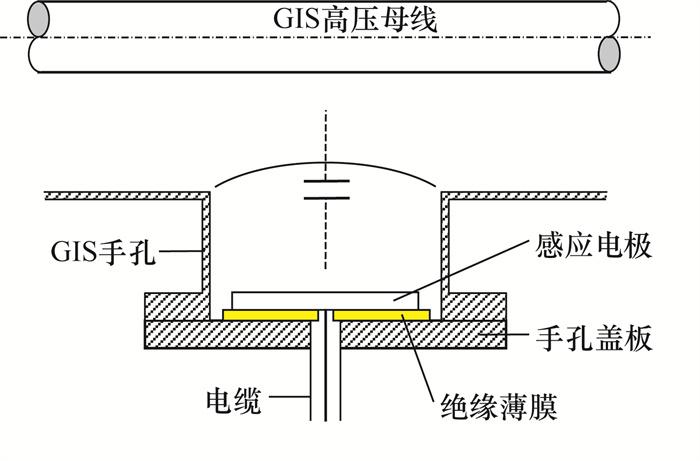
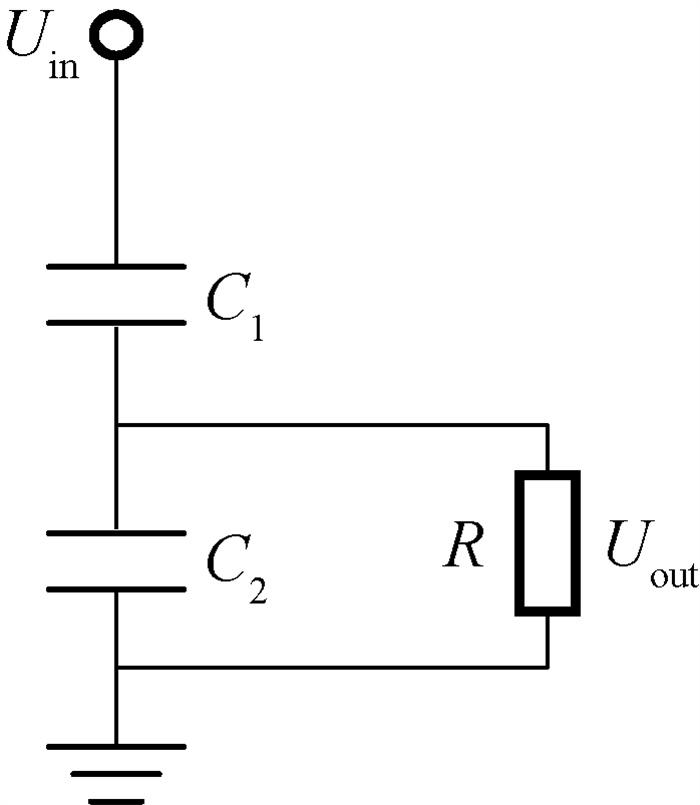
一方面,阻抗变化单元的高输入阻抗能显著提高低压臂电路的时间常数,从而拓展测量系统的低频特性,低频截止频率可低至几赫兹。另一方面,阻抗变换单元较低的输出阻抗能实现理想的测量电缆和采集单元输入端口之间的阻抗匹配,从而拓展测量系统的高频特性,高频截止频率可达上百兆赫兹[22]。
利用标准测量系统对基于电容分压原理的宽频带电压传感器的频响带宽进行标定。结果显示:该电压传感器的有效测量带宽为10 Hz~100 MHz。
2.2 暂态电压监测系统
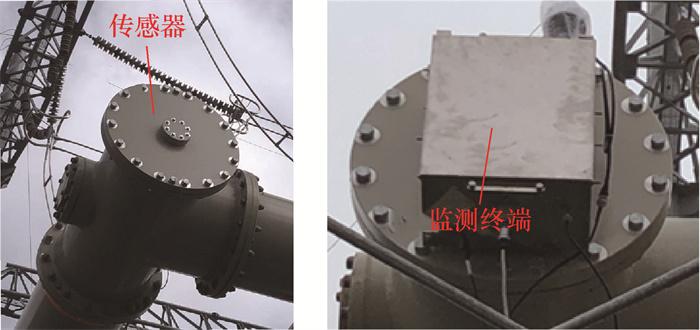
本文建立的GIS宽频带暂态电压在线监测系统主要包括电压传感器、阻抗变换单元、监测终端和控制单元。监测终端包含高速采样单元,采样率为250 MS/s,模拟带宽为100 MHz,存储深度为2 GB。所有单元均放置于金属屏蔽箱内,通过特种隔离变压器进行供电以抑制外部干扰侵入监测终端,避免影响信号采集。传感器和暂态电压监测终端的现场安装位置如图 5所示,监测终端固定在传感器外部的法兰上。
监测终端通过光纤与光交换机连接,光交换机通过网线连接至控制单元。控制单元可灵活配置监测终端的采样率、存储长度和触发模式等参数,可进行检测数据的自动存储和分析。
3 GIS断路器合闸暂态电压波形解析
在某特高压换流站500 kV GIS上安装宽频带暂态电压在线监测系统,本文对变电站调试过程中断路器操作的暂态电压进行了测量。图 6为GIS内部暂态电压在线监测系统布置,系统调试内容包括:1) 断路器5062断开,断路器5063关合空载GIL于Ⅱ母,GIL长度为360 m;2) 断路器5063断开,断路器5061合闸,断路器5062关合空载GIL于Ⅰ母。宽频带暂态电压监测点位于GIL终端。
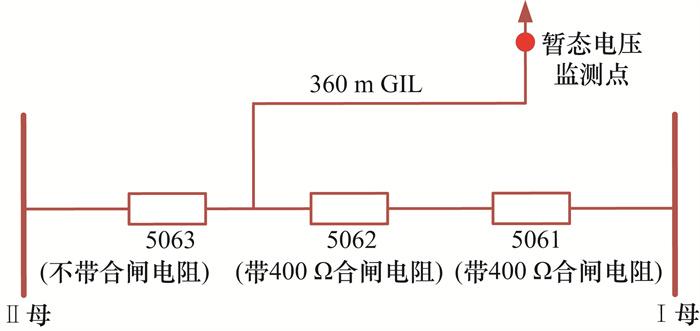
断路器5063不带合闸电阻,断路器5062带有400 Ω的合闸电阻,当2台断路器分别对空载GIL充电时,合闸暂态电压存在差异。本文将分别对2台断路器合闸过程暂态电压进行波形解析,并分析合闸过程中辅助触头弹跳状态。
3.1 不带合闸电阻的断路器合闸暂态电压
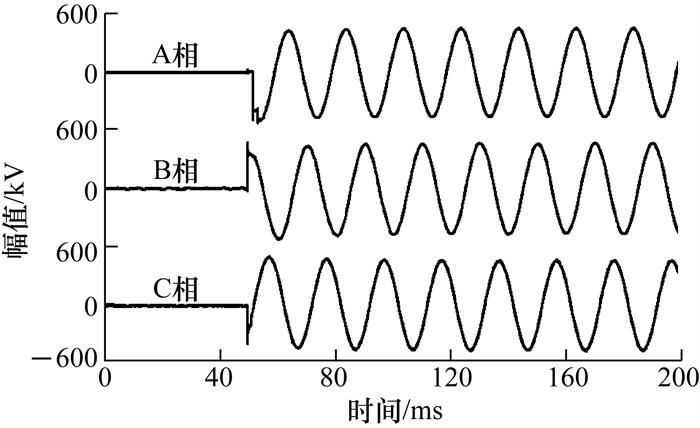
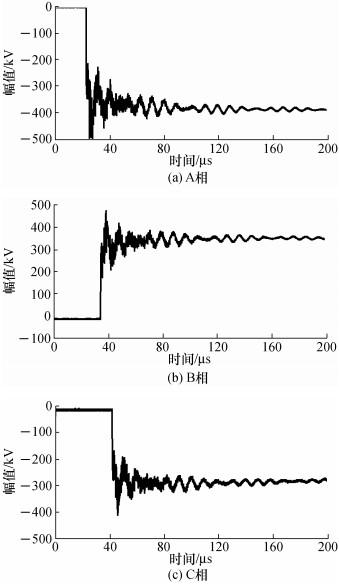
通过断路器5063对空载GIL进行充电时,断路器5063合闸激发的暂态电压整体波形如图 7所示。断路器5063合闸初期GIL侧电压波形如图 8所示,图中a、c、e表示触头间电弧击穿时刻,b、d表示触头间电弧熄灭时刻。合闸过程中,主断口的动静触头间首次发生电弧击穿(图 8a中a时刻)后,GIL侧电压与电源侧一致,呈工频变化。GIL侧电容负载小,流过主断口的容性电流小,在主断口的动静触头间距较大时,电弧熄灭(图中b时刻)。电弧熄灭之后,GIL侧将保留直流残压,并叠加较小幅值的工频感应电压。随后,主断口的动静触头间距进一步减小,主断口两侧的电压增大,动静触头间将再次被击穿。以此重复,直至断路器合闸完成,之后断路器两侧电压均呈工频变化。
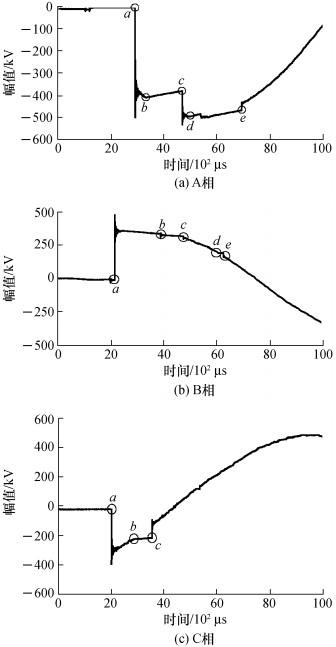
由图 8可知,在断路器5063合闸过程中,A相发生3次电弧击穿,2次电弧熄灭;B相发生3次电弧击穿,2次电弧熄灭;C相发生2次电弧击穿,1次电弧熄灭。
3.2 带400Ω合闸电阻的断路器合闸暂态电压
通过断路器5062对空载GIL进行充电时,该断路器合闸初期GIL侧的电压波形如图 10所示。图 10中a、c、e、g和i等表示触头间电弧击穿时刻,b、d、f和h等表示触头间电弧熄灭时刻。在断路器5062合闸过程中,辅助断口的动静触头间首先被击穿,GIL侧电压与电源侧一致,呈工频变化。同时由于GIL侧电容负载小,流过辅助断口的容性电流小,辅助断口间的电弧熄灭。随后,辅助断口的动静触头间距减小、辅助断口间电压增大,辅助断口的动静触头间再次被击穿。以此重复,直至辅助断口完全关合。在约10 ms后,主断口的动静触头也将实现有效机械接触。合闸过程中,辅助触头如果能稳定接触,主触头的动静触头间就不会发生电弧击穿。
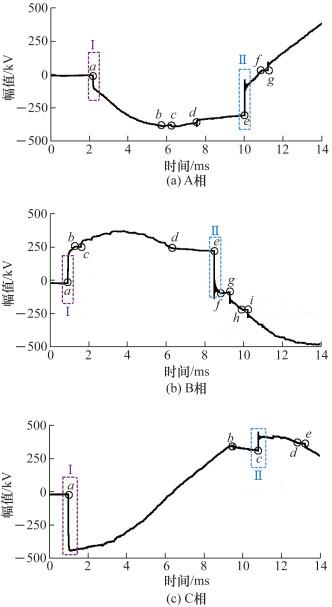
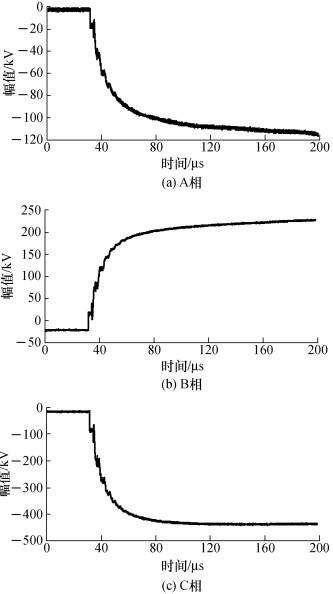
断路器5062合闸过程中首先出现的是Ⅰ类暂态电压,其波形如图 11所示。该类暂态电压不包含明显的高频振荡分量,由辅助断口的动静触头间被击穿引起。辅助断口串联了400 Ω的合闸电阻,极大抑制了电弧击穿所产生的高频振荡分量。
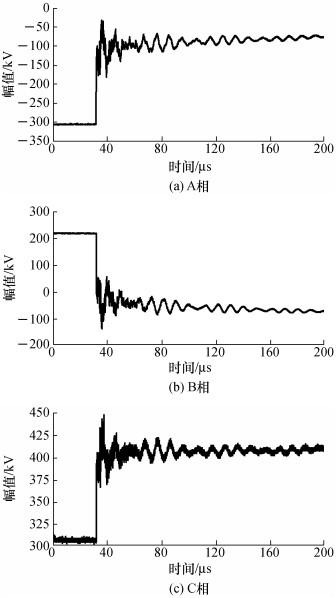
Ⅱ类暂态电压出现在辅助断口的动静触头间首次被击穿后数毫秒,A相约7.8 ms,B相约7.5 ms,C相约9.8 ms。Ⅱ类暂态电压波形如图 12所示。由图 12可知,A、B、C三相中的Ⅱ类暂态电压均包含明显的高频振荡分量,与断路器5063合闸时主断口的动静触头间被击穿所激发的暂态电压特征相似,由此推断A、B、C三相中的Ⅱ类暂态电压由断路器5062主断口的动静触头间被击穿产生。在带合闸电阻的断路器合闸过程中,断路器主断口的动静触头间发生电弧击穿,说明在合闸电阻投入过程中出现辅助触头弹跳,且辅助触头弹跳距离较大,导致合闸电阻失去作用。因此,通过检测断路器合闸过程中的暂态电压,分析Ⅱ类暂态电压出现的时刻,可实现对合闸电阻辅助触头弹跳状态的有效监测和诊断。
4 基于暂态电压的辅助触头弹跳
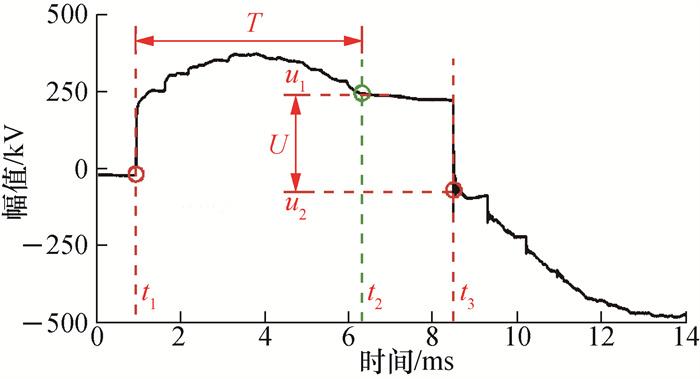
图 13为带并联式合闸电阻的断路器合闸特征参数。通过对带合闸电阻的断路器合闸过程(见图 2)和合闸暂态电压(见图 10)的分析,本文提取了图 13中合闸暂态电压的特征时刻和特征参数。由图 13可知,t1时刻辅助断口的动静触头间发生第1次电弧击穿,此时断路器处于图 2中合闸Ⅰ阶段。t2时刻断路器GIL侧电压近似线性变化,此时辅助断口的动静触头分离且电弧熄灭,随后发生的下一次电弧击穿出现了Ⅱ类暂态电压,表明t2时刻辅助断口的动静触头处于弹跳状态,断路器处于图 2中合闸Ⅲ阶段。t3时刻出现Ⅱ类暂态电压,表明此时断路器主断口的动静触头间发生电弧击穿,产生高频振荡分量丰富的暂态电压,断路器处于图 2中合闸Ⅳ阶段。
根据带并联式合闸电阻的断路器典型合闸暂态电压,辅助触头弹跳熄弧时间间隔可表示为
其中:T为合闸过程中从辅助断口首次被击穿至辅助触头弹跳后触头间电弧熄灭之间的时间间隔,即辅助触头弹跳熄弧时间间隔。
进一步,定义主断口击穿电压:
其中:u1为t2时刻断路器辅助断口弹跳后触头间电弧熄灭时的电源侧电压,即GIL侧的残压;u2为t3时刻断路器主断口发生电弧击穿时电源侧的电压。
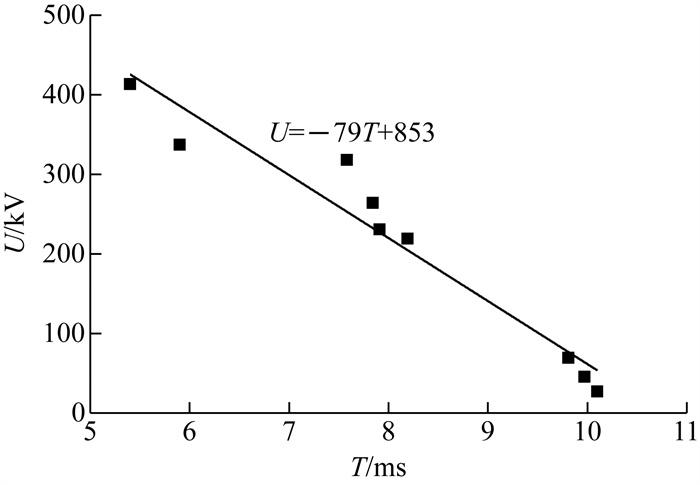
拟合结果表明:当辅助触头弹跳熄弧时间间隔接近11 ms时,主断口击穿电压接近0 kV。换言之,辅助触头在辅助断口首次出现电弧击穿后11 ms发生弹跳,此时主断口击穿电压接近0 kV,表明主断口已关合,主触头发生有效机械接触,这与该断路器的设计基本一致。从拟合结果来看,辅助触头弹跳熄弧时间间隔越小,主断口击穿电压越大,这表示主断口的动静触头间距越大,发生电弧击穿时产生的暂态电压越大,对设备绝缘危害越大。极端情况下的主断口击穿电压约853 kV,接近于发生峰峰值击穿,此时产生的暂态电压幅值大、高频振荡分量较大、持续时间长,对设备绝缘将构成严重威胁。
通过以上分析可知,带合闸电阻断路器辅助触头发生弹跳,将导致主触头间被击穿,并产生高频振荡分量丰富的暂态电压,从而威胁设备绝缘。因此,带合闸电阻的断路器操作机构从机械设计和装配工艺上应当尽量避免发生辅助触头弹跳。弹跳不可避免时,应当使辅助触头弹跳熄弧时间间隔较大,避免辅助触头弹跳后主断口被击穿时产生过高的暂态电压。在GIS运行过程中,断路器经过多次开合后,辅助触头机械特性可能发生变化,触头弹跳情况未知。如前所述,最坏情况下辅助触头弹跳可能导致主断口击穿电压接近于发生峰峰值击穿,产生幅值较高的暂态电压。而通过对断路器合闸过程中的暂态电压开展实时监测,准确提取辅助触头弹跳熄弧时间间隔和主断口击穿电压作为特征参数,同时利用三相横向对比,可实现断路器辅助触头弹跳状态的有效监测和评估,为该类设备的设计和运维提供参考。
5 结论
本文利用基于电容分压的电压传感技术实现了GIS内部暂态电压宽频带监测,提出了基于GIS内暂态电压检测的断路器辅助触头状态检测评估方法,主要结论如下:
1) 不带合闸电阻的断路器在对空载GIL充电时,触头间将出现电弧熄灭和复燃现象,产生包含丰富高频振荡分量的暂态电压。
2) 带合闸电阻的断路器在对空载GIL充电时,辅助断口被击穿时产生的暂态电压中的高频振荡分量被抑制,而辅助触头发生弹跳将导致主断口被击穿,激发高频振荡分量丰富的暂态电压。
3) 通过对断路器合闸暂态电压开展实时监测,解析合闸过程暂态电压,分析辅助触头的弹跳和主触头间的击穿电压等情况,可为此类断路器的设计和现场监测提供参考。


