


制动过程中,基础制动通过制动闸片压紧制动盘产生摩擦力,并通过轮对传递至轮/轨界面形成制动力,从而实现列车安全减速或停车[6]。在这一过程中,制动摩擦副(制动盘和制动闸片)不仅要承受巨大的机械负荷,还面临高温下的多种物理化学变化如材料磨损、热变形、热衰退和表面氧化等,直接影响制动性能和服役寿命。此外,界面摩擦力所诱发的自激振动,会影响列车运行的稳定性和关键零部件的服役行为,伴随的尖叫噪声影响乘坐舒适性[7-9]。更为复杂的是,长大坡道工况下,制动盘/片间的摩擦自激振动与轮/轨接触的非线性激扰耦合作用,导致制动盘/片磨损、振动和疲劳损伤行为显著加剧,进而加速制动性能退化,严重危及制动安全[10-12]。因此,揭示长大坡道下列车制动性能退化机理,需要综合摩擦学、动力学和疲劳失效等方面的知识进行系统深入研究。现有研究多集中于常规工况下制动摩擦副的摩擦学和动力学行为,针对长大坡道工况下制动摩擦副磨损演化、热-机-磨损耦合效应及动力学响应的研究鲜见报道。
本文总结了长大坡道工况下高速列车制动系统在摩擦学和动力学领域的研究进展,重点阐述了在试验研究、有限元仿真与动力学建模等方面的最新成果,归纳了各类方法揭示的关键现象与规律,并讨论了当前研究中存在的共性问题及未来发展方向。本文旨在为深入理解长大坡道工况下制动系统的性能演变规律及其影响机理提供理论支撑,归纳该领域的前沿研究方向、关键技术手段及创新研究思路,为优化制动系统的设计、提升其性能与可靠性奠定理论基础,为高速列车在复杂工况下的安全稳定运行提供有力支持。
1 长大坡道工况影响列车制动性能的试验研究
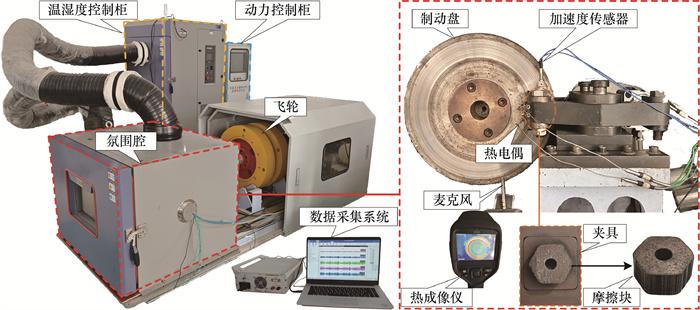
为分析长大坡道工况下高速列车制动系统的摩擦学和动力学行为,构建了图 1的高速列车制动性能模拟试验台,以模拟不同环境温度与工况条件下的制动过程[13]。试验台由温湿度控制柜、动力控制柜、氛围腔、动力系统和制动系统等组成。其中,制动系统包含制动盘、摩擦块、摩擦块夹具、夹钳和制动气缸,制动盘材料为中国高速列车制动盘常用的锻钢,摩擦块材料则为铜基粉末冶金。在制动过程中,夹钳紧压摩擦块使其与制动盘贴合,盘块摩擦作用将运行中的动能转化为热能,从而实现制动。该试验台可实现-40~80 ℃的温度控制、0~320 km/h的速度控制和0~2 000 N的制动力控制,能够模拟多种工况(如高中低速、低温冰雪环境等)和制动模式(如拖曳制动、停车制动等)。此外,试验台配备振动、温度、声压和摩擦力传感器,可实时监测制动过程中的摩擦振动噪声、界面接触行为及磨损演变特性等。
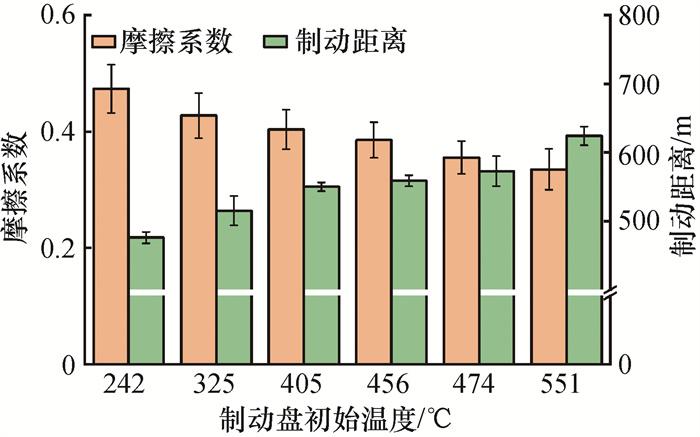
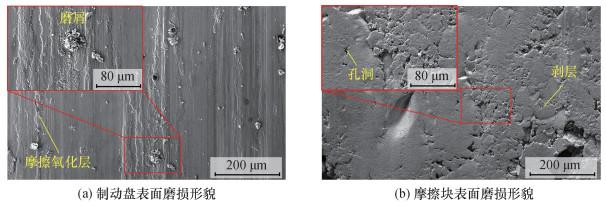
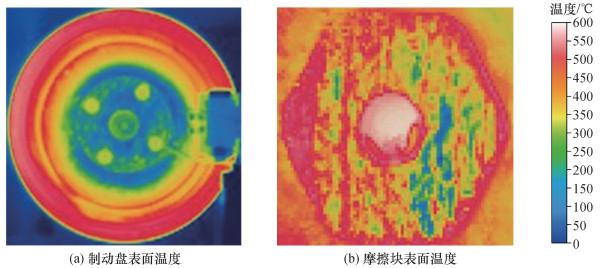
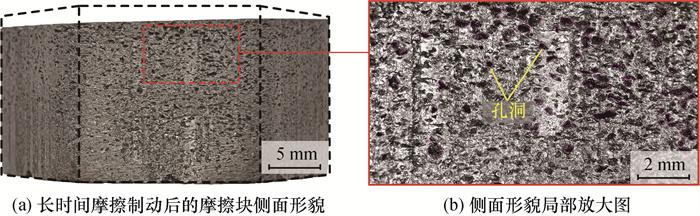
一方面,持续的高温加速制动摩擦副的磨损和性能退化,导致热疲劳、热裂纹,甚至是严重的结构破坏[15-17]。长时间制动过程中,摩擦副表面逐渐形成较厚且连续的摩擦层(见图 3),表面趋于平整,犁沟数量减小,接触状态发生显著变化,磨损机制主要为高温磨损[18]。此时,摩擦副表面出现明显的热积累和温度梯度(见图 4),导致热应力和残余应力的集中积累[19]。当局部应力超过材料屈服强度时,会形成裂纹源。此外,在高温环境下,摩擦块靠近摩擦面的侧壁出现了不规则孔洞(见图 5),这可能由于摩擦块中石墨成分发生了碳化反应[20-21],生成了CO2或CO气体,导致C相结构消耗。随着温度进一步升高,碳化反应加剧,孔洞数量和尺寸不断增加,严重影响摩擦块的结构完整性。
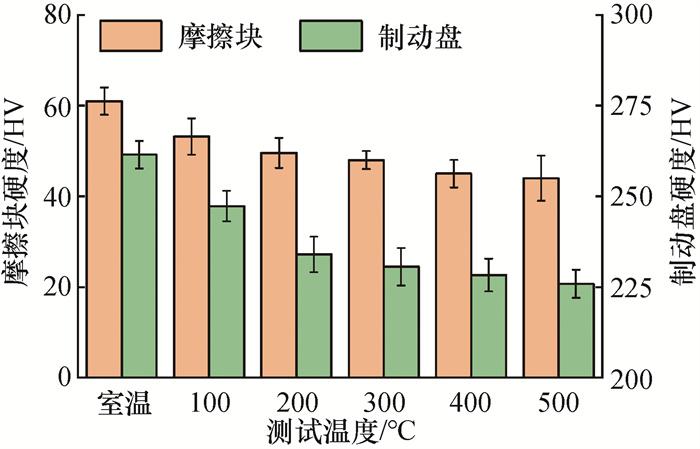
总的来说,相比普通线路,长大坡道下制动系统受高负荷与热-机耦合效应的影响显著,摩擦学行为更为复杂,制动性能显著退化,严重威胁列车的安全运行。
2 长大坡道下制动摩擦副热-机-磨损全耦合模型有限元仿真
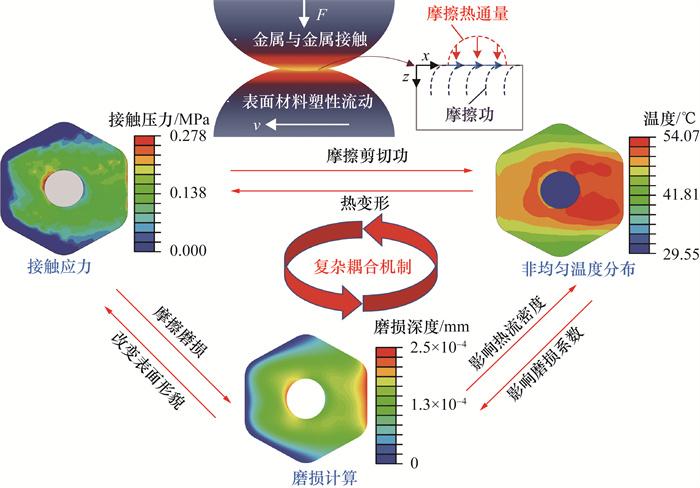
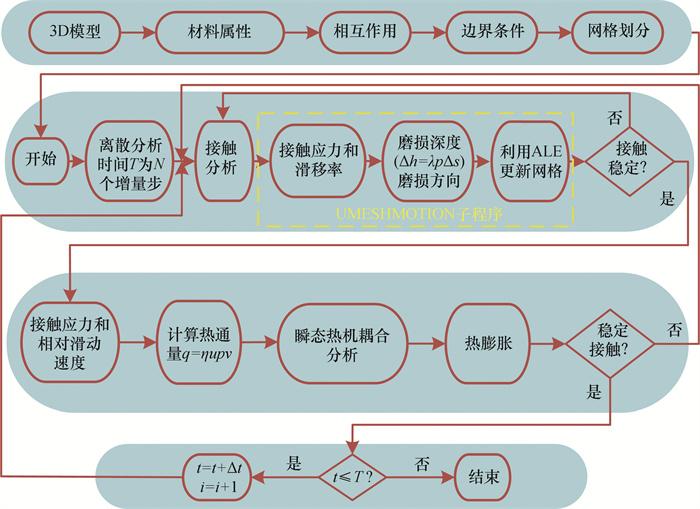
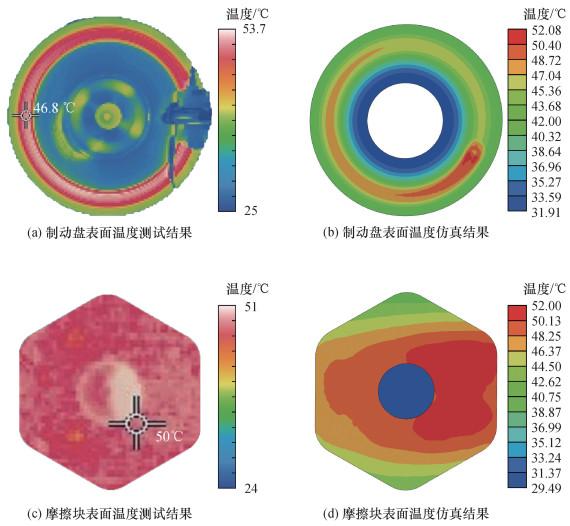
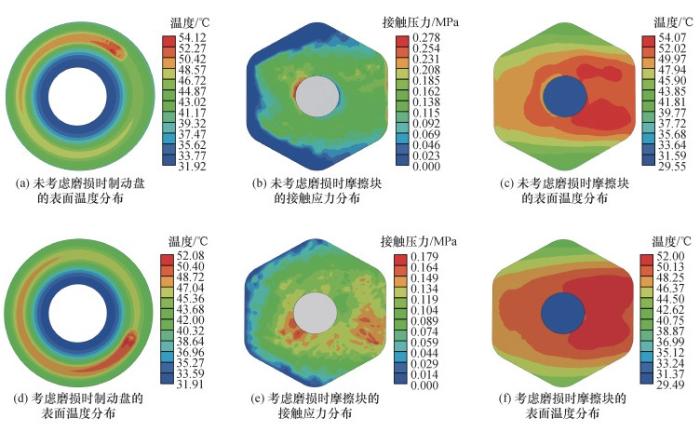
此外,图 11中,摩擦力的拖曳作用使摩擦块与制动盘表面在宏观上形成倾斜角,致使切入端承受较高接触应力而产生显著磨损,而切出端则因接触应力较低而磨损较轻。同时,热膨胀效应使制动盘的高温热尾凸出,并挤压摩擦块表面,形成表面凹陷,使实际接触面积进一步扩展至后缘部分。这一现象不仅揭示了摩擦块磨损分布的形成机理,也表明热变形对界面接触行为的显著影响。
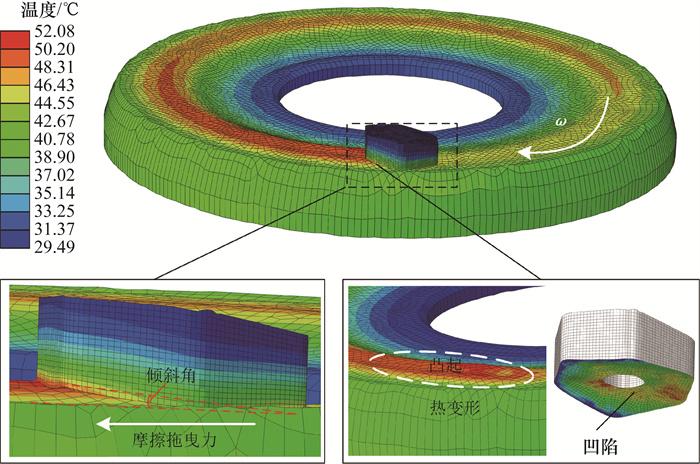
尽管全耦合仿真方法在揭示长大坡道工况下制动系统热-机-磨损相互作用方面具有显著优势,但其结果的准确性依赖于参数的精确设置,且计算复杂性和较长的计算时间可能限制实际应用。通过严格的参数设置与试验数据对比,当前模型的可靠性已得到验证[17]。未来研究可进一步优化模型计算效率,同时结合动态参数校正方法,以实现更高效、更精准的仿真,推动其在复杂工况下的实际应用。
3 考虑界面接触行为的集总参数模型
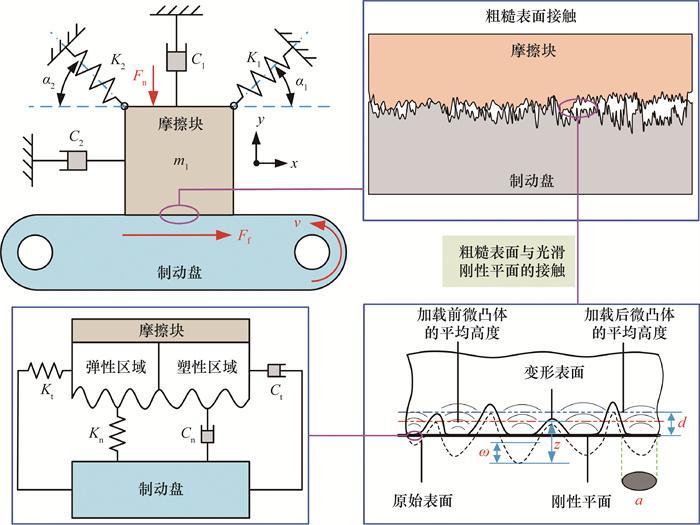
为准确描述界面接触特性,采用基于分形理论的Weierstrass-Mandelbrot(W-M)函数来表示结合面的随机粗糙特征[35-36]。当2个粗糙表面接触时,可简化为粗糙表面与刚性光滑表面的接触。粗糙表面的微凸体高度随机分布,每个微凸体所受到的法向力为高度的函数,因此每个微凸体所受到的载荷不同,表现出的变形状态也不尽相同。高度或接触面积较小的微凸体因受力较小,更容易发生滑动[37]。根据微凸体的变形程度,可将其与刚性平面的接触分为弹性接触和塑性接触。在接触载荷较小时,微凸体变形量小而处于弹性变形状态;随着接触载荷的增大,微凸体的变形量逐渐增大,达到临界变形量后开始转变为塑性变形[36]。这一变形过程中,微凸体通过存储或耗散能量而分别表现为刚度或阻尼特性[38]。
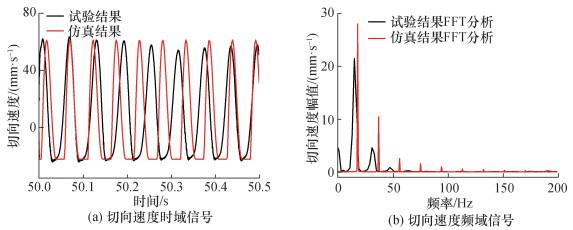
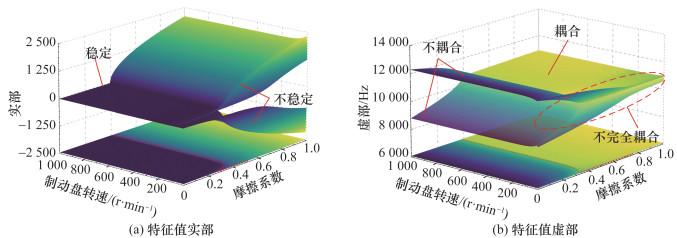
Zhang等[34]对比了数值仿真与试验结果的切向速度变化趋势和数值大小(见图 13),验证了所建立的考虑界面接触行为的制动摩擦副集总参数模型在模拟界面接触行为和动态响应方面的有效性和可靠性。然后,进一步分析摩擦参数、接触参数等对系统稳定性的影响,揭示了摩擦振动的产生机理。图 14中,在高速列车摩擦制动过程中,摩擦振动特性随着转速的降低经历多种机理共同作用。在制动盘转速较高时,制动系统的摩擦振动响应在结构、制动压力及转速的作用下出现模态耦合,表现为高频的摩擦振动及噪声;随着转速的降低,系统出现不完全耦合现象[43-44],主要与摩擦力-相对速度间的负斜率特性有关,表现为低频的黏滑振动[45-47]。
4 考虑轮/轨黏着特性的制动系统动力学模型
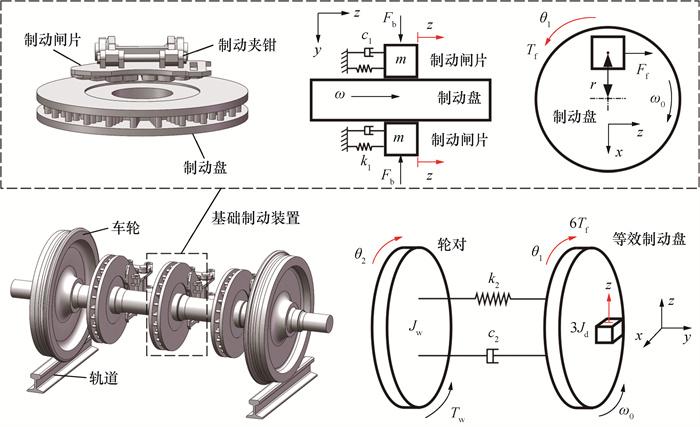
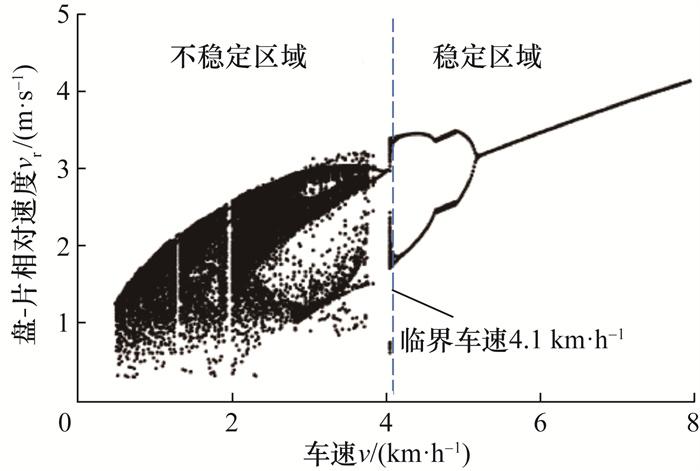
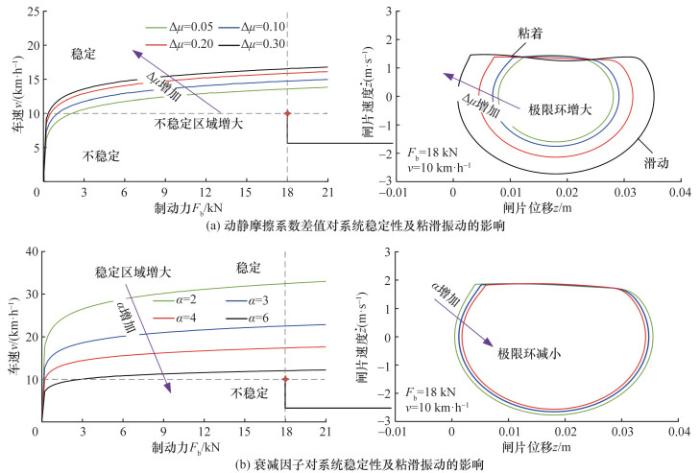
此外,制动盘/片界面摩擦参数对制动系统稳定性也具有显著影响。低速时,较大的动静摩擦系数差值会导致制动系统黏滑振动增大,而增大衰减因子α时,动静摩擦系数之间的过渡更为平缓,从而扩大系统的稳定区域并减弱黏滑振动(见图 17)。因此,通过降低制动力、减小动静摩擦系数差值和增加衰减因子,可有效削弱低速时的摩擦力-相对速度负斜率特性,从而提高制动系统的稳定性。
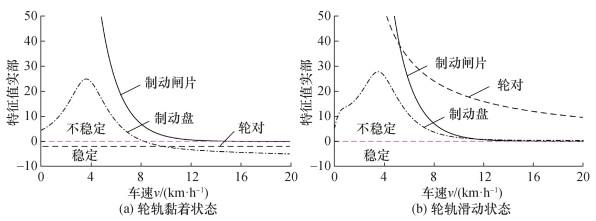
在轮/轨黏着状态下,摩擦力与相对速度的负斜率特性会导致盘/片的不稳定振动;而在轮/轨滑动状态下,黏着系数与滑移率之间的负斜率特性同样导致轮对的不稳定运动(见图 18)。因此,低速制动时,由于制动界面摩擦力-相对速度负斜率和轮/轨界面黏着系数-滑移率负斜率共同作用,加剧了制动-轮轨间的耦合作用,显著降低制动系统稳定性。
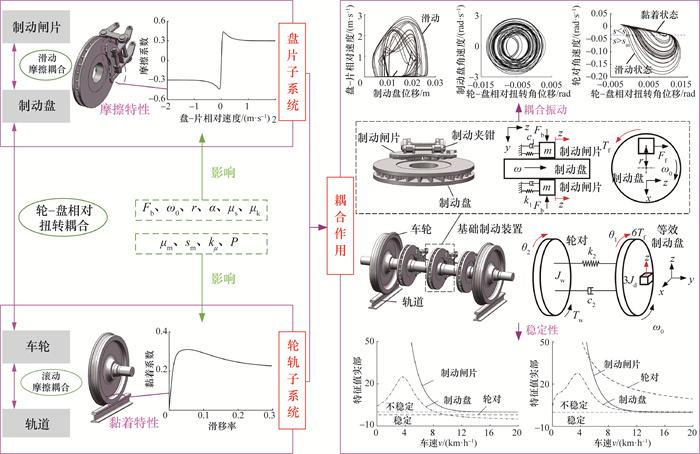
在此基础上,讨论制动-轮轨耦合振动机理(见图 19)。制动系统的振动特性不仅由制动闸片与制动盘之间的滑动摩擦决定,还受到车轮与轨道之间滚动摩擦的影响,这两者通过轮对与制动盘的相对扭转实现动态耦合。在低速制动时,盘/片摩擦力与相对速度之间的负斜率特性导致负等效阻尼效应,加之轮/轨黏着系数与滑移率之间存在负斜率特性,阻尼力对系统做正功并持续向系统输入能量,从而导致制动系统的不稳定。
所建立的考虑轮/轨黏着特性的制动系统动力学模型,为揭示制动盘/片子系统与轮/轨子系统之间的耦合作用机理提供了重要支撑,并有效反映了关键参数对振动行为的影响。然而,为进一步提高模型对复杂工况下振动响应的精确表征能力,未来研究可在现有框架基础上,纳入制动盘、车轴及轮对等部件的柔性变形特性,以更全面反映制动系统的动态性能。
5 结论
本文总结并阐述了长大坡道工况下高速列车制动系统摩擦学和动力学行为的研究进展,包含试验研究、有限元仿真与动力学建模等方面主要成果。试验研究揭示了长大坡道工况下制动摩擦副的磨损演化规律,发现摩擦副在长时间制动过程中磨损加剧,且摩擦系数降低,进而导致制动性能显著退化。制动摩擦副热-机-磨损全耦合模型有限元仿真表明,温度与应力之间的复杂耦合关系直接影响磨损行为,温度升高导致热变形,进而影响接触状态及磨损行为。所建立的考虑界面接触行为的集总参数模型表明在高速状态下,制动系统在结构、制动压力及转速的作用下出现模态耦合,表现为高频摩擦振动及噪声;而在低速状态下,系统出现不完全耦合,表现为低频的黏滑振动。此外,所建立的考虑轮/轨黏着特性的制动系统动力学模型表明,轮/轨之间的黏着特性对制动系统的振动行为有显著影响,尤其在低速和高制动力条件下,黏着系数的变化会导致系统的动态稳定性降低。这些研究结果为深入理解长大坡道工况下的制动性能提供了理论支持,进而为优化制动系统设计和提高安全性奠定了基础。
尽管现有研究在制动系统摩擦学和动力学行为的探索上取得了重要进展,然而,在某些特殊线路条件下,长大坡道与低温冰雪、低压缺氧等复杂环境因素的叠加作用会使列车制动盘/片的摩擦行为和损伤失效机理变得更加复杂。因此,未来的研究应进一步探索多种环境条件下摩擦特性对制动性能的影响,以构建更完善的理论基础来优化制动系统。此外,需要进一步优化多场耦合仿真模型,以提升对制动系统在极端工况下性能变化的预测能力。同时,亟须开发高效的智能实时监测系统,对制动性能进行动态评估和实时响应,以便及时识别潜在的故障风险,确保列车在复杂环境中的安全运行。


