

建筑业产生巨大的碳排放量,联合国环境规划署(United Nations Environment Programme,UNEP)在《联合国气候变化框架公约》第二十七次缔约方大会上发布报告[1]指出:“尽管全球建筑行业大力增加对能效的投资,并降低其能源强度,但建筑物与施工建设造成的能源消耗和二氧化碳排放仍然超过新冠肺炎疫情暴发之前的水平,创下历史新高。”该报告还强调:“在2021年,建筑物和建设行业占全球能源需求的34%以上;在与能源消耗和工艺流程相关的二氧化碳排放中,其占比则达到37%。”后续,建筑业的节能减排将成为相关从业人员的重要研究方向和共同目标。
对于中国而言, 建筑业是经济的主导产业,对促进经济发展至关重要。同时,建筑全生命周期碳排放量也占碳排放总量的一半以上,是碳排放的重要来源。随着双碳目标的提出,建筑业面临较大的节能减排压力,迫切需要切实的手段和工具来降低碳排放量[2]。
基于此,本文采用文献计量学研究方法统计BIM技术应用于建筑全生命周期碳排放控制的相关文献,获取关键词和研究领域,分析BIM在建筑全生命周期的减碳技术结论。
1 研究方法
1.1 文献计量学
文献数据检索的全面性和相关性,是一篇文献综述的关键所在。而文献计量学是一种系统统计和分析文献数据的方法,旨在可视化展示一个学科领域的知识结构。该方法通过大量可视化处理和分析文献数据,以知识网络的形式建立文献研究主题之间的联系,传统通过人工大量阅读文献进行综述的方法无法达到这一目标。在文献计量学中,通过分析文献数据的作者、关键词或期刊的合作与共现网络来可视化呈现主要的研究领域及其关系。
本文应用基于可视化的文献计量学软件VOSviewer和Bibliometrix,通过分析文献数据的作者合作网络、关键词共现网络和聚类分析等进行知识图谱构建和分析,进而探索和可视化呈现领域知识结构,具体工作流程如图 1所示。首先,使用VOSviewer生成关键词共现网络和聚类图,在此基础上确定研究的重点领域;然后,在R环境中建立Bibliometrix软件包分析和映射文献数据(使用Bibliometrix软件进行文献计量学分析),并生成关键词主题随时间的演变过程。
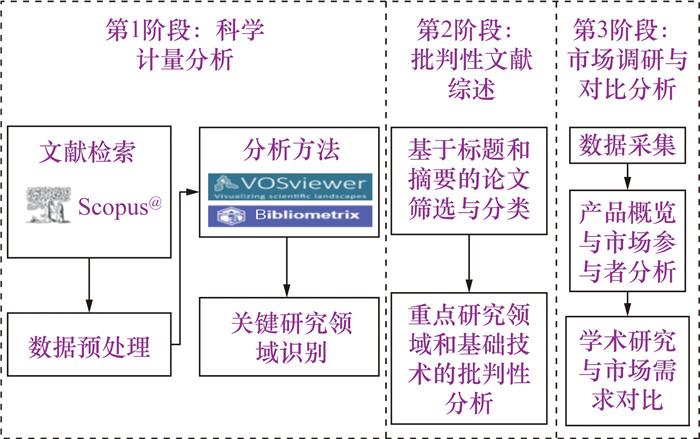
在数据库方面,本文检索和分析了Web of Science、Scopus和PubMed等学术领域常见数据库(3种数据库中BIM全生命周期碳排放相关文献分别为436、754和39篇),比较了不同数据库文献数据运行结果,并选择Scopus作为主要文献数据来源,原因是Scopus的数据相关性涵盖了其他数据库的结果。
具体检索流程如下:检索字段设置为标题、摘要和关键词;检索时间设置为所有年份,采用高级检索模式TS=(“building information modeling” OR “building information model” OR “building information modelling” OR “architectural information model” OR “building information mode” OR “building information” OR “building infor” OR “information model of buildings” OR “BIM”) AND TS=(“carbon emission” OR “carbon emissions” OR “carbon dioxide emissions” OR “carbon dioxide emission” OR “CO2 emission” OR “CO2 emissions” OR “carbon” OR “carbon discharge”)。依次对数据进行筛选和去重,排除不相关的文献数据。筛选后的数据分别以CSV(VOSviewer软件可识别的格式)和BibTeX(Bibliometrix软件可识别的格式)2种格式保存。
1.2 文献批判性
在数据筛选第一阶段,根据研究者对目标问题的理解和背景知识进行筛选和评估,确定关键研究领域。同时,对这些关键研究领域进行批判性审查。批判性回顾是研究者全面收集和整理文献数据,并分析和评估其核心思想。这种评价不仅包括对文献内容的分析,也包括对研究如何相互联系和影响的评估,以此为人们深入理解该研究领域提供支撑,便于确定后续的研究方向和重点。
为筛选和评估已有文献,通过文献的标题、摘要和关键词信息初步判断文献与哪些研究领域有关,并将其逐一对应至相关领域。同时,过滤和排除超出研究范围或不适合任何领域的文献,避免这些文献影响研究结果。本文通过批判性审查已有文献,对BIM的全生命周期碳排放控制的发展趋势、热点问题和后续研究方向有了更深入的了解,研究结果可为进一步研究BIM建筑全生命周期减碳应用提供参考。
2 研究对象
由于分析BIM在不同研究领域的分布情况是了解BIM整体研究进展的前提,因此本文对相关文献的研究领域进行了文献计量学分析,并检索了1955—2023年BIM全生命周期碳排放相关文献,共754篇(主要分布在481种期刊或书籍)。前10个文献来源共发表了147篇文献(见表 1),其他607篇文献分布在其他期刊。
表 1 文献来源及篇数统计 |
| 来源 | 篇数 |
| Sustainability (Switzerland) | 32 |
| IOP Conference Series: Earth and Environmental Science | 25 |
| Journal of Cleaner Production | 23 |
| Energy and Buildings | 13 |
| Energies | 12 |
| Buildings | 11 |
| Automation in Construction | 8 |
| IBM Journal of Research and Development | 8 |
| Lecture Notes in Civil Engineering | 8 |
| Advanced Materials Research | 7 |
本文为全面了解BIM全生命周期碳排放的研究领域,将754篇文献数据以RIS格式导入VOSviewer进行文献计量学分析,以研究该领域的关键词共现网络。本文为获得最优的关键词共现网络图,根据科学计量软件特点和多次试验,采取以下操作:1) 在1 992个关键词中设置关键词最小出现次数为5,共有84个关键词进行可视化展示;2) 为简化关键词共现网络布局,将可视化图谱导入网络分析软件Pajek进行进一步编辑,使关键词聚类布局更清晰;3) 关键词共现网络中出现的某些关键词(如“China”“reserch”“simulation”)因不能准确反映研究领域的相关内容,为避免影响聚类准确性,将其排除;4) 将thesaurus_terms.txt文件输入VOSviewer以合并同义词,例如“building information modelling”“building information model-bim”“building information modeling”“building information modeling (bim)”“life cycle assessment (lca)”和“life cycle assessment”等。最终得到84个关键词所生的共现网络,关键词可分为6个聚类,每个聚类中关键词的出现频次如表 2所示。
表 2 各聚类关键词出现频次 |
| 关键词 | 频次 | 关键词 | 频次 | 关键词 | 频次 | ||
| 聚类1(建筑设计) | energy consumption | 9 | energy utilization | 6 | |||
| architectural design | 129 | energy efficiency | 9 | geographic information systems | 6 | ||
| artificial intelligence | 74 | energy performance | 7 | information theory | 5 | ||
| building materials | 42 | energy simulation | 6 | interoperability | 5 | ||
| buildings | 37 | energy use | 6 | modeling | 5 | ||
| carbon | 35 | in-buildings | 5 | sensitivity analysis | 5 | ||
| construction | 27 | numerical model | 5 | three dimensional computer graphics | 5 | ||
| cost benefit analysis | 22 | optimization | 5 | ventilation | 5 | ||
| costs | 15 | performance assessment | 5 | visualization | 5 | ||
| decision making | 14 | retrofitting | 5 | 聚类5(BIM) | |||
| decision support systems | 12 | sustainability | 5 | building construction | 18 | ||
| demolition | 11 | 聚类3(经济社会环境协同发展) | case-studies | 15 | |||
| design | 11 | building energy efficiency | 61 | computer software | 15 | ||
| embodied carbon | 9 | circular economy | 40 | ecodesign | 15 | ||
| information use | 7 | climate change | 24 | energy analysis | 10 | ||
| life cycle assessment | 7 | construction industry | 20 | green building | 10 | ||
| low-carbon buildings | 7 | digital storage | 18 | historic preservation | 9 | ||
| office buildings | 6 | economic and social effects | 16 | housing | 8 | ||
| robotics | 5 | environmental management | 11 | intelligent buildings | 8 | ||
| structural design | 5 | environmental sustainability | 8 | life cycle analysis | 6 | ||
| tall buildings | 5 | gas emissions | 7 | project management | 6 | ||
| 聚类2(低碳高效) | 聚类4(能源效率) | residential building | 6 | ||||
| building | 103 | air conditioning | 177 | sustainable building | 6 | ||
| carbon dioxide emissions | 59 | building information modelling | 56 | sustainable design | 5 | ||
| CO2 emission | 29 | building operations | 50 | zero energy buildings | 5 | ||
| computer aided design | 23 | building performance | 11 | 聚类6(生命周期) | |||
| computer simulation | 22 | computational fluid dynamics | 10 | automation | 36 | ||
| emission control | 14 | cost effectiveness | 8 | building life cycle | 21 | ||
| energy | 14 | energy efficient building | 7 | carbon footprint | 7 | ||
| energy conservation | 11 | energy management | 6 | environmental impact | 5 |
根据文献计量学理论,每个聚类代表BIM全生命周期碳排放研究的某个主要领域,每个聚类的关键词代表其研究主题的主要方向。聚类1中,“architectural design”“building materials”“buildings”和“structural design”表示建筑设计研究领域;“artificial intelligence”和“robotics”表明建筑设计采用大量的人工智能技术;“carbon”和“low-carbon buildings”描述了建筑碳排放问题。聚类2中,“carbon dioxide emissions”“emission control”“energy consumption”和“energy efficiency”等与建筑的低碳高效有关,低碳高效建筑在设计、施工、使用和维护过程中,通过节能减排技术措施达到减少温室气体排放和节约能源的目的[16];“energy consumption”和“energy efficiency”分别指能源消耗和能源效率,是低碳高效建筑中非常重要的关键词,减少能源消耗和提高能源效率均是实现低碳高效建筑的核心手段[17]。聚类3与实现经济、社会和环境的协同发展有关,包括“building energy efficiency”“circular economy”和“economic and social effects”等。聚类4关注建筑的能源效率,主要包括如何提高建筑的能源效率和建筑行业的可持续实践研究。聚类5主要关注BIM,重点研究BIM在建筑行业中的应用。聚类6与建筑生命周期有关, 如“building life cycle”和“carbon footprint”。通过分析关键词共现聚类可知,不同聚类关注的研究领域不同。
BIM全生命周期碳排放控制领域的文献分布如图 2所示。环境科学和绿色可持续科学与技术领域最受关注,分别占总文献篇数的17.29%和16.27%;土木工程和建筑施工技术也吸引了不少学者的关注,分别占总文献篇数的15.08%和14.07%。
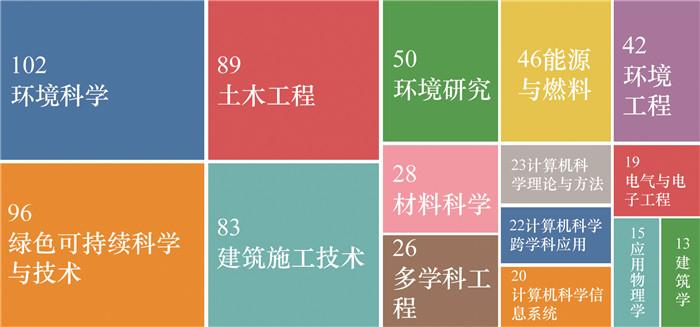
根据上述分析可知,BIM研究主要围绕建筑设计、低碳高效、经济社会环境协同发展、能源效率、BIM和生命周期等关键词开展,工程类、环境科学类和建筑结构类是BIM研究的主要领域。这些研究从不同角度推动了BIM技术研究的深入发展,促进了BIM技术在建筑全生命周期各阶段完善地开展实践应用。
3 BIM技术在建筑全生命周期中的减碳应用
基于对各研究领域的梳理和总结,本文结合现有建筑全生命周期阶段BIM应用的文献批判性分析方法,深入分析了建筑全生命周期应用BIM技术减少碳排放的研究和实践情况,并列举了国内外现行的碳排放政策标准,分析了建筑运营阶段和全生命周期碳排放监管机制的演进路径。
3.1 全生命周期
生命周期评估(life cycle assessment,LCA)是一种综合性环境评估方法,现有研究结果较丰富,建筑全生命周期碳排放分析主要工作框架如下:1) 定义生命周期内碳排放的边界;2) 建立建筑物碳排放系数数据库,并采用Revit(BIM软件)、GTJ2018(工程量计量软件)和Green Building Studio(建筑能耗、水资源和碳排放分析工具)进行库存分析;3) 计算生命周期各阶段的碳排放;4) 解释碳排放的计算结果[18]。利用该框架可较准确地分析建筑在各生命周期阶段的碳排放情况,相关研究结果表明,建筑在生产和运营阶段的碳排放占比最大[19]。在现有BIM研究中,针对这2个阶段开展碳排放优化是较成熟的研究方式,可有效降低建筑的碳排放。
然而,在计算模型和工具的相关研究中,BIM技术虽适用于建筑精细化设计,并能详细记录建筑施工阶段碳排放情况,但在大体量建筑设计中仍存在局限性[20-21]。Li等[22]基于BIM技术开发了全生命周期会计系统,可准确高效地计算印制电路板(printed circuit board,PCB)的碳排放量,并验证了节能减排效果;建立了预制住宅建筑的全生命周期碳排放指数;通过提供全面的碳足迹计算方法,建立了PCB碳排放经验模型,并分析了其发展趋势。同时,相关研究也证实LCA与BIM的协同作用也有问题需要解决[23]。在项目早期,BIM无法还原LCA所需的完整信息,需手动输入BIM信息,费时费力[24]。
建筑LCA领域的相关研究和实践证明建筑物的碳排放主要来源于生产和运营阶段,相关工作框架和模型工具可有效辅助工程人员评估建筑物的碳排放情况,但目前对相关领域的研究仍处于评估阶段,尚未形成成熟和体系化的建筑节能减碳措施、建议和优化手段供工程人员使用,并且LCA与BIM之间的整合和有效协同也有待进一步研究。
3.2 设计阶段
建筑设计是建筑全生命周期节能减碳的重要阶段,该阶段需考虑建筑的功能、结构、空间布局、美学效果、材料和环境保护等问题,是一项高度综合性任务,通过系统性设计可有效降低建筑在建造和运营阶段的碳排放量。现有BIM在建筑设计阶段的应用研究主要包括整体设计、材料设计、电气设计和人工智能辅助设计4方面。
整体设计方面,Wang等[25]研究结果表明,提高建筑设计阶段的预制构件标准化率能有效减少建筑物的碳排放量,并利用BIM技术建立Revit模型,使用C#语言开发Revit,实现建筑预制率和构件标准化率的快速计算。
电气设计方面,BIM技术可在设计阶段有效辅助优化建筑的配电、暖通和照明系统设计,并通过预先模拟线路传输损耗情况,辅助电气系统优化,从而降低电气设计不合理带来的碳排放量。同时,应用BIM技术在设计阶段分析建筑能耗,并合理配置可再生能源发电系统和智能电力控制系统,可有效降低碳排放量。
基于上述研究可知,建筑设计阶段影响碳排放的主要因素为气候条件、朝向布局、设备能效和围护结构设计等。随着普通建筑逐步向低能耗建筑和近零能耗建筑发展,建筑设计需从整体设计、材料设计和电气设计等方面进行优化,BIM技术则为此提供了一种适宜的优化方式和平台,同时结合建筑设计与神经网络技术,可使设计优化效率超过传统人工方法。
3.3 生产阶段
BIM在建筑生产阶段的减碳研究主要围绕成本预估和施工管理2方面开展。合理应用绿色环保可回收建材和寻找替代建材是建筑生产阶段减少碳排放的核心。建筑生产阶段的碳排放主要来源于建材生产,占比可达建筑总碳排放量的55%以上。例如,生产钢铁、石灰和混凝土等常用建材产生大量二氧化碳,减少高碳排放建材的使用量和寻找可替代建材有助于降低建筑生产阶段的碳排放量。
BIM技术在建筑生产阶段的应用场景是通过准确估算材料和采用预制技术来减少浪费。在早期设计和施工阶段介入建材生产,从而减少相应的碳排放量。另外,还可以利用BIM技术建立各类物料的资源消耗信息库,并在工料测量阶段形成物资碳排放清单,从而预先评估建筑生产阶段的碳排放量。建筑生产阶段,BIM技术量化管理方面的优势在提高材料利用率和减少废物产生方面效果显著。
3.4 运营阶段
现有BIM在建筑运营阶段的减碳应用研究主要在实时监控、异常预警和预测评估3方面开展。建筑运营阶段的碳排放主要来源是建筑的供暖空调系统、照明系统和设备系统。该阶段的建筑减碳主要在于提高建筑物的能源效率,利用BIM技术可通过整合传感器与数据统计分析平台,实时监测各类能源使用情况,并及时调节。另外,在建筑运营出现异常情况时,BIM技术通过整合监控、定位、报警和处理系统,对异常情况进行快速反应,以提高建筑物管理效率,从而降低建筑物运营阶段的碳排放量[35]。BIM技术还可以结合一系列评价指标,评估建筑物的节能减碳效益,长期和周期性评估建筑物运营情况,为运营人员提供决策参考。建筑运营阶段的BIM技术应用场景较明确,研究重点在于提高辅助建筑监测和评估的科学性和准确性。
3.5 相关政策及标准
国内外对于BIM技术在建筑全生命周期各阶段的碳排放工作发布了相关政策及标准,涵盖能源、工业、建筑和交通等社会全行业,反映了整个国家或地区层面全社会的碳排放发展现状,如表 3所示。全球主要经济体已构建起多层级政策标准体系,将建筑碳排放管控深度嵌入全生命周期管理范式。各国政策及标准呈现出“全行业覆盖-建筑专项聚焦”的双轨特征,在能源转型总体框架下,通过建筑领域专项立法与技术标准的协同作用,形成全生命周期碳排监管系统。
表 3 国内外碳排放政策及标准 |
| 国家 | 类型 | 文件 | 主要内容 |
| 中国 | 政策 | 《关于完整准确全面贯彻新发展理念做好碳达峰碳中和工作的意见》[36] | 明确2030年二氧化碳排放量达到峰值,2060年实现“碳中和” |
| 政策 | 《“十四五”建筑节能与绿色建筑发展规划》[37] | 到2025年,完成既有建筑节能改造面积3.5亿m2以上,建设超低能耗和近零能耗建筑共0.5亿m2以上 | |
| 标准 | 《建筑碳排放计算标准》[38] | 规定了建筑全生命周期碳排放的计算框架、方法和碳排放因子等内容 | |
| 政策/标准 | 《建筑节能与可再生能源利用通用规范》[39] | 要求建设项目的可行性研究报告、建筑方案和初步设计文件应包含建筑碳排放分析报告。更新了建筑节能要求 | |
| 美国 | 政策 | 《13514号行政令》[40]即《关于在联邦政府运营中领导可持续发展的行政命令》 | 提出了净零能耗建筑概念,到2030年新建建筑实现净零排放 |
| 政策 | 《13693号行政令》[41]即《关于联邦运营中可持续发展的行政命令》 | 提出《联邦可持续发展性计划》,对《国家自主贡献计划》进行细化,2050年实现全社会零碳 | |
| 政策 | 《13834号行政令》[42]即《关于促进联邦政府建筑能效和可持续性的行政命令》 | 废除尖山温室气体排放的所有要求 | |
| 政策 | 《14057号行政令》[43]即《通过联邦可持续性发展推动清洁能源产业和就业的行政令》 | 重新提出2045年实现净零排放建筑的目标 | |
| 标准 | 《国际节能规范IECC》[44-45] | 美国建筑能源规范的基准,每3年更新一次 | |
| 标准 | 《ANSI/ASHRAE/IES标准90.1》[46] | 美国及世界商业建筑能源规范的基准,提出建筑节能的规定性及强制性设计施工要求,每3年更新一次 | |
| 标准 | 《零能耗建筑设计导则》及《高级能源设计指南(AEDG)-50%》系列[47] | 为零能耗建筑提供设计、施工和运行阶段的策略意见 | |
| 英国 | 政策 | 《建筑法规》2010版(Statutory instrument)[48] | 增加建筑最大碳排放率限值的要求 |
| 政策 | 《建设更绿色的未来》(Building a greener future)[49] | 2016年后所有新建住宅实现零排放,后被废止 | |
| 政策 | 《绿色工业革命十点计划》(The ten point plan for a green industrial revolution)[50] | 2023年,所有公共建筑直接碳排放比2017年减少50% | |
| 标准 | 《可持续住宅标准》 (Code for sustainable homes)[51] | 提出零碳住宅的定义,2015年废止 | |
| 标准 | 《未来住宅标准》(Future homes standard)[52] | 提出准零碳(zero carbon read)居住建筑要求 | |
| 德国 | 政策 | 《建筑能源法》(Gebäudeenergiegesetz)[53] | 采用对比评定法判定建筑能耗 |
| 标准 | 《节能条例》(Energieeinspar-verordnung)[54] | 采用限值法制定建筑能耗分级,明确可再生能源的占比要求 |
4 结论与展望
4.1 结论
本文统计了BIM全生命周期碳排放相关的754篇文献,分析了现有BIM技术应用于建筑全生命周期碳排放研究的主要关键词和领域,并基于此详细分析了BIM在建筑全生命周期的相关研究进展和不足,主要得出如下结论:
1) 本文采用VOSviewer针对建筑全生命周期碳排放的相关研究开展了文献计量学分析,共形成6个聚类。研究结果表明,现有研究主要围绕建筑设计、低碳高效、经济社会环境协同发展、能源效率、BIM和生命周期等关键词开展,工程类和环境科学类是BIM研究的主要领域,分别占统计文献总量的40.54%和25.61%。
2) 现有BIM技术在建筑全生命周期减碳的研究中,关于建筑LCA的研究实践最成熟,这得益于BIM可有效整合各类信息与评估工具,方便工程技术人员有效评估建筑物全生命周期碳排放的主要产生阶段,有助于采取进一步措施。建筑设计阶段,利用BIM技术可有效模拟建筑建成后的碳排放情况,便于建筑设计人员优化设计方案;建筑生产和运营阶段,相关研究主要聚焦于辅助优化建筑材料和施工过程,以及提升建筑运营管理效率等方面。BIM技术的应用场景还有待进一步拓展,如何高效快速地获取基础数据和构建标准化基础数据库也是后续BIM技术广泛应用于建筑减碳领域需解决的问题。
4.2 展望
政策层面,中国、美国、英国和欧盟等碳排放主要经济体,均已明确达到碳中和的时间。美国除了提出全行业碳排放发展目标外,《通过联邦可持续性发展推动清洁能源产业和就业的行政令》[43]还明确了建筑领域的要求(2045年实现净零排放的目标)。对于中国建筑行业,《“十四五”建筑业发展规划》已将节能低碳作为发展的重点内容,提出了总的发展目标和指引方向,但还需发布更详细和能落地的政策,为节能减碳工作提供结合各地气候和经济等因素,并由各地主管部门细化的具体实施方案。
由于建筑全生命周期碳排放中,建材生产和运输不属于建筑领域,因此建筑领域的碳排放标准要求更倾向于约束建筑运行阶段的碳排放强度。政策及标准要求包括强制性要求和推荐性要求:强制性要求是对建筑行业碳排放的平均发展水平提出要求,适用于居住建筑和公共建筑等,主要对建筑运行阶段进行指标控制;推荐性要求更适用于特殊类型的建筑(如政府投资、超高层建筑或大型公共建筑等)。随着时间的推移,政策要求的最终目标均为实现建筑零碳。目前,中国正在编制的“绿色建筑国家标准”和“零碳建筑技术标准”等,旨在完善对于建筑全生命周期的碳排放评价指标。
目前,在建筑设计过程中,缺少建筑低碳设计的指导性设计标准,建筑碳排放工作往往在设计完成后进行核算,设计阶段未考虑降碳措施。设计阶段基于BIM技术实现建筑算量统计,结果可用于建材生产和运输阶段的碳排放活动水平数据统计。基于BIM技术的建筑运行阶段碳排放监测可实现高精度的实测数据统计,不仅能核算建筑运行阶段的碳排放,还可以为碳排放预测研究提供数据支撑。但在政策要求、学术研究和适用工具等方面,信息化与全生命周期碳排放研究未能紧密结合。同时,随着人工智能技术的不断发展,结合人工智能技术与BIM实现更高效和精准的建筑全生命周期碳排放评估和建筑设计优化的研究方向,具有较大潜力。
另外,美国和英国在建筑节能降碳领域的政策法规均出现过废止建筑碳排放目标的情况,原因如下:一方面,政策制定者制定目标时未综合考虑社会经济发展水平,建筑节能降碳伴随的增量成本过高,无法达到既定目标的要求;另一方面,政策制定者的变化导致国家发展目标及配套政策出现调整。
对于BIM技术的节能减碳应用而言,BIM技术可逐步完善建筑全生命周期碳排放监管的政策要求,后续可考虑接入现有建材和能源等相关系统,补充建筑全生命周期核算所需数据。另外,已发布标准中提供的碳排放因子,只能体现该项产品或技术的碳排放平均水平,在核算碳排放时偏差较大,后续可考虑建立基于BIM的碳排放因子库,统筹建设单位、施工单位、建材单位和各地方政府进行数据核算、鉴定和入库,实现基本参数的动态管控。另外,制定政策时需吸取欧美国家政策的教训,结合国家经济与社会发展情况,制定合理的发展目标。


