

早期的风险管理研究主要关注个别技术风险和财务风险,采用相对简单的定性分析方法。随着项目管理学科的成熟,风险管理研究逐步系统化,并在20世纪80年代末被正式纳入项目管理知识体系[4]。随着现代工程项目规模的不断扩大、技术的日益复杂以及项目环境的快速变化,传统的风险管理方法难以有效应对项目风险的多样性、动态性、复杂性和系统性[5]。为应对这些挑战,全面风险管理和合作风险管理的理念应运而生。其中:全面风险管理强调从整体角度系统管理项目全生命周期的各类风险,注重风险之间的相互关系以及风险与项目目标的联系[6];合作风险管理则注重项目各利益相关方之间的协同,强调通过知识共享和协同行动来更好地识别、评估和应对项目风险[7]。
清洁能源项目风险管理涉及的相关方众多,包括建设单位、设计方、施工方、监理方等,应建立多方合作机制,合理配置各方资源,进行全面风险管理。随着数字信息技术快速发展,清洁能源项目风险管理也应充分结合相关数字化工具,从而有效提升风险管理水平[12]。此外,当前关于促进项目风险管理的研究往往局限于单一视角,如风险管理方法和数字化风险管理技术等[13-15]。鉴于利益相关方合作和数字化技术应用对于清洁能源项目风险管理都非常重要[16-17],本文从数字化和伙伴关系双元视角探究清洁能源项目风险管理作用机理,提出了清洁能源项目风险管理影响机理模型,揭示了项目数字化水平、伙伴关系、知识管理、参建企业能力和项目风险管理水平对项目绩效的影响作用。
1 模型构建
随着数字化技术的快速发展,大数据、云计算、人工智能、物联网等技术已在工程领域广泛应用[12]。应用数字化技术能够拓展知识获取途径,有助于提高效率、促进协作、保障知识安全、持续学习和创新等。通过建立建筑信息模型(building information modeling,BIM)系统,可以集成多源信息,实现各参建方的信息共享与协同工作,从而实现对工程进度、成本、质量、安全等风险的高效管理[28-29]。运用先进数字化技术能够建立智能、定量化的风险管理流程,从而高效识别、评估风险,并辅助风险管理决策,提出精细化的风险应对方案,以保障项目顺利进行[30]。数字化水平的提升能够有效提升企业能力,帮助企业适应环境变化、提升运营效率并实现可持续发展[31]。
基于以上理论基础,建立清洁能源项目风险管理影响机理模型,如图 1所示。
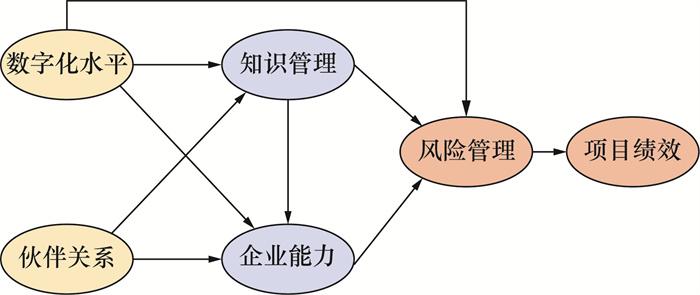
为验证图 1所示模型,需通过行业调研收集清洁能源项目风险管理相关数据,分析清洁能源项目数字化水平和伙伴关系对知识管理、企业能力、风险管理及项目绩效的影响作用。
2 数据调研与分析方法
2.1 调研方法
问卷共分为3个部分,分别为:1) 调研对象基本信息,包括调研对象性别、年龄、文化程度、从业年限、工作类别、所属项目角色等;2) 调研项目基本信息,包括项目名称、类型、承包模式、投资额等;3) 变量测量(Likert 5分量表),包括项目风险管理、数字化水平、知识管理、企业能力、项目绩效等。
问卷调研对象为有着丰富清洁能源项目参建经验的管理人员和技术人员,工作角色涵盖建设单位、设计方、施工方和监理方,所参与的项目类型包括水电、光伏、风电和抽水蓄能。共收回问卷305份,经过对问卷的筛选,排除作答严重缺失、作答时间过短、打分全部相同等质量较差的不合格问卷,得到有效问卷284份。调研对象平均年龄为33.70岁,平均从业年限为10.35 a。调研对象的基本信息详见表 1。
表 1 调研对象基本信息 |
| 基本信息 | 指标 | 占比/% |
| 性别 | 男 | 83.5 |
| 女 | 16.5 | |
| 文化程度 | 博士 | 0.7 |
| 硕士 | 33.1 | |
| 本科 | 54.2 | |
| 专科及以下 | 12.0 | |
| 从业年限 | 1~5 a | 42.3 |
| 6~10 a | 22.2 | |
| 10~15 a | 16.9 | |
| 15~20 a | 11.3 | |
| 20 a以上 | 7.3 | |
| 工作类别 | 公司管理人员 | 9.2 |
| 公司技术人员 | 32.7 | |
| 项目部管理人员 | 39.4 | |
| 项目部技术人员 | 18.7 |
2.2 数据分析方法
对收集到的定量化数据,进行均值分析、聚类分析、相关分析和路径分析等。利用Cronbach's α、组合信度(composite reliability,CR)和平均变异萃取量(average variance extracting,AVE)等指标对量表的信度和效度进行检验。使用SPSS27.0和AMOS26.0软件进行定量分析。
3 调研结果分析
3.1 风险管理现状
风险管理方法应用情况调研结果见表 2。其中:1分代表从不使用,5分代表一直使用。
表 2 清洁能源项目风险管理方法应用情况 |
| 指标 | 得分 | 排序 |
| 风险辨识 | 3.69 | |
| 主要相关人员集体讨论 | 3.87 | 1 |
| 对照问题清单 | 3.85 | 2 |
| 咨询专家 | 3.60 | 11 |
| 个人判断 | 3.45 | 18 |
| 风险分析 | 3.57 | |
| 主要相关方共同评估 | 3.79 | 3 |
| 定性分析 | 3.74 | 6 |
| 咨询专家 | 3.60 | 12 |
| 定量分析 | 3.56 | 14 |
| 半定量分析 | 3.53 | 15 |
| 个人分析 | 3.48 | 16 |
| 用计算机或其他方法模拟 | 3.28 | 19 |
| 风险应对 | 3.51 | |
| 风险规避 | 3.72 | 7 |
| 减小风险可能性/后果 | 3.70 | 9 |
| 风险分担 | 3.58 | 13 |
| 风险转移 | 3.48 | 17 |
| 风险自留 | 3.05 | 20 |
| 风险监控 | 3.73 | |
| 定期进行文件﹑报表以及现场检查 | 3.77 | 4 |
| 风险预警机制 | 3.76 | 5 |
| 风险状态分析 | 3.72 | 8 |
| 风险趋势预测 | 3.68 | 10 |
| 平均值 | 3.61 |
从表 2可看出,清洁能源项目风险管理各阶段管理方法平均得分为3.61分,且各项得分均小于4.00分,表明清洁能源项目各方在风险管理各阶段能够有效运用一定的风险管理方法,但在其中一些管理方法方面仍需着重加强。
在风险辨识阶段,“主要相关人员集体讨论”得分最高,为3.87分,其次是“对照问题清单” “咨询专家”和“个人判断”,分别为3.85、3.60和3.45分,表明清洁能源项目中参建各方注重将项目相关人员的群体智慧应用到风险识别环节,通过知识共享、协同决策,准确辨识项目风险。
在风险分析阶段,“主要相关方共同评估”得分最高,为3.79分,项目参与人员对项目各项信息掌握更为具体、全面,通过各方协同分析,能够对风险的可能性与后果进行准确判断。“定性分析”评分高于“定量分析”和“用计算机或其他方法模拟”,表明当前在清洁能源项目风险分析阶段,数字化技术的运用受到一定制约,一方面由于风险分析所需历史数据仍有欠缺,另一方面则归因于当前数字化风险分析技术仍存在不足。
在风险应对阶段,“风险规避”和“减小风险可能性/后果”评分较高,分别为3.72和3.70分,表明清洁能源项目参建各方对项目风险积极应对与防范,而非倾向于将风险转移给其他利益相关方,这有利于各方基于伙伴关系进行项目风险协作管理。
在风险监控阶段,“定期进行文件﹑报表以及现场检查”得分最高,其次为“风险预警机制” “风险状态分析”和“风险趋势预测”。清洁能源项目中风险因素多样,且存在动态变化,应结合数字化技术,通过文件报表分析、环境监测分析和设备运行状态感知分析等手段,对清洁能源项目风险进行监控。
3.2 数字化水平
清洁能源项目数字化水平如表 3所示,包括数字化设计、数字化采购、数字化施工和数字化运维。其中:1分代表完全不符,5分代表完全符合。
表 3 清洁能源项目数字化水平 |
| 指标 | 得分 | 排序 |
| 数字化设计 | 3.73 | |
| 建立数字化设计管理平台,实现设计信息的实时存储、查阅、提取与共享 | 3.89 | 1 |
| 基于数字化平台进行设计质量、进度和设计方案造价管控 | 3.84 | 6 |
| 项目参建各方基于数字化平台实现设计成果审批、反馈与分享 | 3.77 | 9 |
| 建立BIM设计模型,实现多维化设计 | 3.69 | 16 |
| 基于数字化平台,进行方案比选决策支持 | 3.68 | 17 |
| 设计变更可视化,实现变更前后的影响比对 | 3.66 | 18 |
| 基于BIM实现设计“错漏碰缺”检查 | 3.62 | 21 |
| 数字化采购 | 3.85 | |
| 建立采购管理平台,实现对采购全流程管理 | 3.88 | 2 |
| 基于采购管理平台,综合各类因素合理制定采购计划 | 3.87 | 3 |
| 基于采购管理平台,进行采购物资实时跟踪和管控 | 3.86 | 4 |
| 运用数字化技术,进行物资入库、存储和出库一体化管理 | 3.86 | 5 |
| 基于采购管理平台,进行供应商综合评价和采购方案决策 | 3.84 | 7 |
| 运用数字化技术,及时反馈施工现场物资需求,动态调整物资供应 | 3.78 | 8 |
| 数字化施工 | 3.67 | |
| 运用数字化技术,对施工安全进行监测和智能管控 | 3.76 | 12 |
| 运用数字化技术,对施工进度进行模拟、监测、分析和管控 | 3.69 | 15 |
| 运用数字化技术,进行工程智能建造和施工过程智能管控 | 3.66 | 19 |
| 运用数字化技术,进行工程质量信息的采集、分析、管控、验评和存档 | 3.64 | 20 |
| 运用数字化技术,对项目成本进行预测、监测、分析和管控 | 3.59 | 22 |
| 数字化运维 | 3.74 | |
| 运用数字化技术,进行工程智能化运行管理 | 3.77 | 10 |
| 运用数字化技术,对工程健康状态进行实时监测、预警和管控 | 3.76 | 11 |
| 运用数字化技术,对设备运行性态进行实时监测、预警和管控 | 3.72 | 13 |
| 运用数字化技术,进行源网荷储一体化管理,提高能源利用效率 | 3.70 | 14 |
| 平均值 | 3.75 |
从表 3可看出,清洁能源项目数字化水平整体得分为3.75分,且各环节得分均在3.59~3.89分之间,表明当前数字化技术在清洁能源项目各环节均有着一定的应用,但在部分场景下的应用仍需进一步加强。清洁能源项目设计、采购、施工和运维各环节数字化情况如下:
1) 数字化设计。
“建立数字化设计管理平台,实现设计信息的实时存储、查阅、提取与共享”和“基于数字化平台进行设计质量、进度和设计方案造价管控”得分较高,分别为3.89和3.84分,表明当前清洁能源项目设计环节主要通过数字化平台进行设计管理。设计资料的数字化是数字化设计管理的基础,通过线上高效管理设计信息,不仅能够促进设计方各部门间高效协同,还能够帮助建设单位对设计质量、进度和造价及时管控,保障设计工作满足项目实施要求。“设计变更可视化,实现变更前后的影响比对”和“基于BIM实现设计‘错漏碰缺’检查”得分较低,分别为3.66和3.62分,表明基于BIM的正向设计有待加强。
2) 数字化采购。
“建立采购管理平台,实现对采购全流程管理”“基于采购管理平台,综合各类因素合理制定采购计划”和“基于采购管理平台,进行采购物资实时跟踪和管控”得分均较高,分别为3.88、3.87和3.86分,表明数字化技术在采购计划制定与实施中有着较好应用,能够对物资进行实时跟踪,保障材料设备供应。“运用数字化技术,及时反馈施工现场物资需求,动态调整物资供应”评分相对较低,为3.78分,表明对施工现场物资需求的实时响应仍需进一步加强,应加强物资编码体系,实现供应链可视化管理,并结合人工智能、物联网等先进数字化技术,对物资需求进行实时监控与预测,从而对物资供应进行动态调控,减少因供货不及时导致的延误。
3) 数字化施工。
“运用数字化技术,对施工安全进行监测和智能管控”得分为3.76分,表明在施工环节能应用数字化技术对施工现场进行监控,保障施工安全。需注重安全管控的数字化、智能化水平,通过对现场的实时监控与数据分析,及时应对安全风险,降低事故发生的概率和影响程度。另外,还应对施工人员加强安全培训,树立风险意识。“运用数字化技术,对项目成本进行预测、监测、分析和管控”得分较低,为3.59分,应加强跨部门的合作与信息共享,保障项目成本相关数据的准确性和完整性,运用大数据和人工智能技术对项目成本进行分析预测和动态管控。
4) 数字化运维。
“运用数字化技术,进行工程智能化运行管理”得分较高,为3.77分,表明清洁能源项目运维环节能较好运用数字化技术。“运用数字化技术,进行源网荷储一体化管理,提高能源利用效率”得分较低,为3.70分。随着清洁能源的大规模并网,清洁能源的间歇性和不可预测性给电网的稳定、安全运行带来了很大挑战,应着力提升源网荷储一体化管理的数字化、智能化水平,提升能源系统的运行效率,减少“弃水”“弃风”“弃光”。
3.3 知识管理水平
清洁能源项目知识管理情况如表 4所示,包括知识获取、知识存储、知识共享和知识利用。其中:1分代表完全不符,5分代表完全符合。
表 4 清洁能源项目各参与企业知识管理情况 |
| 指标 | 得分 | 排序 |
| 知识获取 | 3.94 | |
| 公司设置有针对项目的经验教训总结机制,要求过程中和完工后总结相关经验教训,积累了已做项目的经验教训报告材料 | 4.02 | 2 |
| 公司通过多种渠道获取知识,包括内部资源、行业报告、专业期刊、网络资源等,以确保知识来源的广泛性和多样性。 | 4.01 | 6 |
| 公司会运用先进数字化技术,进行知识挖掘 | 3.80 | 12 |
| 知识存储 | 3.94 | |
| 公司汇总所有已做和在做项目的基本信息、文件材料、会议记录,形成了完善的项目材料体系 | 4.00 | 7 |
| 公司会定期更新知识数据库,保证其中信息的实时性和有效性 | 3.96 | 10 |
| 公司对已做项目的各类信息与材料进行了编码,形成了方便易用的知识数据库 | 3.85 | 11 |
| 知识共享 | 3.98 | |
| 公司举办了相关讲座和培训来推动不同项目之间的经验传承与相互借鉴 | 4.05 | 1 |
| 公司设置有跨项目信息或知识的发布平台或推送机制(如内部邮件、论坛等) | 3.98 | 3 |
| 开展新项目的时候,公司会提前收集类似项目材料提供给项目人员进行系统学习 | 3.90 | 8 |
| 知识利用 | 3.96 | |
| 公司会吸收咨询机构、外部专家的相关知识解决重要技术问题 | 4.10 | 4 |
| 公司会吸收并利用以前项目的经验教训来改善后续项目的管理方式、技术方法、工作程序等 | 4.04 | 5 |
| 公司会结合项目参与方反馈建议进行改进 | 4.02 | 9 |
| 公司会吸收并利用前沿技术,推动项目创新,提升项目绩效 | 3.88 | 13 |
| 公司会利用大数据、人工智能等先进技术进行数据分析和知识融合,支持业务管理 | 3.74 | 14 |
| 平均值 | 3.95 |
从表 4可看出,各参与企业的知识管理总体得分为3.95分,且知识管理各环节平均得分相近,表明当前清洁能源项目各参建企业在知识管理方面普遍有较好表现。在知识获取环节,建立了经验教训总结机制,并能够通过多渠道获取外部知识;在知识存储环节,形成了完善的项目材料体系,建立了知识数据库并及时更新;在知识共享环节,能够通过举办讲座和培训、跨项目知识推送等方式促进知识、经验的学习与推广;在知识应用环节,能够运用外部机构与过往项目的知识、经验和技术方法等解决相应问题。然而,各环节对大数据、人工智能等前沿数字化技术的应用尚有不足,应进一步吸收并运用先进数字化技术,以推动知识管理效率的提升。
3.4 伙伴关系情况
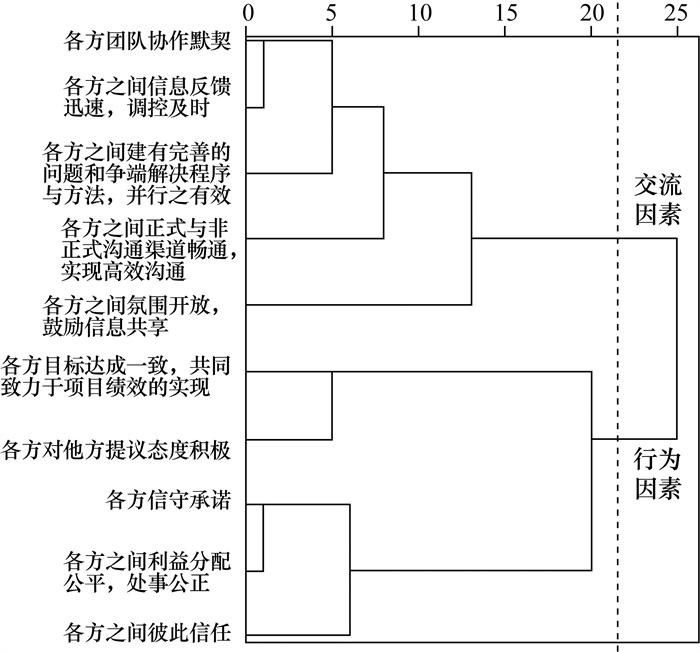
表 5 项目各方伙伴关系情况 |
| 指标 | 得分 | 排序 |
| 交流因素 | 3.88 | |
| 项目各方之间正式与非正式沟通交流渠道畅通,实现高效沟通 | 3.94 | 2 |
| 项目各方之间建有完善的问题和争端解决程序与方法,并行之有效 | 3.88 | 6 |
| 项目各方之间氛围开放,鼓励信息分享 | 3.87 | 7 |
| 项目各方团队协作默契 | 3.86 | 9 |
| 项目各方之间信息反馈迅速,调控及时 | 3.85 | 10 |
| 行为因素 | 3.94 | |
| 项目各方目标达成一致,共同致力于项目绩效的实现 | 4.10 | 1 |
| 项目各方对他方提议态度积极 | 3.91 | 3 |
| 项目各方信守承诺 | 3.90 | 4 |
| 项目各方之间利益分配公平,处事公正 | 3.90 | 5 |
| 项目各方之间彼此信任 | 3.87 | 8 |
| 平均值 | 3.91 |
从表 5可看出,各项因素总体得分为3.91分,表明伙伴关系各项关键因素在清洁能源项目各参建方之间有着一定程度的应用。在行为因素方面,“项目各方目标达成一致,共同致力于项目绩效的实现”得分最高,为4.10分,表明各方能够清晰认识项目目标,并积极协作以推动项目成功。在交流因素方面,“项目各方之间正式与非正式沟通交流渠道畅通,实现高效沟通”得分较高,为3.94分,表明各方能够通过多种渠道实现知识共享。各参建方应注重建立完善的信息共享平台与问题解决机制,实现各方的高效协同,以及时识别和响应潜在风险,保证项目顺利完成。
3.5 企业能力情况
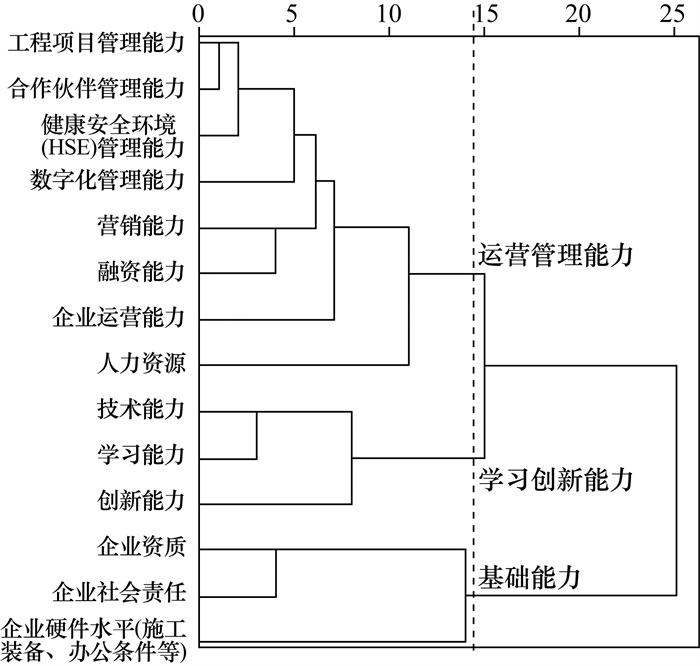
表 6 企业能力情况 |
| 指标 | 得分 | 排序 |
| 基础能力 | 4.25 | |
| 企业资质 | 4.43 | 1 |
| 企业社会责任 | 4.29 | 2 |
| 企业硬件水平(施工装备、办公条件等) | 4.03 | 7 |
| 运营管理能力 | 3.94 | |
| 企业运营能力 | 4.08 | 5 |
| 工程项目管理能力 | 4.03 | 6 |
| 合作伙伴管理能力 | 3.92 | 8 |
| 健康安全环境(HSE)管理能力 | 3.92 | 9 |
| 融资能力 | 3.90 | 10 |
| 数字化管理能力 | 3.89 | 11 |
| 人力资源 | 3.88 | 12 |
| 营销能力 | 3.87 | 13 |
| 学习创新能力 | 4.07 | |
| 技术能力 | 4.26 | 3 |
| 学习能力 | 4.11 | 4 |
| 创新能力 | 3.84 | 14 |
| 平均值 | 4.03 |
从表 6可看出,清洁能源项目参建企业能力总体得分为4.03分,表明各参建企业整体能力较强,但在其中某些能力上仍存在较大提升空间。基础能力总体得分较高,为4.25分,表明各参建方在“企业资质”“企业社会责任”“企业硬件水平”等方面相对较好。运营管理能力方面,“融资与营销能力”“数字化管理能力”“人力资源能力”还需进一步加强。学习创新能力方面,“创新能力”依然是短板,参建各方需加强新技术、新材料、新设备、新工艺的应用和管理创新,以提升风险管理水平。
3.6 项目绩效情况
清洁能源项目绩效情况如表 7所示。其中:1分代表非常差,5分代表非常好。
表 7 项目绩效情况 |
| 指标 | 得分 | 排序 |
| 项目履约绩效 | 3.97 | |
| 项目质量 | 4.06 | 3 |
| 项目成本 | 3.92 | 8 |
| 项目进度 | 3.94 | 7 |
| 健康安全环境(HSE)绩效 | 4.03 | |
| 职业健康与安全 | 4.12 | 1 |
| 环保水保 | 3.97 | 6 |
| 社会经济绩效 | 4.01 | |
| 移民 | 3.99 | 4 |
| 经济效益 | 3.98 | 5 |
| 社会效益 | 4.08 | 2 |
| 平均值 | 4.00 |
从表 7可看出,清洁能源项目绩效的总体得分为4.00分,其中履约绩效、健康安全环境绩效和社会经济绩效的平均得分分别为3.97、4.03和4.01分,表明清洁能源项目绩效总体较好,但其中部分指标仍有待提升。
“职业健康与安全”得分4.12分,排序第1,表明项目实施中将项目成员的健康与安全置于优先位置,建立了较为完善的安全管理体系,包括安全管理组织机构、安全风险管理流程、安全培训等多个方面。“社会效益”得分4.08分,排序第2,表明清洁能源项目在社会效益方面有较好表现,具体体现在促进社会福祉、提高能源安全等方面,例如清洁能源项目通过提供低碳或无碳的能源解决方案,显著减少了温室气体排放;清洁能源项目的开发和运营需要大量的工程建设、设备制造、系统安装和后期维护等工作,这为当地社区提供了大量的就业机会;清洁能源中的水电项目除发电外,还兼具防洪、灌溉、航运等功能;保障能源安全,减少能源供应的不确定性和价格波动风险等。“项目成本”和“项目进度”得分分别为3.92和3.94分,排序第7和第8,表明清洁能源项目在控制成本和保障进度两方面仍需进一步加强。
4 模型验证
4.1 信度检验
测量模型信度检验结果如表 8所示。各潜变量CR均大于0.7,Cronbach's α均大于0.7(均在0.9以上),表明测量模型具有较好的内部一致性。
表 8 测量模型信度检验结果 |
| 潜变量/指标 | CR | Cronbach's α |
| 数字化水平 | 0.983 | 0.977 |
| 伙伴关系 | 0.991 | 0.982 |
| 知识管理 | 0.989 | 0.986 |
| 企业能力 | 0.978 | 0.966 |
| 风险管理 | 0.946 | 0.923 |
| 项目绩效 | 0.985 | 0.978 |
注:指标权重均在0.001水平上显著。 |
4.2 效度检验
测量模型收敛效度和区别效度检验结果如表 9所示。其中,各潜变量的AVE值均大于0.5,表明收敛效度较高;各潜变量的AVE平方根均大于该潜变量与其他各潜变量间相关系数,表明区别效度较高。
表 9 测量模型效度检验结果 |
| 潜变量 | AVE | 相关系数和AVE平方根 | |||||
| 1 | 2 | 3 | 4 | 5 | 6 | ||
| 1. 数字化水平 | 0.936 | 0.967 | |||||
| 2. 伙伴关系 | 0.982 | 0.765 | 0.991 | ||||
| 3. 知识管理 | 0.958 | 0.878 | 0.774 | 0.979 | |||
| 4. 企业能力 | 0.935 | 0.774 | 0.820 | 0.794 | 0.967 | ||
| 5. 风险管理 | 0.813 | 0.714 | 0.675 | 0.736 | 0.658 | 0.902 | |
| 6. 项目绩效 | 0.957 | 0.743 | 0.831 | 0.747 | 0.856 | 0.692 | 0.978 |
注:对角线加粗数字为潜变量AVE的平方根,其余为相应变量间相关系数。 |
4.3 模型路径分析
为验证数字化水平、伙伴关系、知识管理、企业能力、风险管理和项目绩效之间的相互作用关系,利用AMOS27.0对模型进行路径分析,结果如图 4所示。
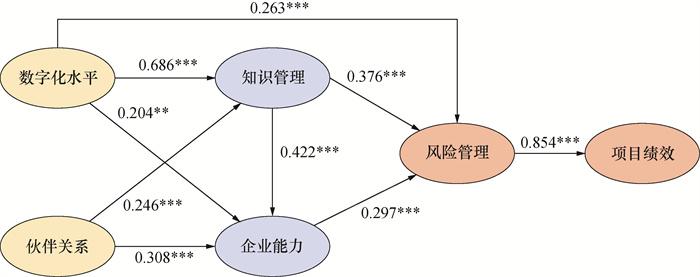
模型分析结果表明,风险管理水平受到数字化水平、伙伴关系、知识管理和企业能力的影响,并对项目绩效有正向促进作用。为检验各影响因素对风险管理的间接作用,使用Bootstrapping法进行抽样分析(抽样数为5 000),结果如表 10所示。
表 10 清洁能源项目风险管理影响路径及效应系数 |
| 作用路径 | 总体效应系数 | 显著性 |
| 路径A:项目数字化水平→项目风险管理 | 0.263 | ** |
| 路径B:项目数字化水平→知识管理→项目风险管理 | 0.258(0.686×0.376) | ** |
| 路径C:项目数字化水平→知识管理→参建企业能力→项目风险管理 | 0.086(0.686×0.422×0.297) | ** |
| 路径D:项目数字化水平→参建企业能力→风险管理 | 0.061(0.204×0.297) | ** |
| 路径E:伙伴关系→知识管理→项目风险管理 | 0.092(0.246×0.376) | ** |
| 路径F:伙伴关系→知识管理→参建企业能力→项目风险管理 | 0.031(0.246×0.422×0.297) | ** |
| 路径G:伙伴关系→参建企业能力→项目风险管理 | 0.091(0.308×0.297) | ** |
注:**表示在0.01水平上(双侧)显著。 |
总体而言,项目数字化水平和伙伴关系对项目风险管理有着积极影响,其中项目数字化水平的总体效应系数为0.668,伙伴关系的总体效应系数为0.214(见表 10)。项目数字化水平对项目风险管理的影响主要可分为对风险管理的直接促进作用(效应量39.3%),以及通过提升知识管理水平进而间接提升项目风险管理水平(效应量38.9%)。伙伴关系对项目风险管理的影响主要可分为通过提升知识管理水平的间接促进作用(效应量42.9%),以及通过提升参建企业能力的间接促进作用(效应量42.5%)。接下来,对总体路径系数较高的路径A、路径B、路径E和路径G进行分析。
1) 路径A:项目数字化水平→项目风险管理。
清洁能源项目各环节数字化水平的提升,能够对项目风险管理产生直接影响。在设计阶段,利用数字化设计平台能够有效实现设计质量、进度和方案造价的高效管控,另外,基于BIM模型的多维度设计与“错漏碰缺”检查能够及时发现并纠正设计中的错误和遗漏,有效降低设计风险。在采购阶段,通过数字化技术应用,能够提升采购全流程管理水平,包括供应商管理、物资跟踪管控、库存管理等,降低采购风险。在施工环节,应用先进信息技术能够实现进度、成本的动态管控,以及工程质量与施工安全的实时监控,从而有效降低项目风险。在运维环节,运用数字化技术,一方面可以对工程安全状态与设备运行性态进行实时监测、预警和管控,避免因工程安全隐患或设备故障等因素造成损失;另一方面能够利用数字化技术实现源网荷储一体化管理,保障能源系统的稳定性和可靠性。
2) 路径B:项目数字化水平→知识管理→项目风险管理。
数字化水平提升能够促进知识的整合、共享和利用。通过建立基于数字化技术的清洁能源项目知识图谱,能够将多元化知识以结构化的形式进行分类和存储,便于跨组织、跨项目的知识共享与利用。高效的知识管理不仅能够支持清洁能源项目的风险识别与量化,还能够促进学习与创新,从而有效应对清洁能源项目的各类风险。
3) 路径E:伙伴关系→知识管理→项目风险管理。
项目参建各方间建立伙伴关系,形成互信、共赢的合作氛围,能够提升各方对知识、经验、技术等的交流与应用,从而发挥各方优势,共同应对项目风险,形成更加全面、有效的解决方案。另外,清洁能源项目参建各方与高等院校、科研机构、咨询机构等外部机构建立良好的产学研用合作关系,可推动知识共享,加深对风险的认识,合理应对风险。
4) 路径G:伙伴关系→参建企业能力→项目风险管理。
清洁能源项目各参建企业间形成良好的伙伴关系,能够通过各方优势互补有效促进各参建企业提升综合能力,共同应对清洁能源项目风险。其中,学习创新能力提升能够帮助企业在风险管理中通过关键技术突破,高效识别、评估和应对项目风险;基础能力提升可为项目实施与风险管控提供保障;运营能力提升能够通过标准化风险管理流程,规范管控清洁能源项目全过程风险。
5 清洁能源项目风险管理建议
基于本文研究结果,针对清洁能源项目风险管理提出如下建议:
1) 建立完善的风险管理体系,加强全面风险管理。风险管理体系是项目风险管理的重要基础,应建立完善的风险管理组织职能体系,形成系统化、专业化的风险管理机制;建立完整的风险管理流程,并结合多种风险管理方法,帮助组织或个人依据程序管理项目风险;建立科学的风险管理激励机制,促进各方积极主动管理风险。
2) 加速项目数字化转型,提升智能化风险管理水平。本研究模型结果揭示了清洁能源项目数字化水平提升对风险管理有着显著促进作用,总体效应系数为0.668(见图 4)。各参建企业应注重数字化管理体系的完善与数字化基础设施建设,从设计、采购、施工和运维各环节全面提升项目智能化风险管理水平,包括重大设计方案论证、设计问题检查、质量安全管理、环保监测、动态物流管理、设备运行性态监控等。
3) 加强项目各方间伙伴关系,促进合作风险管理。本研究模型结果揭示了清洁能源项目参建各方伙伴关系对风险管理有着显著促进作用,总体效应系数为0.214(见图 4)。项目参建各方应确立共同的项目目标,建立开放的项目团队,促进项目参建各方基于合作共赢的理念合理分配利益/风险,有效进行风险管理协同。各方间应通过正式与非正式渠道建立协作沟通,在相互信任的基础上,打破组织间壁垒,促进各方知识共享和资源优化配置,从而加强项目风险识别、分析、应对和监控。
4) 建立系统的知识管理体系,形成学习型组织。本研究模型结果揭示了提升知识管理水平对提高清洁能源项目风险管理有着显著促进作用,总体效应系数为0.501(见图 4)。清洁能源项目应建立系统的知识管理体系,包括知识的获取、存储、共享和利用,并结合大数据、人工智能等先进技术进行数据分析和知识融合,为项目风险管理提供支持。对于显性知识,如项目相关信息、资料、数据等,可通过分类、归档,存储,形成项目知识数据库,并及时更新完善,从而便于项目成员共享和利用。对于隐性知识,它们往往以经验的形式存储于项目成员或专家的思想中,而项目结束后团队解散会导致大量隐性知识丢失,因此亟需营造项目各方间互信共享的氛围,通过项目交流会、技术讨论会、专家讲座等方式进行知识共享,并对重要经验教训等进行记录、归档,从而将隐性知识转化为显性知识。
5) 加强参建企业能力建设,持续提升项目风险管理水平。本研究模型结果揭示了加强参建企业能力建设对提升清洁能源项目风险管理有着显著促进作用,总体效应系数为0.297(见图 4)。参建各方应加强基础能力建设,为项目实施提供保障;从项目管理、数字化技术应用、人力资源、融资、营销等方面,加强运营管理能力;通过加强学习创新能力,促进清洁能源项目管理水平的持续提升,高效辨识、分析、应对和监控项目风险。
6 结论与展望
本文提出并验证了清洁能源项目风险管理影响机理模型,揭示了项目数字化水平、伙伴关系、知识管理、参建企业能力和项目风险管理对项目绩效的影响作用。模型检验结果表明,项目数字化水平、伙伴关系、知识管理、参建企业能力和项目风险管理共同对项目绩效有显著的影响作用。项目数字化水平既能够直接影响项目风险管理,也能够通过促进知识管理与参建企业能力提升间接提升项目风险管理;伙伴关系则能够通过提升知识管理水平和加强企业能力建设,进而影响项目风险管理。项目风险管理对项目绩效有显著促进作用。以上研究结果为清洁能源项目加强风险管理提供了理论与实践参考。
本文建立了清洁能源项目风险管理相关因素的测量指标体系,系统地揭示了清洁能源项目风险管理及相关管理因素的现状、问题及成因,明确了当前清洁能源项目风险管理应重点关注的因素,有助于参建各方有针对性地制定风险管理措施。
结合以上分析,提出如下风险管理建议:建立完善的风险管理体系,加强全面风险管理;加速项目数字化转型,提升智能化风险管理水平;加强项目各方间伙伴关系,促进合作风险管理;建立系统的知识管理体系,形成学习型组织;加强参建企业能力建设,持续提升项目风险管理水平。
本研究的实证研究数据来自中国清洁能源项目参与企业,主要基于中国清洁能源项目建设情况进行讨论。未来可进一步对国际清洁能源项目进行调研,收集多个典型地区的清洁能源建设风险管理相关数据,深入分析不同环境下清洁能源项目风险管理规律。此外,应加强信息化风险管理技术研究,不断提升智能化风险管理水平。


