
Significance: Floating wind turbines (FWTs), as a revolutionary breakthrough in offshore renewable energy technology, are redefining the boundaries of human development of ocean energy with innovative technological solutions. With the collaborative innovation of floating foundations and dynamic anchoring systems, this technology has successfully broken through the limitations of traditional fixed wind turbines on water depth, expanding the scope of wind power development to deep-sea and high wind speed resource rich areas. Compared to offshore fixed wind turbines, FWTs not only significantly reduce marine ecological disturbances, but also provide a dual solution for global energy transformation that combines environmental friendliness and production efficiency through the potential for large-scale cluster deployment. This article systematically reviews the current development status of floating wind power technology and deeply analyzes the core pain points that constrain its commercialization process, including key technical challenges such as dynamic response control, mooring system durability, and life cycle cost optimization. Of particular note is the milestone breakthrough achieved by China's innovation forces in this field-the "Mingyang-Tiancheng" floating platform, as the world's largest single unit capacity floating wind turbine system, has opened up a new paradigm for the development of far-reaching offshore wind power and provided important technical references for the global iteration of floating wind power technology. Progress: Globally, floating wind power projects represented by Hywind (Spar) and WindFloat (semi-submersible) have completed the transition from experimental prototypes to small-scale commercial applications, and their technological level and industrial chain layout are in a world leading position. In contrast, China's floating wind power is still in the demonstration and verification stage, represented by the 5.5 MW (2021) and 7.25 MW (2023) units of the "Yinlinghao" and "Guanlanhao". Although key technological breakthroughs have been achieved, the maturity of technology and the construction of supporting industrial chains still need to be improved. Currently facing three development bottlenecks: at the economic level, floating wind power technology is not yet mature, research and application costs are high, and it is still far from achieving the goal of grid parity; In terms of environmental constraints, the special working conditions in typhoon prone areas require higher adaptability of the units; At the level of industrial synergy, an industrial cluster effect covering design, manufacturing, and operation and maintenance has not yet been formed. Therefore, it is urgent to promote technological innovation to drive the development of related industrial chains, gradually reduce development costs, and achieve large-scale commercial applications. At the same time, it is necessary to promote the coordinated upgrading of offshore wind power equipment manufacturing and marine engineering industry, build a full life cycle cost control system, and lay a technical and economic foundation for large-scale commercial applications. Conclusions and Prospects: In order to address these challenges, the "Mingyang-Tiancheng" floating wind power platform has made innovative breakthroughs in areas such as prestressed high-strength concrete technology, composite lightweight buoy design and construction technology, intelligent perception collaborative control technology, single point mooring technology, dual wind turbine technology, and typhoon resistance technology, reflecting China's emerging leadership position in floating wind technology. It combines material science breakthroughs, intelligent control systems, and ecological design principles. Future progress will require sustained interdisciplinary collaboration and accelerated global deployment through industrialization to reduce costs. The "Mingyang-Tiancheng" provides valuable practical experience and technical reference for the future development of floating wind power.

Significance: The global offshore wind power industry is experiencing rapid growth, with floating offshore wind energy technology emerging as a pivotal solution for exploiting wind resources in deep sea areas. The floating foundation, a critical component of floating offshore wind power systems, plays an essential role in ensuring the stability and safe operation of wind turbines. However, the design and analysis of these foundations are fraught with challenges due to their intricate system composition, distinctive dynamic characteristics, and the harsh marine environment they must endure. Traditional design methods, which rely heavily on experience and trial-and-error, are not only inefficient but also fail to integrate multidisciplinary theories, highlighting the need for the more scientific design and optimization tools. Progress: As research delves deeper, technological advancements, and accumulated development experience have led to the application of multidisciplinary optimization design and analysis techniques in the floating wind power sector. The field of floating offshore wind power foundation optimization has seen significant advancements in recent years, with a shift towards more sophisticated multidisciplinary, multi-objective optimization techniques. These techniques have been crucial in addressing the complex interplay between various factors such as structural mechanics, hydrodynamics, aerodynamics, and economic considerations. MDAO techniques, initially from aerospace, enable system-wide optimization by considering interdisciplinary interactions, crucial for managing the complex dynamics between wind turbines and environmental loads. In the realm of optimization algorithms, genetic algorithms, particularly the Non-Dominated Sorting Genetic Algorithm Ⅱ (NSGA-Ⅱ), have become prominent due to their ability to handle multiple conflicting objectives simultaneously. These algorithms have been effectively utilized to identify a set of Pareto-optimal solutions, providing a range of options that balance different performance criteria such as cost, structural fatigue, motion response, and tower acceleration. The use of frequency domain analysis has been widespread for early-stage optimization research due to its efficiency in capturing key dynamic characteristics of the floating structures. However, the industry has also recognized the need for time-domain simulations to capture the nonlinear dynamics of the system, especially when precision is paramount. Hybrid methods that combine the benefits of both frequency and time-domain analyses, as well as the application of surrogate model, are being developed to achieve a balance between computational efficiency and accuracy. These innovative techniques offer scientific guidance for the scale planning and optimization design of floating foundations, striving to achieve an optimal balance in cost, performance, and environmental adaptability. This paper provides a comprehensive review of the evolution and application of multi-objective, multidisciplinary optimization methods in the scale optimization of floating offshore wind power foundations. Conclusions: The integration of multi-objective, multi-disciplinary optimization technology is of paramount importance for the optimized design of floating offshore wind power foundations. By merging structural optimization concepts with efficient optimization algorithms and precise simulation tools, it is possible to enhance design efficiency, abbreviate the design cycle, and more scientifically and swiftly obtain floating foundation design that exhibit superior comprehensive performance. This approach not only streamlines the design process but also ensures that the final scheme is more robust and cost-effective, meeting the stringent requirements of the offshore wind power industry. Looking ahead, the field is expected to see further integration of advanced computational methods, machine learning techniques, and high-fidelity simulations to push the boundaries of floating offshore wind power foundation design, leading to more efficient, cost-effective, and durable solutions that can withstand the test of time and the rigors of the marine environment.
Objective: Offshore wind turbines (OWTs) are supported by driven open-ended steel piles. At present, monopiles are the most common type of foundation adopted for OWTs because of the simplicity of their design, fabrication, and installation. Compared with the piles used in offshore platforms, monopiles are shorter but heavier. Due to these characteristics, pile drivability analysis needs to be conducted to evaluate whether pile running will occur during pile driving. Methods: Based on the measured data from monopiles of offshore wind farms on site, the influencing factors of pile running are investigated, and the identification methods for pile running are analyzed. This study found that pile running easily occurs when monopiles penetrate areas where sand overlies clay. The thicknesses of the overlying sand layer and underlying clay layer will have an impact on whether pile running occurs. Results: In this study, when the thickness of the sand layer is 0.1D-0.2D (where D is the pile diameter) and the thickness of the clay layer exceeds 0.4D, the risk of pile running is the highest. When pile running occurs, because of the sudden change in bearing capacity, the penetration velocity in the pile running stage will first increase, then gradually decrease, and eventually return to 0. Therefore, the change in penetration velocity can fully demonstrate the process of pile running, and the length of the pile running can be judged based on this. A process for calculating the penetration velocity of the pile during pile driving has been proposed. Based on the process of calculating the penetration velocity, the penetration velocity was calculated. When calculating the penetration velocity during pile driving, the dynamic effect needs to be considered. The method based on the two-dimensional dynamic cavity expansion model was used to calculate the dynamic resistance. The shape parameter N required for calculating the dynamic resistance was obtained using the measured data from 27 monopiles on 3 sites. For a monopile with a diameter of 6.5-9.0 m, the shape parameter N=1.2 is appropriate. Conclusions: A method to determine the length of the pile running, which considers the static and dynamic resistance simultaneously, has been presented. The measurement results on site show that the pile running length obtained by the velocity discrimination method is consistent with that in practice. The identification method for pile running proposed in this study provides a reference for the identification of pile running of similar OWT monopiles in the future.
Objective: Ocean wave energy is an indispensable part of China's efforts to achieve carbon neutrality and contribute to the energy transition as a green renewable energy. However, the wave energy density in the coastal area is low, and the efficiency of wave energy converters placed there is also low. By optimizing the structural form and spatial layout of the WEC, or optimizing the parameters of the energy conversion system, the efficiency can be improved, but to a limited extent. In order to increase the wave energy captured by the WEC at the source, a parabolic wave energy focusing device is proposed, and the parabolic wave energy focusing device can concentrate wave energy into a certain area. The concentrated energy characteristics of parabolic wave energy focusing device are investigated, the suggestions and references for the integration of the device and WEC also provided. Methods: The concentrated energy characteristics of parabolic wave energy focusing device are investigated through physical model experiments and numerical simulation, and the influence of the focal distance change of parabolic wave energy focusing device on the focusing effect of wave energy is analyzed under different wave period conditions. The Boussinesq equation with improved dispersive characteristics is used to simulate the waves, and the cut-cell technique is used to solve the Boussinesq equations with complex structural boundaries. The Boussinesq equation is solved by an explicit second-order MUSCL-Hancock Godunov-type finite volume scheme, and the HLLC approximate Riemann solver is used to evaluate interface fluxes. The physical experiments were conducted in the 24-meter-wide wave basin at the State Key Laboratory of Coastal and Offshore Engineering, Dalian University of Technology, China. The chord length l, and the focal length, Lf, of the parabolic wave energy focusing device, were 18 and 4.22 m, respectively. Results: The numerical simulation results are consistent with the physical experimental results. All the results showed that: 1) With the change of focal distance and incident wave period, the wave energy focusing point reciprocate periodically around the theoretical focal point; 2) When the ratio of focal distance to half wavelength is approximately an integer multiple, the wave energy focusing point coincides with the theoretical focal point; 3) The smaller the focal distance or the shorter the wave period, the better the wave energy focusing effect at theoretical focal point; 4) The wave energy focusing area is symmetrically distributed along the chord length with the theoretical focal point as the center, and with the decrease of the focal distance, the wave energy focusing effect on the side of the wave incident direction is gradually weakened. Conclusions: By physical model experiment and numerical simulation, the concentrated energy characteristics of parabolic wave energy focusing device are investigated. The parabolic wave energy focusing device can concentrate wave energy into a certain area, and significantly increase the wave energy captured by the WEC. Thus, the efficiency of the wave energy converters can be improved.
Objective: With the rising global energy demand and the urgent pursuit of sustainable energy solutions, offshore photovoltaic (PV) systems have emerged as a highly promising option. However, existing applications of fixed offshore PV structures are restricted to water depths of merely 3-5 m. This narrow range limits the large-scale development of offshore PV power generation. This has facilitated an urgent need to expand the applicable water depth range and clarify more effective structural forms. This research aims to develop an automated simulation and optimization method. This method is particularly suitable for handling problems involving complex nonlinear relationships and multiple conflicting goals, such as those encountered in the design of offshore PV structures. By addressing the combinatorial explosion problem caused by numerous design variables in the optimization process, the study focuses on parameterized finite element analysis and optimization design to enhance the performance and expand the application scope of fixed offshore PV structures. Methods: This research aims to optimize fixed offshore PV structures. Several design variables, including water depth, the number of piles, and support structure parameters, are carefully selected. The goal is to maximize structural stiffness while minimizing costs, two objectives that often conflict with each other. The Isight platform was used to integrate finite element analysis with a multi-island genetic algorithm. This integration enables the automation of the simulation and optimization process for PV structures in water depths ranging from 4 to 16 m. First, the PV structure is parameterized using Abaqus software. In the Abaqus model, the structure is modeled with beam elements, and all connections are assumed to be rigid for simplicity and computational efficiency. The bottom of the structure is constrained as fixed, which simplifies the boundary conditions while effectively capturing the main structural response characteristics. After parameterization, the multi-island genetic algorithm, integrated within the Isight platform, is used to search for the optimal combination of design variables. This algorithm divides the population into multiple sub-populations (islands), and each sub-population evolves independently for a certain number of generations. Then, individuals are exchanged between islands, which helps avoid local optima and explore a wider design space. Results: The optimized design can significantly increase the applicable water depth to 16 m while fully satisfying all design constraints. This achievement provides substantial technical support for the development of shallow-sea photovoltaics and broadens the scope of offshore PV applications. A surrogate model has been constructed based on the proposed method. Using this surrogate model greatly enhanced the efficiency of the optimization process. This eliminates the need for repetitive finite element modeling, which is time-consuming. The sum of squared residuals of the surrogate model is less than 0.1, and the root-mean-square error ranges from 0.75 to 0.9. These values indicate that the model fit can effectively capture the primary response tendencies of the structure. In terms of structural performance, the optimization process could reduce the maximum stress that the structure endures by about 45% while keeping the structural mass unchanged. This outcome not only improves the safety factor of the structure but also shows great potential for material efficiency and cost reduction in offshore PV structure design. Conclusions: This study presents an automated simulation and optimization methodology that significantly enhances the efficiency and effectiveness of offshore PV structure design. The approach is applicable to offshore PV structures, and it provides a theoretical reference for the preliminary design of other novel offshore structures, contributing to the advancement of offshore renewable energy technologies.
Objective: The vertical axis wind turbine (VAWT) cluster is a floating structure that integrates multiple VAWTs onto a single foundation. This design aims to maximize marine space utilization and lower the cost of floating wind power generation. The internal layout of the wind turbines and the pitching motion of the floating platform can both significantly impact the power generation efficiency of the turbines. To examine these combined effects, this study constructs three-dimensional computational fluid dynamics models for both a single wind turbine and a VAWT cluster. Methods: These models use an H-type straight-bladed turbine. The pitching motion follows a simple harmonic motion pattern with a constant period and amplitude.The computational domain for the VAWT cluster includes a stationary rectangular background domain and two movable cylindrical rotating domains. A cut-cell mesh is applied to the background domain, while polyhedral meshes are used in the rotating domains to reduce discretization errors and enhance computational accuracy. Additionally, dense prismatic boundary layer meshes are generated near the turbine blades, and local mesh refinement is introduced around the turbine wakes and rotor areas to capture flow details more accurately. Data exchange between the stationary and rotating domains is achieved using overlapping mesh techniques. The independence of the mesh is verified by evaluating the simulated instantaneous power coefficients of three mesh configurations with varying grid densities. The power coefficient for a single wind turbine is calculated across different tip-speed ratios, and the numerical modeling method is validated by comparing these results with experimental data. Subsequently, a second wind turbine is introduced into the fluid domain to form a cluster, and periodic pitching motion is applied to the cluster base. Two typical layouts (side-by-side and staggered) of the dual-rotor floating VAWT cluster are analyzed under pitching motion. Flow field characteristics and power variation patterns are examined under three rotation modes for each layout. Results: The side-by-side layout demonstrates a 5.64% maximum increase in average power coefficient during the pitching period, while the staggered layout achieves a 6.69% increase. The increases in the average power coefficient during the pitching period for the three rotation modes are 4.04%, 5.21%, and 5.64%, respectively. However, in the staggered layout, the downstream turbine is affected by the tip vortices of the upstream turbine, and the rotation mode has a more significant impact. The corresponding power coefficient increases are 5.35%, 6.69%, and 3.36%, respectively. Conclusions: Both side-by-side and staggered layouts deliver better power performance compared to a single fixed wind turbine. The rotation mode of the turbines weakly affects the average power coefficient of the side-by-side dual-rotor wind turbine cluster. Pitching motion significantly affects turbine rotor torque at both peak and valley positions. When the turbine swings into the wind, the peak positive torque increases significantly. Conversely, when it swings downwind, the peak positive torque decreases, but the valley negative torque also decreases. The overall efficiency of positive and negative torques within a pitching cycle is higher than that of a single fixed wind turbine.
Objective: Offshore wind energy is considered an attractive solution for power generation and environmental conservation. Floating offshore wind turbines (FOWTs) are feasible systems when the water depth exceeds 60 m, where the total cost for the bottom-fixed wind turbine increases. FOWTs usually keep position by using mooring systems, which provide up to 80% of the total damping in surge under certain circumstances. Furthermore, the mooring system accounts for approximately 20%—30% of the overall cost of an FOWT. Since the mooring system performance significantly affects the operational safety, power generation efficiency, and economic cost of an FOWT, it is necessary to select an appropriate mooring system based on engineering standards and requirements. The analysis and optimal design for the mooring system of a floating wind turbine involve many factors and variables and are usually conducted by trial-and-error method, requiring amounts of computational resources and time. Methods: This study proposes a multiobjective optimization method for the mooring system of a floating wind turbine, considering station-keeping ability, safety performance, and economic performance. Then, the intelligent optimization design program for this problem is developed based on the genetic algorithm and quasistatic mooring analysis code. On the basis of the aforementioned methods, the mooring system of a 15-MW floating wind turbine that was designed for a water depth of 50 m in the South China Sea is redesigned and optimized. The motion responses, safety performance, and cost of the original and optimized designs are compared and analyzed under operating, extreme, and breaking conditions. Results: The results show the following: First, the intelligent optimization program of the mooring system effectively achieves the optimization objectives and meets the requirements, as well as solves the complex multiobjective and multivariable problems in the mooring design process, which can significantly save the time and computing resources. Second, considering the construction and installation costs of the mooring line and anchor, the economic cost of the optimized solution is 17% lower than that of the original one, demonstrating significant economic improvement. Moreover, the damping of surge and sway of the optimized design is 69.30% and 21.43% greater than that of the original design, respectively, which is beneficial for reducing the horizontal motion of the floating wind turbine and mooring tension amplitude. Finally, with the optimized mooring system, the pitch maximum of the floating wind turbine at rated wind speed is reduced by 10.28%, which could be beneficial for improving the power generation efficiency. Both the optimized and original mooring systems meet the design requirements, and the horizontal motion amplitude is in good agreement under extreme conditions. In addition, under breaking conditions, the amplitude of the surge and the pitch motion of the floating wind turbine with the optimized mooring system are obviously reduced, and the safety factor of the mooring line is increased by 9.61%, which significantly reduces the risk of dragging anchor and improves the performance. Conclusions: Based on the aforementioned research, the feasibility and superiority of the intelligent optimization mooring design method and program are verified. This study could provide an engineering approach for mooring optimal design of the FOWT.
Objective: Large-diameter monopiles are the primary foundations for offshore wind turbines. However, in challenging marine hydrodynamic environments, flow disturbances around these monopiles often cause significant scour in the adjacent sandy seabed. This scour reduces the effective embedment depth, increases the length of the cantilever section of the monopiles, initiates sediment transport, and modifies the consolidation state of the underlying soil. These changes weaken monopiles' lateral bearing capacity and affect wind turbines' overall dynamic responses. Consequently, developing an accurate and efficient method to assess scour effects on the lateral bearing capacities and dynamic responses of monopiles is imperative. Methods: In this research, finite element models of pile-soil interactions after scour equilibrium were developed in Abaqus; these models integrate a cyclic dynamic hypoplastic constitutive model that captures the mechanical behavior of sand under complex loading paths and accounts for soil consolidation states. Turbulent wind loads and irregular wave loads acting on wind turbine foundations were computed using OpenFAST and Abaqus/Aqua, respectively. The numerical simulation unfolds in three phases: 1) The first phase involves assigning the initial stress fields and applying gravity loads to the complete pile-soil model to achieve geostatic equilibrium with the soil in a normally consolidated state. 2) The second phase involves removing soil elements within a predefined scour depth to simulate the unloading process, shifting the underlying soil to an over-consolidated state. 3) The third phase involves imposing the turbulent wind and irregular wave load on the monopiles to evaluate horizontal dynamic responses, accounting for scour effects. The pile-soil interaction model was validated using centrifuge test data. Based on this model, the soil flow mechanisms of monopiles under horizontal cyclic loads after scour equilibrium were analyzed, revealing the impacts of changing stress histories in remaining soils and local scour depths on the horizontal bearing capacity responses of cyclically loaded monopiles. Results: Numerical analysis results reveal the following key findings: 1) Scour significantly accelerates deformation accumulation in monopiles and reduces the lateral stiffness of pile-soil interactions. At identical scour depths, peak horizontal displacement at the mudline is twice as high for global scour compared to local scour. 2) Scour-induced changes in soil consolidation states enhance the remaining soil's shear strength and compressive resistance. Assessing post-scour horizontal displacement responses using pile-soil interaction stiffness derived from pre-scour soil parameters overestimates peak displacement by approximately 23%. 3) The influence of scour depth and lateral extent on pile-soil interactions is confined to a wedge-shaped failure zone surrounding the monopile. The zone's width and depth scale linearly with increasing local scour depth. Conclusions: The finite element analysis models of pile-soil interactions developed in this study are effective for evaluating scour impacts on the dynamic response of monopile foundations under cyclic loading. Unlike API and DNV standards, which only account for scour by simply reducing foundation embedment depth, this study highlights the critical role of scour-induced changes in soil consolidation state; incorporating them further reduces monopile displacement responses.
Objective: Floating vertical-axis wind turbines (VAWTs) hold a massive potential for rapid advancements in the coming years owing to their relatively low cost of energy. To date, very few studies have analyzed the dynamic response characteristics of floating VAWTs using wave basin model tests. Only some studies have specifically focused on the strain responses of blades and struts of floating VAWTs. In the present study, a 5-MW floating VAWT concept, which consists of a three-bladed rotor and a semi-submersible platform, was proposed. This study aims to elucidate the response characteristics and the factors affecting the wind turbine under combined wind and wave conditions. The outcomes of the study contribute to the advancement of floating VAWT model test technology. Methods: The dynamic response characteristics of this wind turbine were investigated using a wave basin model test at a 1∶50 scale. Based on the actuator cylinder model and least squares fitting correction, a performance-scaled rotor was designed to match the target thrust and lateral forces. A fiber Bragg grating (FBG) sensor-fiber optic rotary joint (FORJ) strain sensing system was integrated into the driving and supporting device for the wave basin model test of floating VAWT to monitor the strain responses of blades and struts. Subsequently, a series of preliminary calibration experiments, including wind and wave calibration tests to validate the environmental conditions, thrust calibration to evaluate whether the designed performance-scaled rotor can produce the expected thrust and side forces, and a six-degree-of-freedom free decay test in calm water to validate the physical model system, were conducted. Additionally, a rotating test was performed to study the feasibility of the developed FBG-FORJ strain sensing system. Finally, a 1∶50 model test was conducted under wave-only, wind-only, and combined wind-wave conditions. The experimental results are thoroughly analyzed, with a specific focus on the dynamic responses of global motions, tower-base sectional loads, mooring line tensions, and the strain responses of blades and struts. Results: The results show that the designed performance-scaled rotor can reproduce the thrust and lateral force of the prototype wind turbine. The strain-measurement system exhibits high sensitivity, and it can effectively capture the strain variations induced by external excitations. In the rotating tests, the first flap-wise bending mode of the blade is excited by the centrifugal force that is acting on the blade. Conclusions: This study provides valuable insights into the dynamic behavior of floating VAWTs under combined wind and wave conditions. The mean values of the platform's surge and pitch motions are mainly affected by wind loads, while their fluctuations are affected by wave loads. Additionally, aerodynamic damping effects persist in surge and pitch motions. The mean values and fluctuations of the tower-base bending moment and the mooring tension are affected by the aerodynamic load, and the 3P (three-times-per-revolution) component is dominant. The strain responses of the blades and struts are predominantly affected by wind loads, with the effect of wave loads being minimal. According to the current sensor configuration, the blade strain response and strain response of struts are mainly affected by the 1P (once-per-revolution) component and the 2P (twice-per-revolution) component, respectively.
Objective: Floating offshore wind turbines (FOWTs) experience irregular motion because of their unique structure under severe deep-sea conditions. The floating motions of the FOWTs exert specific effects on their aerodynamic characteristics, manifested in the periodic variation of the blade angle of attack, instability of aerodynamic loads, and fluctuations in power output. This study investigates the 6 degrees of freedom (DOF) motion of the FOWT, simplifies the complex floating motion to harmonic motion, and quantitatively analyzes the influence of different factors, such as amplitude and frequency on the aerodynamic characteristics. The power generation of the FOWT under the floating motions is determined, and the total energy output is calculated based on this. Methods: By utilizing the integrated analysis software OpenFAST, the aerodynamic characteristics of the FOWT under harmonic motion are investigated in this study. The blade element momentum theory is employed to compute the aerodynamic loads acting on the blades in OpenFAST. Meanwhile, the structural response of the FOWT is determined based on the structural dynamics. The coupled calculations are conducted based on Kane's method in multibody dynamics. The mass, stiffness, and damping matrices of the platform mounted on the wind turbine are defined within the ExtPtfm module of OpenFAST to establish a superelement model. Following the principles of structural dynamics, a time-history harmonic load is applied to the model to induce the harmonic motion of the FOWT. This study focuses on the NREL 5-MW baseline wind turbine as the subject of investigation. The thrust and torque coefficients of the turbine during harmonic motion are statistically analyzed. In addition, the axial aerodynamic loads and aerodynamic torques experienced by the FOWT under both surge and pitch motions are examined through time and frequency domain analyses, followed by a comparison of power output and energy generation between fixed and floating turbines. Results: The statistical analysis of the thrust and torque coefficients reveals that, for the surge motion with an amplitude of 5 m and a frequency of 0.1 Hz, the coefficients of variation for the thrust coefficient is 8 times greater than that of a fixed wind turbine, whereas the torque coefficient increases by a factor of 23. For the pitch motion with the same frequency and an amplitude of 5°, the thrust and torque coefficients increase by factors of 20 and 44, respectively. Time and frequency domain analyses of the aerodynamic loads acting on the wind turbine (both axial aerodynamic load and aerodynamic torque) indicate significant fluctuations in the aerodynamic loads under both surge and pitch motions, with additional components induced by the motion. Furthermore, the power generated by the wind turbine exhibits considerable fluctuations because of the effects of both surge and pitch motions. Conclusions: In the case of the wind direction being perpendicular to the rotor plane, both surge and pitch motions in all 6 DOFs have a more significant effect on the aerodynamic characteristics of the FOWT. Both surge and pitch motions cause periodic variations in the aerodynamic loads, with the amplitude and frequency of the motion influencing the nature of these fluctuations. Moreover, both surge and pitch motions lead to instability in power generation. However, the total energy produced over time remains largely unaffected.
Objective: Harnessing high-quality deep-sea wind energy, semi-submersible wind turbines have emerged as a prevalent structural solution in the offshore wind energy industry. In particular, the Y-shaped semi-submersible platform, featuring a centrally arranged wind turbine, and the Δ-shaped semi-submersible platform, with an eccentrically arranged wind turbine, are two dominant configurations for deep-sea applications. However, the systematic quantification of their dynamic characteristic disparities remains lacking, which can be attributed to various factors, such as incomplete numerical methodologies, variations in turbine power capacities, divergent design standards, and construction techniques among existing prototypes, as well as potential technical and commercial confidentiality constraints. Methods: To facilitate an equitable comparison, the optimized design of centrally and eccentrically arranged semi-submersible platforms and mooring systems suitable for the DTU 10-MW wind turbine is obtained, with minimizing the system costs and cumulative fatigue damage as the objectives and the main dimensions of the platform and mooring as the key variables. Subsequently, semi-submersible wind turbine test models with a scale ratio of 1∶70 were designed and established based on the similarity criterion. Dynamic characteristic testing was conducted using scaled model tests under combined wind and wave conditions, focusing on the rated operation and extreme survival mode of the wind turbines. A comparative analysis was conducted to assess the effects of wind-only, wave-only, and combined wind-wave conditions on dynamic responses of the two semi-submersible wind turbines. Through statistical analysis of the time and frequency domains of key dynamic performance indicators, such as platform motion, nacelle acceleration, tower base bending moment, and mooring fairlead tension, the effect of different loads, the coupling characteristics among various dynamic responses, and the excitation mechanisms were investigated. Results: The results indicate that the pitch natural periods of the two semi-submersible wind turbines are similar. The larger vertical static water stiffness of the Y-shaped semi-submersible wind turbine results in a shorter heave natural period. The Δ-shaped semi-submersible platform's four-line mooring system demonstrates greater structural stiffness over the Y-shaped semi-submersible platform's three-line system, resulting in a reduced surge natural period. The eccentric arrangement of the Δ-shaped semi-submersible wind turbine is prone to the coupling effects of the heave and pitch; the pitch amplifies the vertical motion of the wind turbine. The difference in mooring stiffness caused by different mooring schemes leads to a significantly smaller surge response and marginally smaller pitch response in the Δ-shaped semi-submersible wind turbine compared with that in the Y-shaped one. Nacelle accelerations and tower base bending moments are more pronounced in the Y-shaped semi-submersible wind turbine under long-period extreme waves, whereas the Δ-shaped semisubmersible wind turbine exhibits higher responses under short-period operational waves. Nonlinear mooring system behavior driven by load-induced equilibrium shifts causes upstream lines to enter a tensioned, nonlinear stiffness regime under combined wind-wave loading, exacerbating fairlead tension fluctuations and spectral peak magnitudes. Conclusions: This study highlights the necessity of accounting for the dynamic characteristic differences between Y-shaped and Δ-shaped semi-submersible wind turbines for various sea states and limit states during engineering design. Furthermore, by integrating the dynamic characteristics observed in typical working conditions with full-lifecycle sea condition data, this research provides a quantitative framework for the selection and design optimization of deep-sea floating wind turbine platforms.
Objective: The deep-sea mining riser plays a crucial role in hydraulic lifting for mineral transportation. Unlike traditional oil production risers, which are fixed at both ends, the deep-sea mining riser features a bottom attachment connected to an intermediate storage chamber, creating a weak constraint boundary condition. During operation, the riser is subjected to the complex shear flow of the deep-sea environment, leading to vortex-induced vibrations and potential structural damage. Consequently, investigating the vortex-induced vibration characteristics of deep-sea mining risers with a free-bottom configuration under varying shear flow conditions holds significant engineering importance. Methods: A novel Wentzel-Kramers-Brillouin (WKB) method is proposed to analyze the static properties of a mining riser attached to an intermediate warehouse To examine the dynamic characteristics of the riser under the influence of the incoming flow, the wake oscillator model, in conjunction with the Runge-Kutta numerical method, is employed to compute the time-varying lift forces exerted on the riser by the external flow field. By integrating the WKB approach with the wake oscillator model, this work investigates the vibration behavior of deep-sea mining risers subjected to shear flow conditions. Results: (1) The analysis of varying shear parameters reveals significant trends in the vibration behavior of risers. As the shear parameters increase, the dominant vibration mode of the riser shifts to higher frequencies, indicating a change in the dynamic response of the riser. Initially, the displacement at the bottom of the riser decreases, likely due to the changes in the shear flow dynamics, before stabilizing at a certain value, suggesting a settling of the system's behavior over time. (2) When the maximum flow velocity of the shear flow increases, the riser's dominant vibration mode also rises, leading to an alteration in the vibration response. Modes adjacent to the dominant mode begin to have a more substantial impact on the overall vibration response. For modes of the same order, the displacement at the bottom of the riser increases initially, followed by a decrease, indicating a complex interaction between modes. However, a more substantial increase in the vibration response occurs when the mode transitions to a new one. (3) The study also highlights a new mode formation with a lower amplitude near the original dominant frequency before the vibration mode transitions. During this conversion, the amplitude of the initial accompanying mode increases, and a new mode emerges from the top of the riser, eventually reaching its peak amplitude. (4) A comparative analysis of deep-sea mining risers and traditional oil production risers shows that mining risers are more prone to exciting higher-order vibration modes. Risers with higher Young's modulus and larger length-to-diameter ratios tend to exhibit higher-order modes, with the dominant vibration mode increasing as the length-to-diameter ratio increases, while the response amplitude decreases. Conclusions: The impact of various shear flow parameters on the vibration response characteristics of deep-sea mining risers is systematically analyzed using numerical methods. Additionally, a comparative study between traditional oil extraction risers and deep-sea mining risers is conducted. This comparison offers valuable theoretical insights that can inform the design and optimization of actual deep-sea mining lifting system engineering.
Objective: The combination of service function chain (SFC) and edge cloud environments presents a promising technical architecture. Edge computing, being close to data sources, can quickly process data locally, while cloud computing provides robust computational power and storage capacity. Therefore, the integration of edge and cloud computing ensures the efficient execution of real-time tasks and sufficient computing support for large-scale data processing. This setup is applicable to a variety of complex scenarios. However, deploying SFC in the edge cloud environment presents several challenges. First, VNF instances in SFC requests from different users require computing and communication resources during deployment. Second, during SFC deployment, meeting the computing and communication requirements of the SFC requests is essential, along with ensuring that computing, communication and queuing delays—from arrival to processing—satisfy the SFC's end-to-end delay requirements. Finally, the resource capacity of edge devices is limited. Therefore, given capital expenditures and operating costs, it is crucial to balance resource capacity with latency requirements to ensure the revenue of network service providers. As SFC requests arrive dynamically, the edge cloud environment must make immediate, irreversible deployment decisions for these requests. Methods: We address the problem of maximizing revenue from the online deployment of SFCs in an edge cloud environment, subject to constraints on latency, computing resources, and communication resources (SDRM-EC). To solve this problem, an algorithm based on deep reinforcement learning, SDRM-EC-PRP, is designed. First, we comprehensively modeled the physical network, SFC request, and deployment cost. In particular, the deployment cost model incorporates market supply and demand principles, accurately assessing the costs of each request based on the real-time remaining computing power of devices and available communication resources of the links. This approach eliminates device heterogeneity and helps evaluate whether the request is worth accepting. Subsequently, we formulated a Markov decision process for these models and integrated them with the dueling double deep Q-network (D3QN) algorithm to manage large-scale and complex decision processes. To optimize learning efficiency and improve sample utilization, we introduced a priority experience replay mechanism based on D3QN. Additionally, to achieve faster convergence, better stability, and enhanced adaptability to complex environments, we incorporated the random network distillation technique. Results: Simulation experiments were conducted with varying combinations of device size and SFC request quantity. The results demonstrated that, compared with the optimal offline solution, two deep reinforcement learning algorithms and one heuristic algorithm, the SDRM-EC-DPR algorithm, achieved a total revenue increase of 8.82%-18.95% and a reduction in SFC end-to-end latency by 12.5%-38.8%. Furthermore, the SDRM-EC-DPR algorithm showed significant advantages in improving the request acceptance rate, optimizing runtime, and enhancing load balancing. Conclusions: The SDRM-EC-DPR algorithm is highly effective in addressing the SDRM-EC problem, and this study demonstrates its practical value in efficiently deploying SFCs in complex edge cloud environments. This algorithm offers a practical and feasible solution for deploying service function chains in the current edge cloud landscape.
Objective: Sentiment analysis is an important subtask of natural language processing. Its core is to mine the sentiment aspects and sentiment polarity pairs in sentences and conduct relevant analysis. It is mainly divided into explicit sentiment analysis (ESA) and implicit sentiment analysis (ISA). Unlike the former, the latter mainly analyzes the implicit semantics of sentences that do not explicitly contain emotional polarity but clearly express emotional views in the context. ISA is widely used in fine-grained sentiment analysis. Currently, ESA dominates the sentiment analysis tasks, and its comment sentences explicitly contain sentiment partial words and sentiment polarity. In the existing work, text representations are mainly obtained through pretrained language models and emotional semantic information is inferred through fine-tuning; however, the deeper implicit semantic reasoning analysis of text still has shortcomings, and the fusion produces an "illusion." Methods: Therefore, this study first proposes a framework for implicit sentiment reasoning based on teacher-student prompting (reasoning implicit sentiment with teacher-student prompting, RI-TSP). Through the reasoning of three-layer thought chains, the implicit emotional information in the sentence can be more effectively mined. Second, a prompt fine-tuning paradigm was designed from the teacher to the student model. In this paradigm, the teacher model uses the zero-shot method to generate reasoning samples, and then, the student model performs prompt fine-tuning and training. Finally, the fine-tuning training of the large model is transferred to the small-scale model through the knowledge distillation method. Results: Experimental results show that on the Laptops and Restaurants datasets, the proposed RI-TSP method outperformed state-of-the-art methods, improving implicit sentiment inference accuracy by 1.73% and 3.49%, F1 value by 2.30% and 1.46%, and training efficiency by 25.0% and 50.0%, respectively. For these two datasets, the RI-TSP model achieved a higher improvement in ESA compared with RGAT, BERT+SPC, BERT+ADA, BERT+RGAT, and prompt-based models. Conclusions: Using a large-scale teacher language model, a sentiment polarity prompt method was developed to generate reasoning samples. Using the knowledge of thought chain and prompt learning, samples with thought chain reasoning processes were effectively generated. In addition, through knowledge distillation, samples with reasoning knowledge were fine-tuned on a small-scale student model to achieve sentiment polarity reasoning. Experimental results on the public datasets Laptops and Restaurants showed that the RI-TSP model had a high accuracy rate and low running cost.
Objective: Modern information systems have become an essential part of enterprise operations. However, these systems are often vulnerable to insider attacks, resulting in frequent security incidents and a heightened risk of data breaches. This has sparked significant interest in insider threat detection among researchers and industry professionals. Existing studies mainly focus on analyzing user activity logs but often overlook the evolving relationships and behavioral patterns among users over time. Furthermore, the common issue of data imbalance affects model performance. Methods: To address these challenges, this study proposes an insider threat detection model called the DySAT_DNN model, which leverages a dynamic self-attention deep neural network. First, the model uses the CERT R4.2 user behavior log dataset, comprising user behavior logs and organization information. Second, the multisource data is preprocessed by aggregating it on a weekly level to extract numerical features of user behaviors, supported by three key rules designed to construct graph structures. Dynamic graph feature representation is achieved through structural and temporal self-attention layers within the DySAT model. The structural self-attention layer uses an attention mechanism to aggregate neighbor information at individual time points, while the temporal self-attention layer captures evolving behavioral patterns over multiple time points. Finally, a fully connected neural network is used as a classifier, trained to be able to distinguish between normal and abnormal behaviors based on the learned representations. Results: In this paper, we design four stages to carry out the experimental evaluation: 1) We compare the performance of the DySAT_DNN model with existing classifier models. The detection performance of the DySAT_DNN model in Pmacro, Rmacro, and F1macro are 0.81, 0.80, and 0.81, respectively, which are higher than those of other classifier models; 2) Ablation experiments demonstrated the significant impact of the graph construction rules, with Pmacro improving from 0.65 to 0.81 and Rmacro from 0.67 to 0.80 when all rules were combined, underscoring their importance in enhancing detection performance. Furthermore, the model demonstrated its efficiency and generalizability across datasets, with a computational cost of 235.96 min and Pmacro of 0.89 on the CERT R5.2 validation set; 3) To address the data imbalance issue, an effective sampling strategy was developed to balance the proportion of positive and negative samples; 4) When compared to baseline models, DySAT_DNN achieved a superior AUC of 99.7%, confirming its ability to surpass existing methods. Conclusions: To tackle the two shortcomings of current insider threat detection research, namely the lack of attention to dynamic user relationships and behavioral patterns, as well as issues of data imbalance, this study proposes an insider threat detection model (DySAT_DNN). Built on a self-attention mechanism, the model dynamically aggregates information from neighboring nodes and captures changes in user behavior over time. The model proposed in this study achieves high detection accuracy, effectively identifying a bnormal user activities and enhancing the security of enterprise information systems.
Objective: With the growth of marine ranching and offshore wind power, finding sustainable ways to protect the ocean environment has become vital. Offshore wind power, a key renewable energy source, helps reduce carbon emissions and promote clean energy. Meanwhile, marine ranching enhances biodiversity and supports ocean conservation by cultivating marine organisms. A new approach combines these benefits by integrating artificial reefs with fixed offshore wind turbines. This strategy aims to restore marine ecosystems while mitigating foundation scouring caused by turbine-seawater interactions. This dual-purpose solution protects marine life while improving wind turbine stability. Despite growing interest in this integrated approach, quantitative research on the hydrodynamic effects of artificial reefs around offshore wind turbine foundations remains limited. This knowledge gap hinders the optimization of reef design for effective scour prevention. Among various types, triangular artificial reefs offer unique flow dynamical properties, but their potential remains underexplored. Methods: To address this knowledge gap, this study focuses on triangular artificial reefs. The study uses experiments to investigate how artificial reefs influence the flow field around offshore wind turbine foundations. Results show that reefs placed near turbine bases significantly alter the local flow environment, triggering key phenomena like the venturi effect, blocking effect, and flow guidance. These effects change the mean flow velocity and the spatiotemporal distribution of turbulence within the flow field, which in turn profoundly affect the dynamics of the surrounding environment. The venturi effect, for example, accelerates water as it flows through narrow gaps between reefs, creating areas of increased velocity. Conversely, the blocking effect slows flow velocity in certain regions, creating sheltered zones that may benefit marine life. Numerical simulations were conducted to analyze the bottom shear stress and the spatial gradient of the flow field. These simulations revealed the mechanisms through which artificial reefs alter scouring around offshore wind turbine foundations. By modifying flow patterns, the reefs effectively lower scour intensity at the base of the piles, providing a protective shield for the foundations. Results: The study found that the shear stress gradient, particularly changes in shear stress across the flow field, directly affects the extent of scour. Areas with higher shear stress experience more intense scouring, while regions with lower shear stress show reduced effects. This information is crucial for designing effective scour protection systems to enhance the durability and stability of offshore wind turbine foundations. Experiments were conducted to further investigate the role of artificial reefs in preventing scour. The results showed that the proper arrangement and configuration of triangular artificial reefs significantly reduced scour around turbine foundations. The shear stress gradient was found to be a key factor affecting how the flow is redirected and how well the seabed remains stable around the turbine piles. Conclusions: This study provides valuable insights into the hydrodynamic characteristics and scour protection potential of artificial reefs when combined with offshore wind turbine piles. The findings deepen our understanding of how these reefs influence flow dynamics and provide practical recommendations for optimizing the design and deployment of artificial reefs as a sustainable solution. By addressing marine ecosystem restoration and structural protection, this research serves as a foundation for future studies that aim to develop more efficient and environmentally friendly offshore wind power solutions.
Objective: The physical model that accurately reflects the actual scour of the prototype is essential for engineering design. The traditional small-scale flume models usually fail to properly reflect the equilibrium scour depth around monopile foundation of the prototype due to scale effect, and the applicability of equilibrium scour depth formulae based on small-scale model experimental data is greatly limited. This study aims to modify the Shields number to reduce the impact of scale effect and improve the prediction accuracy of existing equilibrium scour depth formula and the corresponding scour hole volume formula by analyzing the impact of scale on the Shields number in different turbulent flow regions. Methods: The impact of scale on the Shields number between the prototype and the model under wave conditions is analyzed based on dimensional analysis and similarity theory. The relationships in different turbulent flow are respectively provided under the condition of equal and similar sediment particle size and verified by experimental data. Moreover, different velocities of water particle at the bottom are obtained through large-scale model tests to modify the definition of the model Shields parameter, thereby reducing the impact of scale effect. The accuracy of the existing formulae for equilibrium scour depth and corresponding scour hole volume is also analyzed, based on the modified Shields parameter. Results: The results of dimensional analysis and similarity theory showed that: 1) The ratio of the Shields number between the prototype and the model is greater than 1 in both rough and smooth turbulent flow under the condition of equal sediment particle size. The Shields number between the prototype and the model is equal only when the scale is 1, and the ratio between them gradually increases as the scale increases. 2) The ratio of the Shields number between the prototype and the model is always 1 in rough turbulent flow under the condition of similar sediment particle size. The ratio is less than 1 in smooth turbulent flow. It is only 1 when the scale ratio is 1, and becomes smaller as the scale increases. 3) Compared with the ratio of the Shields number between the prototype and the model under the condition of equal sediment particle size, the ratio under the condition of similar sediment particle size is closer to 1 in smooth turbulent flow region with the same scale. 4) The mean velocity value and mean value of the one third highest velocities are used respectively to modify the definition of Shields number in both rough and smooth turbulence flow when the sediment particle sizes of the prototype and model are equal, thereby reducing the impact of scale effect and improving the prediction accuracy of the formulae for equilibrium scour depth and scour hole volume. Conclusions: Through the dimensional analysis and similarity theory, the impact of scale on the Shields number between the prototype and model in both rough and smooth turbulent flow under the condition of equal and similar sediment particle size is provided and verified by experimental data. The definition of the Shields number in different turbulent flow under the condition of equal sediment particle size is modified to reduce the impact of scale effect. The prediction accuracy of the existing formulae for equilibrium scour depth and scour hole volume is improved, based on the modified the Shields number.
Objective: Intermittent rivers, distinguished by sporadic flow cessation, account for more than half of the global river network and are particularly prevalent in semiarid and arid zones, such as the northwest region of China. These watercourses are pivotal in hydrological modeling, sediment transport simulations, and evaluation of riverine ecosystems. Nevertheless, precise extraction of riverbed and cross-sectional data for intermittent rivers during low-flow periods poses a formidable challenge, largely due to the paucity of data and the constraints inherent in conventional measurement techniques. The current methodologies, including digital elevation models (DEM) and empirical equations, fail to deliver continuous and accurate data on river morphology. This study tackles these challenges by introducing a graphics processing unit (GPU)-accelerated random forest (GRF)-convolutional neural network (CNN) algorithm, referred to as the GRF-CNN algorithm, that harnesses multisource remote sensing information and integrates soil moisture downscaling to delineate riverbed characteristics under bankfull and dry states. Methods: This research centers on the Wuding River Basin, a typical intermittent river system located on the Loess Plateau of China. This study develops and validates the GRF-CNN algorithm via integration and optimization of advanced techniques for river morphology extraction. Multisource remote sensing datasets, such as thermal infrared data from the Landsat-8 and ZY1-02E satellites and soil moisture data from the soil moisture active passive (SMAP) satellite and the Sentinel-1 synthetic aperture radar, are used for comprehensive surface and subsurface analyses. Building on the parallel random forest-artificial neural network (PRF-CNN) framework, the GRF-CNN algorithm incorporates CNN modules to enhance the downscaling of thermal infrared data and improve soil moisture inversion. A hybrid statistical-physical model, combining the water cloud model, Dubois model, and advanced integral equation model, along with the deep supervised neural network, is employed to increase the spatial resolution of soil moisture data to 10 m. Specific soil moisture thresholds for different river levels (4th-7th order) are established to accurately extract riverbeds and cross-sectional boundaries during dry seasons. The algorithm's performance is confirmed via hydrological station measurements and high-resolution satellite images. Results: The results demonstrate that the downscaled soil moisture data achieve an R2 of 0.81 and a root mean square error of < 0.059 m3/m3, outperforming conventional soil moisture products. The GRF-CNN algorithm achieves 95.7% accuracy for bankfull river surfaces and 90.3% for dry season riverbeds, with a 27.3% improvement in accuracy of generalized cross-sectional bottom width extraction versus the PRF-ANN algorithm. Furthermore, GRF-CNN surpasses widely recognized machine learning models, including DiCNN-4, Bi-LSTM, and Transformer-based methods, by a margin of at least 10% in terms of Kappa coefficient, overall accuracy, classification accuracy, F1 score, and recall, particularly in the extraction of intermittent river features. Conclusions: This study underscores the potential of integrating multisource remote sensing data with sophisticated machine learning algorithms to tackle the challenges associated with the extraction of river morphology in intermittent river systems. The GRF-CNN algorithm offers a scalable and precise solution for reconstructing river boundaries and estimating cross-sectional parameters in data-scarce regions. Moreover, it illustrates the benefits of incorporating soil moisture dynamics into riverbed morphology extraction processes. We believe the results have far-reaching implications for hydrological modeling, sediment transport studies, and developing digital twin watersheds for resource management and ecological restoration in arid and semiarid areas. By addressing the gap in river morphology data extraction, this study provides substantial technical and data support for increasing the accuracy of hydrological simulations and advancing sustainable watershed management strategies.
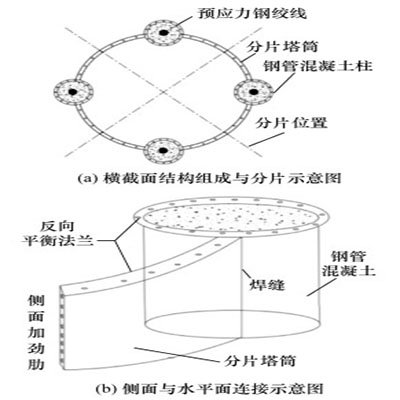
Objective: The primary goal of this study is to address the rising costs linked to the production, transportation, and construction of traditional conical wind turbine towers with increasing wind turbine sizes. Therefore, a novel design for an internally prestressed segmented steel-concrete tower structure is proposed, aiming to improve static performance and structural integrity, reducing material usage, and improving the overall efficiency of the wind turbine tower structure. Methods: Detailed finite element models of the traditional conical steel and new prestressed segmented steel-concrete towers are developed using the ABAQUS platform. These models accurately reflect the geometric complexity and material properties of the structures. The material properties of steel and concrete are defined based on their mechanical characteristics. For concrete, a plastic damage model is utilized to capture its inelastic behavior, whereas steel is modeled using a bilinear stress-strain relationship to represent its yielding and hardening behavior. The models are tested under realistic boundary conditions that simulate the fixed bases of the towers. The loading conditions include the dead load of the tower structure, the weight of the turbine components, and the dynamic loads from the 3-D turbulent wind field during shutdown. Wind loads are calculated using GH-Bladed software simulations specific to the wind turbine model. Prestressing is applied to the new tower model using two methods: temperature reduction and equivalent load. The temperature reduction method simulates prestress by cooling the tendons, whereas the equivalent load method applies an external force equivalent to the prestress effect. Moreover, static and dynamic analyses are performed on the models. Static analyses evaluate stress distribution, displacement, and the linear and nonlinear buckling performances of the tower. Dynamic analyses examine modal characteristics, including natural frequencies and mode shapes. Parametric studies are constructed to understand how various design parameters, including prestress levels, tower wall thickness, tower radius, and concrete strength, affect structural performance. The results of these studies provide insights into the sensitivity of these parameters to the structure. Nonlinear analyses are conducted to account for material and geometric nonlinearities in the structure, which are crucial for accurately predicting the ultimate load-carrying capacity and postbuckling behavior of the towers. The finite element models are validated against experimental data and other numerical studies from the literature, ensuring the simulation results are reliable and accurate. Results: The static performance of the new tower structure is considerably improved without prestressing. The maximum equivalent stress, tower top displacement, and steel usage drop by 10.24%, 14.89%, and 9.51%, respectively. Furthermore, the first natural frequency increases by 7.5% compared to the traditional conical tower. When prestressing is applied, the maximum equivalent stress of the new tower structure and tower top displacement drop by 0.36% and 6%, and the first natural frequency rises by up to 7.6% compared to the nonprestressed state. Compared to the new tower without prestressing, the prestressed tower exhibits a 9.27% enhancement in its linear buckling load; during nonlinear buckling analysis, the load proportionality factor rises by roughly 4.6%, 4.1%, and 4.8% when considering only material nonlinearity, considering both material and geometric nonlinearity, and considering material and geometric nonlinearity along with initial defects. Without prestressing, the ultimate bending capacity of the new tower is 1.15 times that of the traditional conical steel tower. After adding prestressed tendons, this capacity increases by another 6.5%. The weak points near buckling in the new and traditional conical towers are located in section 6 (approximately halfway up the tower). The new tower without prestressing shows better buckling performance than the traditional tower. When prestressing is applied, the ultimate buckling load is minimally affected by the prestress level, with overall buckling performance mainly constrained by the buckling behavior of the thin-walled segments, as seen in the segmented steel tower. Conclusions: The new prestressed segmented steel-concrete tower structure offers remarkable advantages over traditional conical steel towers in terms of static performance, modal characteristics, and buckling resistance. The use of prestressing enhances structural efficiency and optimizes material utilization. This comprehensive analysis provides a scientific foundation for the engineering application of the new tower structure, indicating it as a viable and promising solution for next-generation wind turbine towers.
Objective: This research centers on the automated welding of medium and thick plates within large structural components. It is mainly focused on the in-depth exploration of the multilayer and multipass automated layout technology based on laser vision sensing. The aim is to solve a variety of crucial problems that occur during the welding process of medium and thick plates in large structural parts. By enhancing the welding quality and efficiency, it promotes the intelligent development of welding technology. Through a series of theoretical analyses, algorithm research and development, as well as experimental verifications, a multilayer and multipass automated layout technology based on laser vision sensing, along with its corresponding adjustment system, has been successfully developed. Methods: Under intricate and challenging welding conditions, the precise identification and feature extraction of weld seams were achieved, which laid a solid foundation for the automated tracking control of robots. A highly efficient solution based on a deep learning model was developed, and the end-to-end laser centerline extraction was successfully realized. This algorithm, while ensuring stable adaptation to a large number of working conditions, has a lightweight parameter scale and a relatively fast computing speed. Moreover, both its accuracy and efficiency can meet the engineering requirements, and it can accurately locate the key feature points in the laser weld images of different stages of multilayer and multipass welding of medium and thick plates. By obtaining the images of adjacent weld passes at the same position and using the laser centerline or the inflection point at the top of the groove as the matching feature to perform relevant operations, the weld pass morphology and features were extracted and served as the basis for the multilayer and multipass layout planning. Meanwhile, considering its self-correlation with the changes in welding process parameters, the real-time prediction of welding process parameters was achieved, thereby providing a basis for the rational selection of parameters at different positions of the welding path. Through an extensive analysis of welding parameters across various positions and plate thicknesses, strong correlative relationships among test plate types, plate thicknesses, process parameters, and weld bead deposition amounts were established. This enabled the effective planning of the number of welding layers and deposition quantities for medium and thick plates, providing a clear guideline for subsequent welding operations. Results: By incorporating visual sensing to identify weld seam information, the proposed technology facilitates the automatic planning of welding paths for each pass. Moreover, it determines crucial details such as the optimal position, attitude, and oscillation width of different weld beads at specific positions and times. Based on the deposition amount of each planned pass, process parameters are adaptively adjusted. Simultaneously, by combining position information and visual tracking, the position and orientation of the welding torch are adjusted accordingly, ensuring that the welding torch remains in the ideal state throughout welding. The system accounts for various influencing factors, including welding deformation, groove shape changes, and fluctuations during welding operations. Welding layout information and parameters are continuously refined and dynamically adjusted in real time. Conclusions: This adaptive mechanism ensures stable and efficient welding operations on large structural components, considerably enhancing production efficiency and product quality. Ultimately, this research plays a vital role in promoting the intelligent development of the manufacturing industry.


